Fancy a magical mystery tour over summer? Then dip into wines labelled Pinot Gris.
After all, it is something of a mystery, this chameleon grape on our global landscapes. How else could you describe a variety that was once Pinot Noir, then mutated into a paler, more perfumed form, giving rise to more than 20 different synonyms for Pinot Gris.
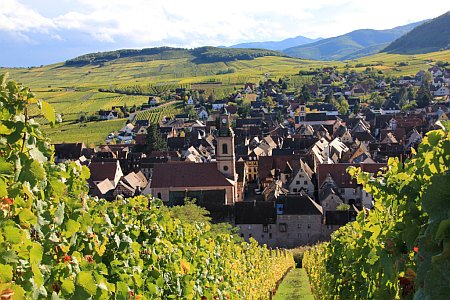
Alsace, ancestral home of Pinot Gris. Image courtesy Hugel et Fils (Flickr).
OK, so you’ve heard Gris is the French name. Well, think again. There’s a handful of monikers in use there too, including both Pinot Gris and Tokay in Alsace, generally regarded as one of the variety’s ancestral homes.
Try spotting Pinot Gris in a vineyard and that becomes a moving feast as well. It presents a wide spectrum of berry colours, anywhere from greyish blue to brownish pink on cooler sites, sometimes all on the same grape bunch. In warmer locations, pinky maroons and rich purples are possible, with berries right on harvest appearing almost as deep in colour as Pinot Noir itself.
Pinot Gris just can’t seem to make up its mind what it wants to be… It’s a mystery that growers, makers and wine enthusiasts each have to deal with in their own ways.
Look over the variety’s recent history and it appears we consumers are comfortable with that. Maybe we don’t want everything to be cut and dried where our grape varieties and wine styles are concerned?
The growth curve for Pinot Gris has been little short of meteoric. In 2004, just under 2100 tonnes of it were harvested in Australian vineyards. By 2014, the figure had risen to 60,000 tonnes; by 2018, it was 76,000 tonnes.
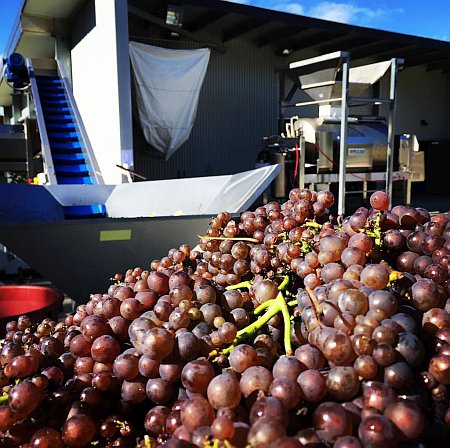
Ghost Rock Pinot Gris at the winery. Image supplied.
That puts this quixotic grape among our top three white wine varieties by volume – a long way behind Chardonnay (370,000 tonnes) but chasing down Sauvignon Blanc (110,000 tonnes.)
Depending on how and where it’s been grown and made, Pinot Gris once bottled comes in a range of guises – or you might think disguises. So attempting to bring a sense of order there is not for the faint hearted.
Cheap Italian versions, typically labelled Pinot Grigio, are generally crisp, dry, light-bodied and free from oak-derived complexity. Less forgiving writers might also include ‘neutral’ as a descriptor. Quite the opposite are the rich, sumptuous, single vineyard wines made by Italy’s best makers, invariably set free from the constraints of site elevation and challenging microclimates.
In eastern France, Pinot Gris has traditionally produced light to medium bodied aromatic whites, often resembling Riesling when young. Top class examples from long-established Alsace producers like Hugel and Trimbach are capable of evolving into rich, exceedingly complex wines with extended cellaring – wines unlike almost any other variety. And perhaps here we can ponder the future for Pinot Gris in Tasmania.
Pipers Brook Vineyard laid our Pinot Gris groundwork in the 1980s and 1990s. Today, its Ninth Island wine takes a bright, fresh, fruit-forward road. Meanwhile, the company’s flagship requires something of a more leisurely journey through the winery. A diverse array of winemaking techniques includes skin contact, barrel fermentation – using both cultured and wild yeasts – and extended ageing on lees.
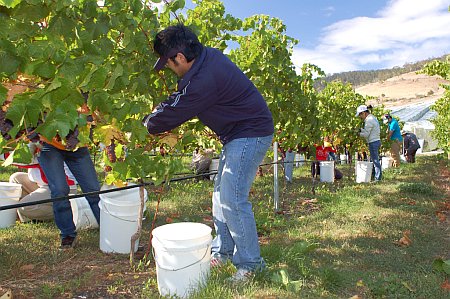
Pinot Gris harvest, Derwent Estate. Image courtesy Mark Smith.
Tamar Valley producers Grey Sands really cast the mould for rich, age-worthy wines in the early 2000s. Back then, they encouraged former Moorilla winemaker Michael Glover to rewrite the Pinot Gris textbook.
Two decades later, Rita and Bob Richter remain steadfast devotees of the variety, insisting it requires the same level of fastidious viticulture that Pinot Noir producers take for granted each season. Individual vine yields at Grey Sands are meagre. They then receive the best of French oak and kid-glove treatment by the couple’s contract winemakers.
“There’s a word – ‘vinosity’ – that describes what I look for in a wine,” explains Bob Richter as he labours on the 5.5ha site at Glengarry, west of Exeter.
“Essentially, ‘vinosity’ means character or personality. It’s something many Australian wines simply don’t have these days. They represent little more than the transformation of pure grape juice into grapey, fault-free wine with a bit of alcohol.
“Our goal is to produce wines that are full bodied and concentrated, something you can drink with pleasure over many years, and also take pride in sharing with others. If we can’t achieve that without complete satisfaction, we don’t make any Pinot Gris at all. In fact, we made no wines of any kind in 2011.”
Ouch.
A magical mystery tour needs a mystery bag of wines to enjoy along the way. Here are some Tasmanian Gris/Grigio companions for the journey: Apogee Tasmania; Bangor; Derwent Estate; Devils Corner; Eddystone Point; Ghost Rock; Grey Sands; Hughes & Hughes; Josef Chromy; Milton; Moores Hill; Pipers Brook Estate.
ADVERTISEMENT – ADVERTISEMENT – ADVERTISEMENT
Wine festival grows in 2021
Tasmanian wineries and vineyards experienced some tough times in 2020, with late summer and autumn rains across much of the state moving harvests further down the calendar, testing both patience and skill of operators.
Then COVID-19 appeared over the horizon. Wine tourism ground to a halt mid-year, amid community lockdowns and fears of virus transmission. But hope springs eternal, with 2021 already bringing reports of pleasing online sales and brisk cellar door trade from wine producers throughout the industry.
Last February saw the inaugural Tasmanian Wine Festival take place at Hobart’s iconic Royal Tasmanian Botanical Gardens. With around 5,000 people in attendance, it was a raging success. So much of a success that organisers are again planning to showcase some of the state’s top wines at a similar event next month.

The 2021 Tasmanian Wine Festival is set to open its gates at 4:00pm on Friday 26 February. This year, the COVID-safe festival will operate four sessions across a bigger garden footprint. Around 30 vineyards are expected to take part, with proceedings winding up at 5:00pm on Sunday 28 February.
Participating vineyards are mostly southern-based, but a handful of well-respected producers, including Pirie, Tamar Ridge and The Ridge North Lilydale, will be flying the flag for the Tamar Valley Wine Route.
Festival patrons can sample ten or more local food options along with their Tasmanian wine purchases. Local entertainers and live music should add further flavour to the event.
Tickets are priced at $29 per person for each 4-hour afternoon and evening session on the Saturday. The same $29 (plus booking fee) will provide access to a 5-hour afternoon session on Sunday or a 6.5-hour session on the opening night.
A premium quality, reusable wine glass is also included with each ticket purchase. Meanwhile, craft beer, cider and a cocktail bus will be located on-site to cater for people who choose not to drink wine.
Go to www.taswinefest.com.au for online bookings and details.

Tasmanian Wine Festival, 2020. Images supplied.
Hobart’s Mark Smith wrote his first weekly wine column back in 1994. Now more than 1700 features and 25 years later, he continues to chart the successes of Tasmania’s small scale, cool climate wine industry with regular contributions to some of Australia’s leading industry publications.
PICK OF THE CROP
 Mark gives you his honest opinions about the best wines available right now from Tasmania’s wine makers.
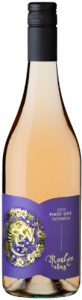
2020 Roslyn 1823 Pinot Gris $34
Roslyn 1823 wines are sourced from a 30ha farm in the Coal River Valley, managed along permaculture lines by the Palmer family. The warm, dry climate there produces fruit-forward styles, with plenty of ripe varietal characters on show. The 2020 Gris opens with engaging aromas of poached pear and some floral/dried herb nuances. Similar flavours follow on a well-crafted palate that also offers suggestions of citrus/mandarin and savoury/spice. Made under contract by nearby Tea Tree winemaker Robert Drew. Neat work. www.roslyn-1823.com
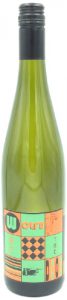
2020 Wolfe at the Door RGG $25
The team at Wellington and Wolfe clearly had Alsace on their minds when they created this lovely Riesling, Gris and Gewürztraminer blend. It’s a soft, easy-drinking wine that captures the spirit of the French region’s Gentil wines. Traditionally, these were created from white grapes grown, harvested, mixed and then fermented together. Here, floral notes beckon attention, with the wine’s smooth, gentle red apple and pear flavours then melding into one satisfying package of deliciousness. Enjoy on its own or with lightly spiced Asian cuisine. www.wellingtonwolfe.com
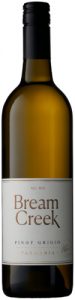
2019 Bream Creek Pinot Grigio $31
The best advice for enjoying Pinot Grigio is often to drink the youngest available. Bream Creek, in Tasmania’s cool, south-east, seems oblivious to such a rule of thumb. Aromatic whites from this part of the state are generally better in their second year of life. That’s surely the case with this 2019 vintage. Its citrus and pear flavours are pure Grigio, while the region’s fresh natural acidity adds a crisp dry finish to the wine. Fresh line-caught fish would provide a neat match. www.breamcreekvineyard.com.au
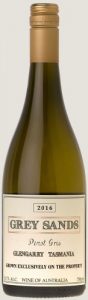
2016 Grey Sands Pinot Gris $50
Grey Sands dares to be different, with 17 grape varieties planted on the 5.5ha site. Daring and different also apply to the uncompromising way its owners go about producing one of our best examples of Pinot Gris. The current 2016 is indicative of Rita and Bob Richter’s patience in allowing wines to evolve over time. This is an intriguing release, with much to enjoy. It’s rich and lush, with layered textures supporting a multitude of citrus, musk and tropical flavours. Subtle use of oak is masterful. www.greysands.com.au
ADVERTISEMENT – ADVERTISEMENT – ADVERTISEMENT