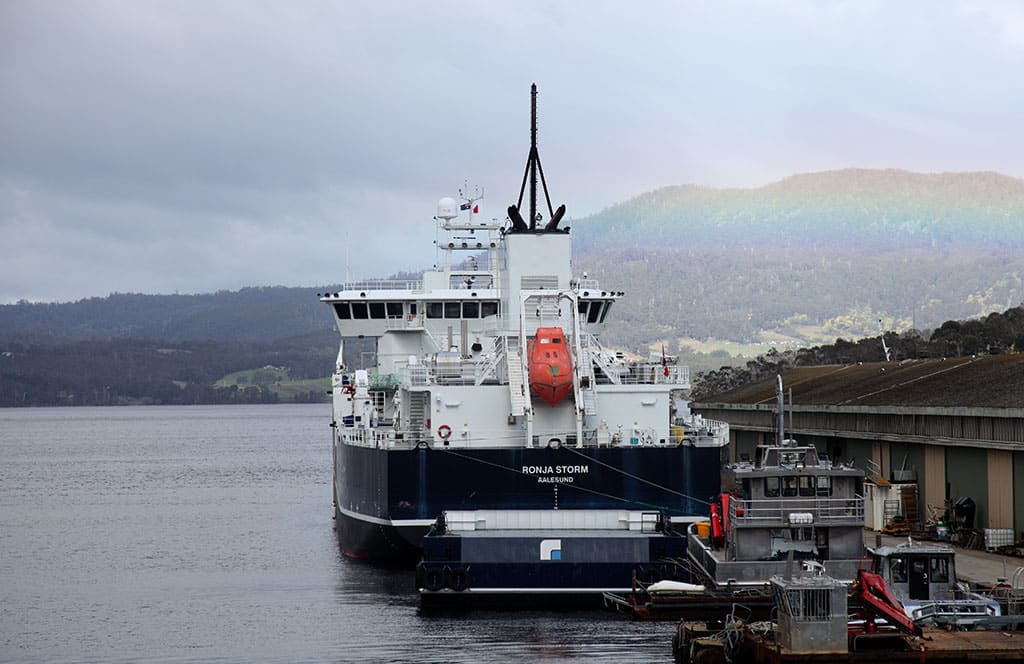
Federal regulator approves pig medicine for 56,000 tonnes of salmon despite all fish already vaccinated
Tasmania’s $343 million salmon export trade faces potential catastrophe after federal regulators approved emergency use of a pig antibiotic on up to 56,000 tonnes of the state’s production – more than double total annual exports – despite acknowledging “potential risk to trade” and major markets having no legal tolerance for the drug residues.
The scale of the permit raises immediate questions.
Tasmania exported only 21,799 tonnes of salmon in 2024-25, meaning this emergency permit covers 2.5 times total export volume. China receives 61% of exports – 13,343 tonnes worth more than $200 million annually.
The government is already concerned about Chinese market access for Tasmanian rock lobster following florfenicol contamination concerns.
Documents obtained by Tasmanian Times reveal the Australian Pesticides and Veterinary Medicines Authority (APVMA) granted emergency permit PER96499 to Abbey Laboratories on 7 November, authorising use of AbbeyFlor Premix Concentrate for Pigs on up to 56,000 tonnes of sea-penned Atlantic salmon through to 31 August 2026.
Industry stakeholders were given just days to respond to the Trade Advice Notice, which closed for submissions on 22 October – barely two weeks before the permit was granted. The APVMA has not published any submissions received or indicated what stakeholder feedback influenced the decision.
Why a pig antibiotic?
Florfenicol products are already registered for aquaculture in countries including Canada, Chile, China, Japan, Norway, South Korea, the United Kingdom and the United States. Australia’s major export markets already have established tolerances for florfenicol in salmon. Yet Tasmania will use a product registered for terrestrial pigs.
The APVMA’s Trade Advice Notice does not explain why Abbey Laboratories did not seek registration for a salmon-specific florfenicol product, or what circumstances made this situation sufficiently urgent to bypass normal registration processes.
Several possibilities emerge.
Abbey Laboratories already had the pig product registered and may have sought to expand its market without the cost and time of salmon-specific registration. The company’s relationship with the Nautilus Collaboration – which includes major Tasmanian salmon producers – may have facilitated the emergency permit application. Regulatory convenience may have made an emergency permit easier than processing a new product registration.
The question becomes more pointed given the permit’s timeframe and scale.
This affects 75% of Tasmania’s salmon production over nine months – hardly a small or unexpected emergency.
The APVMA notes usage is “likely to be biased towards periods of higher temperature”, suggesting a predictable seasonal pattern rather than an unforeseen crisis.
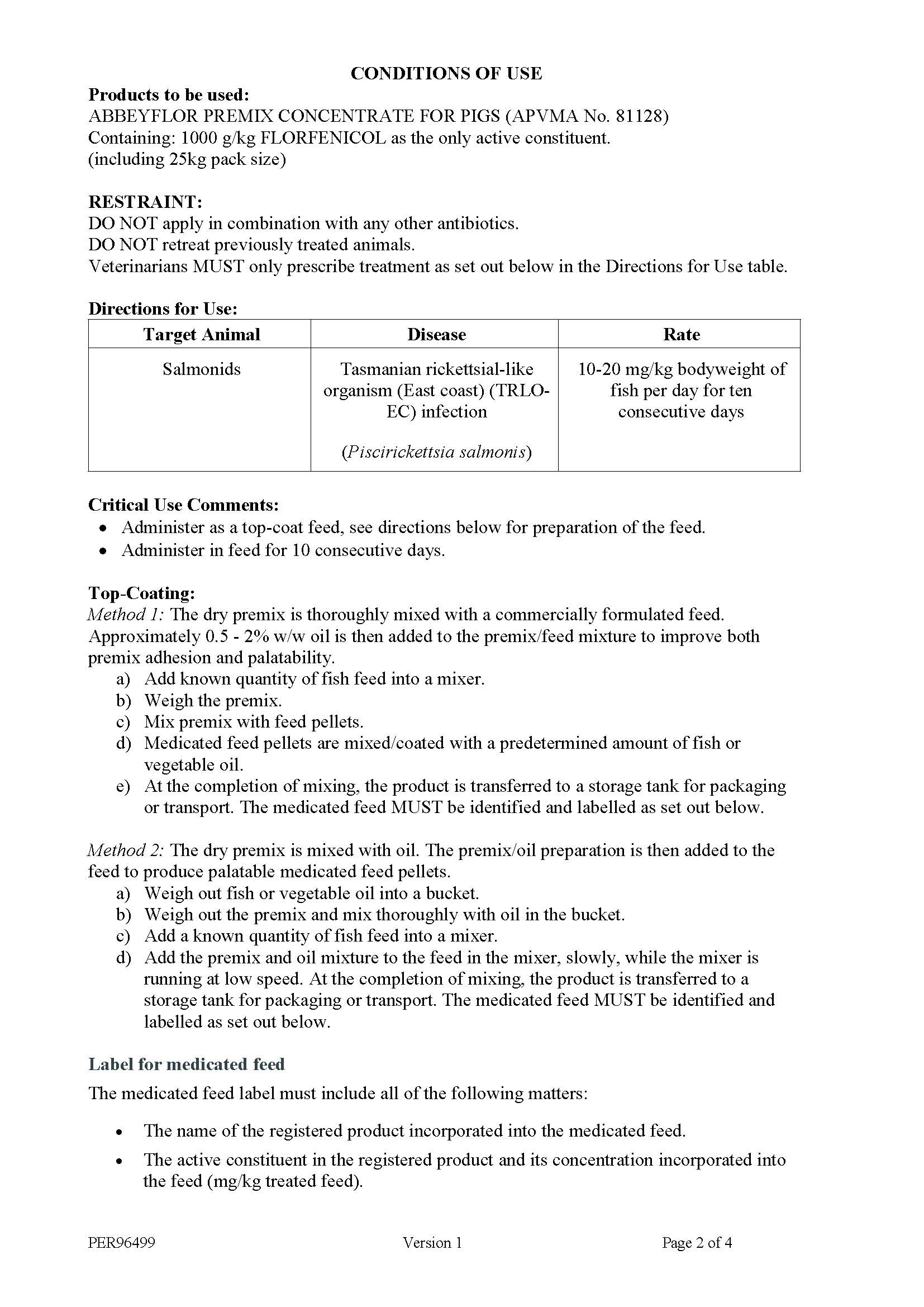
The scale of florfenicol required raises further questions. Treating 56,000 tonnes of salmon at the prescribed dose of 10-20 mg per kilogram of body weight for 10 consecutive days would require approximately 8.4 tonnes of pure florfenicol – equivalent to 336 bags at the 25kg pack size authorised under the permit.
This quantity cannot be manufactured overnight. How much florfenicol did Abbey Laboratories have stockpiled in anticipation of regulatory approval?
When did the company begin manufacturing supplies for this “emergency”?
How long before the October consultation period was this permit actually being negotiated with the APVMA?
The timeline suggests careful preparation rather than emergency response. Mass salmon mortalities from P.salmonis occurred in early 2025. Industry announced universal vaccination in September 2025. The Trade Advice Notice opened in October with just days for submissions. The permit was granted 7 November.
Yet Abbey Laboratories would have needed months to manufacture 8.4 tonnes of florfenicol for immediate deployment.
The vaccination contradiction
In September 2025 – just two months before this permit was granted – Salmon Tasmania CEO John Whittington announced every salmon in Tasmania’s south-east waters had been vaccinated against Piscirickettsia salmonis, the same bacteria this florfenicol permit targets.
“For the first time, we can vaccinate every salmon against the emerging endemic bacteria P.Salmonis,” Whittington told media.
“This means salmon will have a natural immune defence against the effects of the bacteria, which they weren’t able to have last summer.”
Whittington described vaccines as critical tools that “improve fish health, reduce antibiotic use and enhance survival rates”. The vaccine was created by Tasmanian scientists at the Centre for Aquatic Animal Health and Vaccines in Launceston, with 10 million fish injected before going to sea.
Two months later, the same John Whittington was seeking federal approval for emergency antibiotic use on up to 56,000 tonnes of those vaccinated fish.
The permit provides no explanation for what changed between September’s announcement that every fish was vaccinated and November’s emergency requiring treatment of 2.5 times annual export volume.
The permit explicitly prohibits combining florfenicol with other antibiotics and forbids retreatment of previously treated animals.
Yet salmon farming commonly uses various veterinary medicines including oxytetracycline for bacterial infections throughout the production cycle.
In sea pens containing tens of thousands of free-swimming fish, there is no practical method to identify which individual fish have previously received treatments. Fish are not individually tagged or tracked. The permit conditions appear designed for terrestrial livestock where individual animals can be identified – not for aquaculture realities where vaccinated fish cannot be separated from unvaccinated fish, or previously treated fish from never-treated fish.
The export catastrophe
The permit authorises treatment of up to 56,000 tonnes of salmon. Tasmania exported just 21,799 tonnes in 2024-25. This emergency permit covers 257% of total export volume.
Either the industry plans to treat virtually all production (not just in the South East) including fish destined for domestic consumption, or the claimed “emergency” is far larger than publicly acknowledged.
Of the 21,799 tonnes exported, China received 13,343 tonnes – 61% of all exports. Japan took 2,020 tonnes, Indonesia 1,680 tonnes, Vietnam 1,567 tonnes and the United States 1,133 tonnes.
If even a portion of the 56,000 tonnes permitted for treatment is exported, it places these trade relationships at risk.
An MRL – Maximum Residue Limit – is the highest concentration of a veterinary medicine legally permitted in food. Each country sets its own based on safety studies. When Australia exports food containing veterinary medicine residues, those residues cannot exceed the importing country’s MRL. No MRL means any detectable residue could trigger rejection at the border.
Taiwan, South Korea and Indonesia have no established MRLs for florfenicol in salmon. The Codex Alimentarius Commission – the international food standards body – has not established a maximum residue limit for florfenicol in any fish species, meaning countries cannot rely on internationally agreed safety levels.
Even for markets with established tolerances, the timing creates risk. The European Union, China, Japan and the United States permit 1 mg/kg of florfenicol in salmon (with slight variations in measuring metabolites). South Korea permits only 0.2 mg/kg – one-fifth of other major markets. But will these markets accept salmon from Australia when they learn it was treated with a pig antibiotic under emergency provisions rather than an approved aquaculture product?
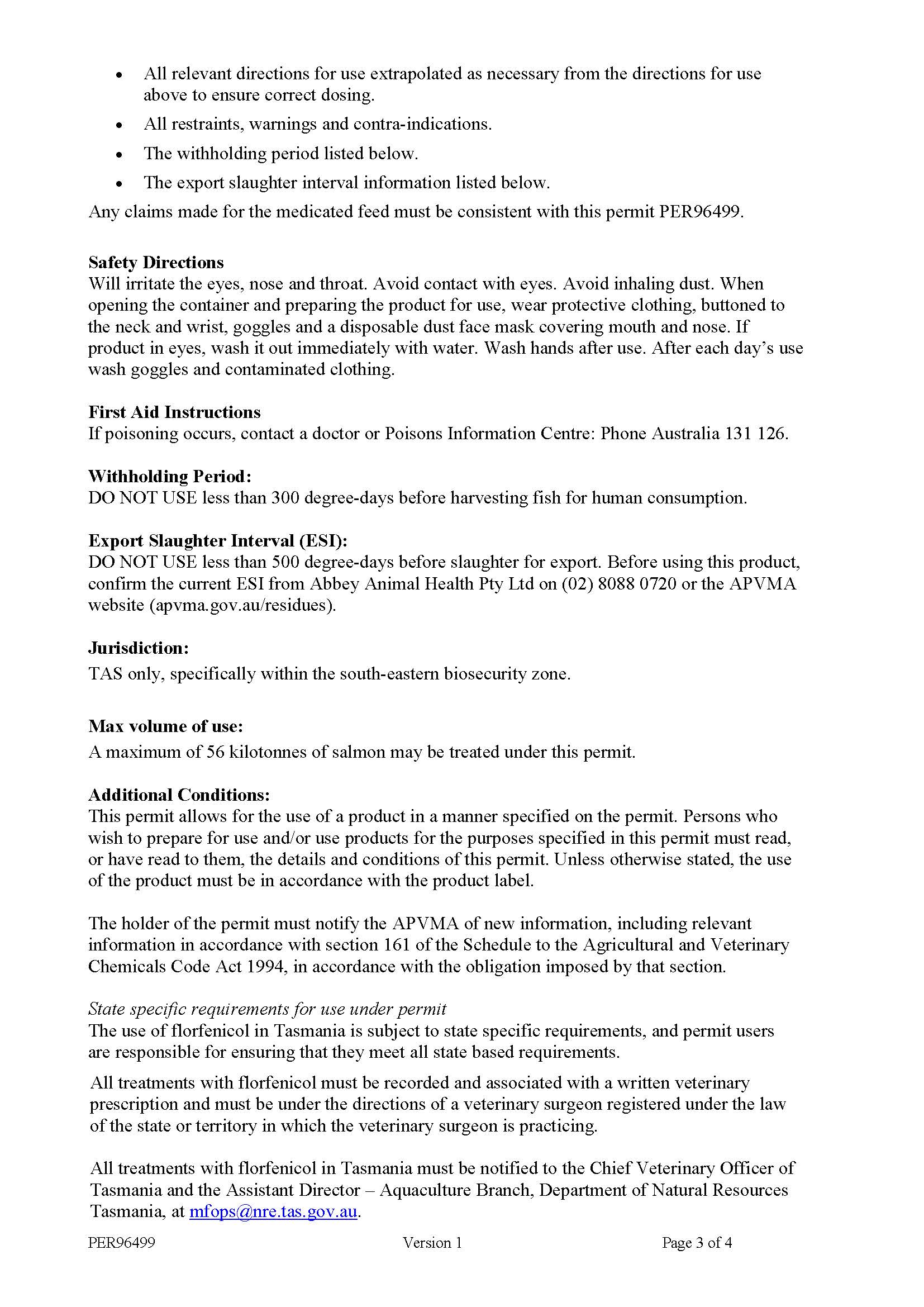
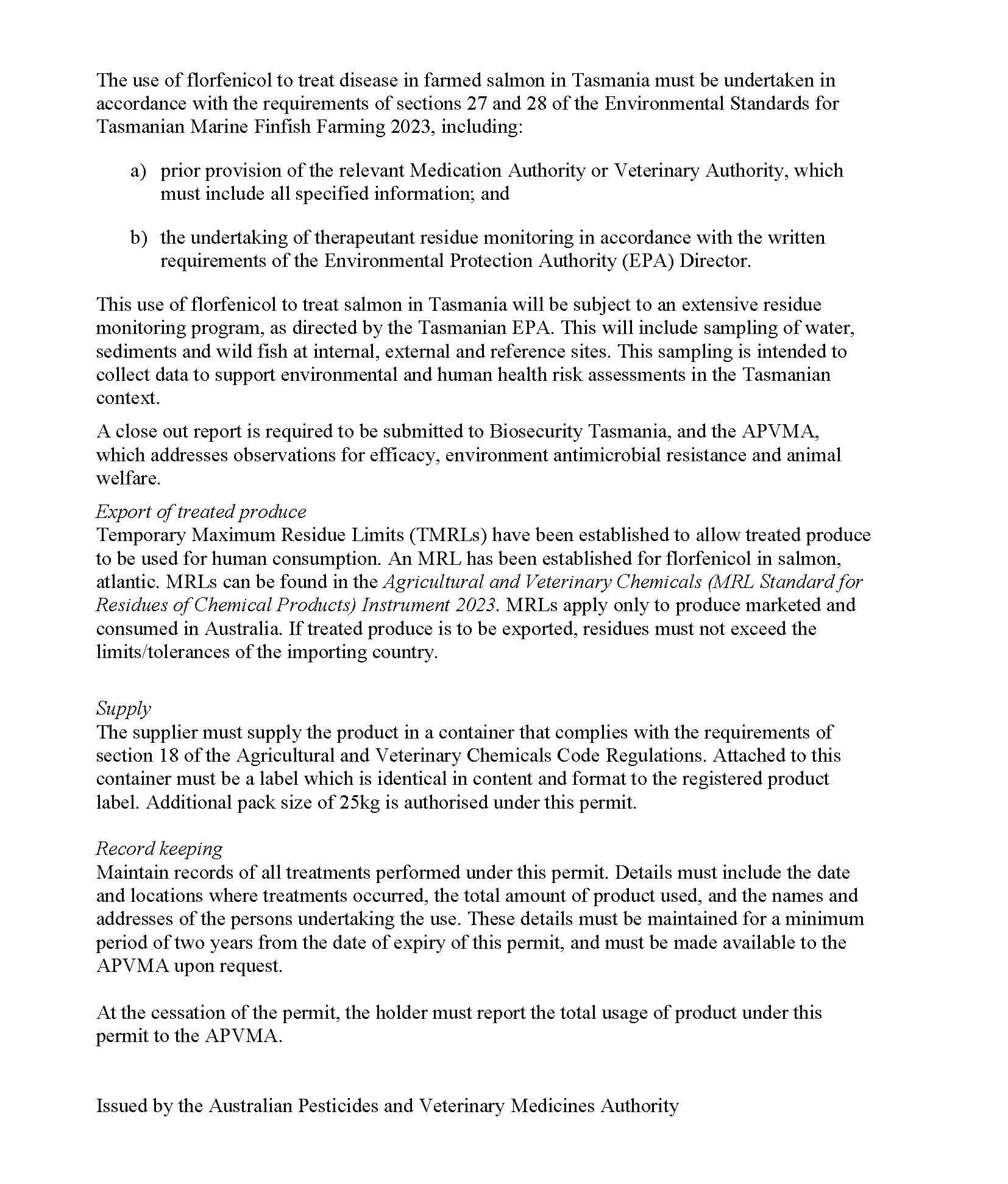
The APVMA set a domestic withholding period of 300 degree-days but imposed an Export Slaughter Interval of 500 degree-days. Fish farming uses “degree-days” – calculated by multiplying days by average water temperature – because fish metabolism varies with temperature. At typical Tasmanian sea pen temperatures of 15°C, this means approximately 20 days before domestic sales versus 33 days for export. The extended interval aims to ensure residues fall below 0.05 mg/kg – twenty times lower than China’s 1 mg/kg tolerance.
But salmon companies must now maintain separate inventory tracking to ensure export-destined fish meet the stricter requirement – a logistical challenge managing tens of thousands of untagged fish at various growth and treatment stages. The permit warns “if treated produce is to be exported, residues must not exceed the limits/tolerances of the importing country”, placing compliance burden entirely on producers.
One rejected shipment to China could close or restrict market access worth more than $200 million annually.
The crayfish precedent
The government is already concerned about Chinese market access for Tasmanian rock lobster following florfenicol contamination issues. Tasmania’s rock lobster fishery has this week experienced closures in areas adjacent to salmon farming operations (south of the D’Entrecasteux Channel) after questions emerged about antibiotic residues entering the marine environment through uneaten medicated feed or fish excretion.
Export market requirements for rock lobster are stringent, with major Asian buyers requiring certification that products are free from veterinary medicine residues. Any florfenicol detection in wild-caught crayfish could close export markets worth tens of millions of dollars annually.
The permit imposes extensive environmental monitoring including sampling water, sediments and wild fish at internal, external and reference sites. This monitoring aims to “support environmental and human health risk assessments in the Tasmanian context”. The requirement for reference site sampling suggests regulatory acknowledgement that florfenicol dispersal beyond salmon lease boundaries is a genuine concern.
The timing of the permit – November 2025 through August 2026 – captures both the summer disease pressure period and the critical crayfish fishing season. The interaction between salmon farming antibiotic use and wild fisheries represents an ongoing tension in Tasmania’s marine zone management.
The dosing problem
The permit authorises florfenicol doses of 10 to 20 mg per kilogram of body weight daily for 10 consecutive days, incorporated into fish feed. But unlike terrestrial animals where veterinarians can administer precise doses to individual animals of known weight, sea pen salmon are free-swimming and self-feeding.
Even within cohorts of similar-aged fish, body weights vary due to natural growth rate differences. Feed is broadcast into pens, where dominant fish may consume more than their share whilst subordinate fish eat less. Water temperature, health status and social hierarchy all affect feeding behaviour.
The permit requires feed “top-coated” with florfenicol premix mixed with oil, but provides no mechanism to ensure individual fish receive the intended dose.
Some fish may consume multiple therapeutic doses whilst others receive sub-therapeutic amounts – a scenario that could contribute to antimicrobial resistance development.
This dosing uncertainty partly explains why the APVMA applied “a conservative temporary MRL of 1 mg/kg to account for the uncertainty in predicted residues”, acknowledging its assessment relies on rainbow trout* data at 13°C rather than Atlantic salmon studies under Tasmanian conditions.
What happens next?
All treatments must be notified to the Chief Veterinary Officer and the Assistant Director – Aquaculture Branch at the Department of Natural Resources Tasmania. At the permit’s cessation in August 2026, Abbey Laboratories must submit a “close out report” to both Biosecurity Tasmania and the APVMA addressing efficacy, environmental antimicrobial resistance and animal welfare.
Whether this nine-month permit allows the industry to manage an acute disease outbreak, or whether subsequent permits will be sought for future seasons, remains unclear. Close-out reporting requirements may inform decisions about whether emergency permits remain appropriate, or whether permanent product registration for florfenicol use in salmon should be pursued.
Peak industry bodies including the Tasmanian Salmon Growers Association and Seafood Industry Australia have not publicly commented on the permit approval.
Salmon Tasmania CEO John Whittington has not publicly explained what changed between his September announcement that all salmon were vaccinated against P.salmonis and the November emergency permit authorising antibiotic treatment of 56,000 tonnes – more than double total annual exports.
For now, up to 56,000 tonnes of Tasmanian salmon may be treated with a pig antibiotic, with export market access to China – worth more than $200 million annually – dependent on maintaining acceptable residue levels, satisfactory environmental monitoring results and inventory management systems that can somehow track treatment histories for tens of thousands of untagged, vaccinated fish swimming in sea pens.
The question is whether Chinese importers, already concerned about florfenicol contamination in Tasmanian rock lobster, will accept salmon treated with a pig antibiotic under emergency provisions – particularly salmon that were publicly announced as universally vaccinated against the target disease just two months before treatment.
One rejected shipment could trigger market restrictions affecting production worth hundreds of millions of dollars in annual trade.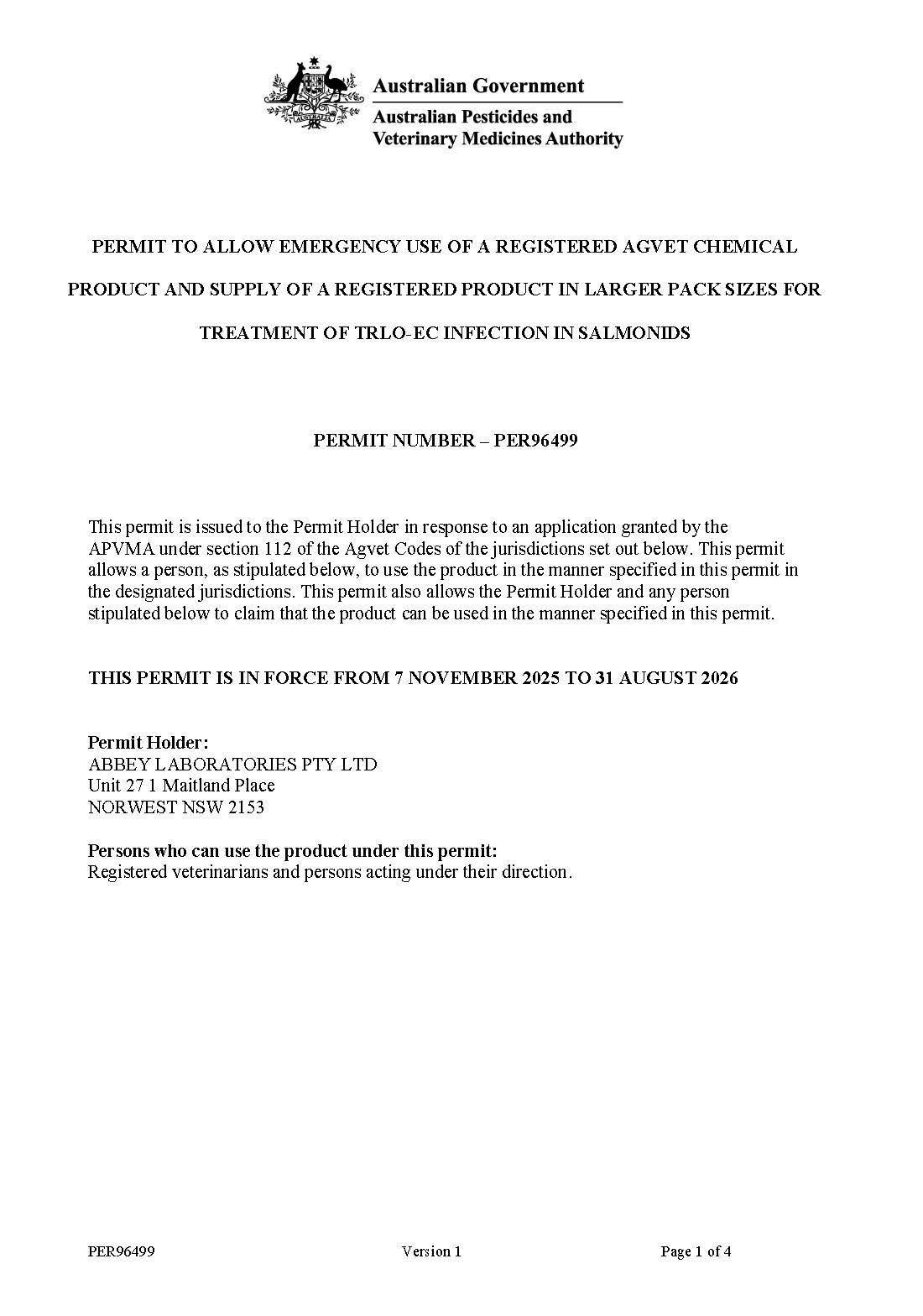
*The APVMA’s residue assessment for this Atlantic salmon permit relies on studies conducted on rainbow trout at 13°C water temperature rather than data from Atlantic salmon under Tasmanian conditions. Rainbow trout and Atlantic salmon are different species with different metabolic rates and physiological characteristics. The authority acknowledged this limitation, stating it applied “a conservative temporary MRL of 1 mg/kg to account for the uncertainty in predicted residues” given the absence of Atlantic salmon-specific studies.
The Trade Advice Notice (October 2025) and Permit PER96499 (7 November 2025) are available on the APVMA website.
Tasmanian Times (TT) is a community-based news and current affairs service covering the island state of Tasmania. It exists to provide a diverse presentation of Tasmanian issues. TT creates and supports independent media content utilising the best of modern technologies and tried-and-true practices of public-interest journalism.
Support us in expanding our coverage and developing new content by and for Tasmanians.
New initiatives on the way include … what our contributors and readers suggest! Please get in touch with your suggestions.