In Tasmania, the line between what we consider “native” and what we label a “pest” is not just blurred—it’s political, subjective and too often shaped by double standards.
Species that have lived here for generations are suddenly branded invasive, while others, equally introduced, are celebrated, protected or simply ignored. It raises a simple but important question: who decides what belongs, and based on what criteria?
The Shooters, Fishers & Farmers Party believes it’s time for a mature, balanced conversation about introduced species in Tasmania—one that acknowledges the environmental, social and economic realities, and respects the people who live and work with these species every day.
Let’s start with the brown trout. First brought to Tasmania in the 1860s, it’s undeniably an introduced species. But over 150 years on, wild trout have become deeply embedded in our identity—central to Tasmania’s reputation as an arguably world-class fishing destination. They support regional tourism, create local jobs and provide affordable recreation to thousands of Tasmanians. Are we really going to pretend these fish are pests? Of course not. They’re part of the Tasmanian story now.
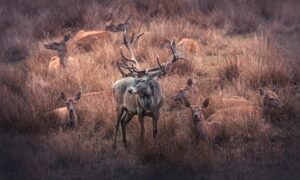
Now compare that to how wild fallow deer are treated. Also introduced in colonial times, deer have been part of the landscape for well over a century. For some farmers, they present real management challenges. But for others, they’re a food source, a cultural asset and a sustainable game species that supports recreational hunting and rural economies.
Yet despite this, deer are increasingly framed as a menace to be eradicated. Government reports and media commentary now routinely refer to them as “feral deer”, as if the word itself justifies large-scale culling with little thought for the consequences.
This misuse of the term feral has become a rhetorical shortcut—used to strip animals of value and justify extreme measures without meaningful consultation. Once used to describe escaped domestic animals, feral is now deployed politically.
A “feral pig”, a “feral deer”, a “feral cat”—these aren’t scientific classifications; they’re PR labels, designed to elicit fear or disgust. Meanwhile, if a species is useful or cute, the word never applies. No-one talks about “feral bees” or “feral trout”. Why? Because we’ve decided they’re economically or culturally acceptable.
Consider the honeybee—introduced to Tasmania like most European species. It’s not native. It competes with native pollinators. Yet it is not targeted or vilified. Why? Because it’s commercially valuable.
Just like foxglove, blackberry, agapanthus and sparrows—introduced species that are either tolerated, landscaped or simply left alone. You’ll find agapanthus lining our highways and foxglove blooming on roadsides. You’ll see blackberries on the edge of every paddock. And sparrows are everywhere. But you rarely hear calls to eradicate these species.
So again, we must ask: what makes one species a pest and another acceptable? It often has nothing to do with science—and everything to do with perception, politics, and whose voice is loudest at the policy table.
There’s a troubling inconsistency here. When everyday Tasmanians use naturalised plants in their gardens, harvest blackberries or head out hunting deer for the freezer, they’re engaging with the landscape in ways that are sustainable and longstanding. Yet more and more, we see these activities framed as problems, while the “solutions” are imposed from above—by urban-based bureaucrats, well-funded lobby groups or Canberra-based academics with no skin in the game.
We don’t deny that some introduced species can have serious environmental impacts. Wild cats, for example, are well-known predators of native wildlife. But even here, the approach needs to be rational, evidence-based and community-led—not hysterical, reactive or driven by ideology. Effective land management comes from partnership with those who know the landscape—not from vilifying landholders, hunters or recreational users who actually spend time on the ground.
Blanket eradication strategies rarely work. What they often do is alienate local communities, waste public money and leave long-term problems unresolved. Worse still, they erode trust in government. When agencies start using words like “feral” as a justification for aerial culling, poisoning or mass extermination without consultation, people rightly ask: who’s next? Which species, or which community, will fall out of favour tomorrow?
We need a better way forward.
The Shooters, Fishers & Farmers Party supports a balanced, respectful approach to managing species—introduced or otherwise. We believe that decisions about land, wildlife and resource use must include the people who live and work with these realities every day. Farmers, hunters, landholders, fishers and regional communities should not be shut out of the conversation just because their views don’t fit an inner-city environmental narrative.
Our message is simple: we must stop pretending that every introduced animal or plant is a disaster. Many are part of Tasmania’s cultural and economic fabric. Some, like trout and deer, are valued by large sections of the community. Others, like the honeybee, are essential to our food production. Treating them all as “feral invaders” is lazy thinking—and it’s driving bad policy.
Tasmania’s biodiversity is precious. But so is our way of life. We need solutions that respect both.
So let’s stop using language like “feral” as a weapon. Let’s stop deciding what belongs based on emotion or ideology. And let’s start listening to the people who actually know the land—not just the ones who want to control it from afar.
Because if we want a future where nature and people thrive together, the first step is admitting that belonging isn’t black and white. It’s lived, it’s layered and it deserves better than political spin.
Adrian Pickin is a candidate for Braddon for the Shooters, Farmers and Fishers Party at the upcoming House of Assembly Election.
Tasmanian Times (TT) is a community-based news and current affairs service covering the island state of Tasmania. It exists to provide a diverse view of Tasmanian issues. TT creates and supports independent media content utilising the best of modern technologies and tried-and-true practices of public-interest journalism.
Support us in expanding our coverage and developing new content by and for Tasmanians.
New initiatives on the way include:
- a weekly podcast covering current affairs
- a revamped website
- a monthly cartoon competition
- a user-friendly app for both Android and Apple devices
- a weekly roundup of key stories