There’s a dangerous idea being peddled by a small minority in some parts of Tasmania – that if a species is familiar, useful or culturally valued by some, it can’t possibly be a problem.
It’s a fair assumption – but it misses a key truth: the difference isn’t about politics or perception, it’s about the impact on Tasmania’s unique animals, plants and ecosystems.
Tasmania is in a biodiversity crisis. Invasive species are pushing unique wildlife to the brink – from eastern quolls to rare orchids – and destroying the places we love.
Yes, many introduced species are largely benign, but some can be ecological wrecking balls. When they drive native wildlife toward extinction, degrade landscapes and fuel long-term decline, acting isn’t ideological – it’s a responsibility.
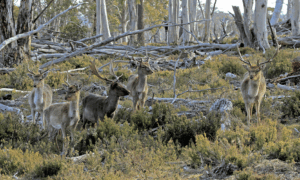
Feral fallow deer are a textbook case. They might make recreational sport for some, but in some places, they destroy forests, smash fences, cause car accidents and displace native animals and plants.
In some areas of the central highlands, deer are eating and killing every single seedling, preventing forests from regenerating. Without intervention, it is estimated that their population could skyrocket to a million by 2050. We’ve seen on the mainland how bad it can get. We can’t let this happen here.
Being an island state gives us a unique edge. On the mainland, feral species have spread so far that full control is often impossible. But in Tasmania – particularly on our many offshore islands – we still have opportunities to act and stop the next wave of extinction.
That’s not about going back to a pre-colonial ideal. It’s about doing what we can, now, to protect what’s left.
In the context of feral deer, cats, rabbits and many of the other invasive species Tasmania is grappling with, statewide eradication is not currently possible. But what we can do is eradicate outlying, isolated populations of invasives like feral deer and cats, especially in places rich with native plants and animals, like the Freycinet Peninsula.
We can use our many offshore islands, like Bruny Island and Lungtalanana/Clarke Island to build feral-free safe havens – places where bandicoots, quolls and bettongs can still thrive.
We can keep feral deer out of Tasmania’s Wilderness World Heritage Area and we can start to reduce deer numbers and impact in the midlands, where their impact is becoming untenable for farmers.
We can increase resources for strategic, targeted and long-term control programs, an approach based on the evidence of what works and what doesn’t work to protect our precious places.
That is good conservation. And this important work is backed by environment and farming groups, by regional communities living with the impacts and by Traditional Owners who recognise that vital intervention is needed to protect species found nowhere else on Earth.
Science should always guide our decisions and when the science shows an introduced species is actively having a negative impact on the native species around it, or is likely to if we dont prevent it spreading, that’s the basis for management – not emotion and definitely not nostalgia.
We’ll never return to a world untouched by the invasive species we have introduced to Tasmania. But we can choose to make sure we preserve the native species we do have left. And in some instances, that means choosing between introduced or native species.
If we don’t act, there is a very real risk that we’ll lose even more of the things that truly make Tasmania special.
Dr Tiana Pirtle is a Conservation Officer working for the Invasive Species Council.
Tasmanian Times (TT) is a community-based news and current affairs service covering the island state of Tasmania. It exists to provide a diverse view of Tasmanian issues. TT creates and supports independent media content utilising the best of modern technologies and tried-and-true practices of public-interest journalism.
Support us in expanding our coverage and developing new content by and for Tasmanians.
New initiatives on the way include:
- a weekly podcast covering current affairs
- a revamped website
- a monthly cartoon competition
- a user-friendly app for both Android and Apple devices
- a weekly roundup of key stories