Statement – Department of Agriculture, Fisheries and Forestry, 29 January 2024
Update, 29 January 2024: MV Bahijah livestock vessel
After considering information provided by the exporter, a decision was made on 20 January 2024 to direct the consignment of livestock on board the MV Bahijah be immediately returned to Australia.
This was in recognition of the exceptional circumstances and taking into account animal welfare considerations.
The department has been working closely with the exporter to determine next steps for the consignment once it returned to Australian waters.
These are high quality Australian animals; however, they would be subject to strict biosecurity controls while in Australia.
Protecting Australia’s strong biosecurity system and the welfare of the livestock on board remain the department’s top priorities.
The department has been working with the exporter to determine the options available to them, consistent with legislative and regulatory responsibilities and taking into account the unique circumstances of the vessel.
It is not appropriate for the department to comment publicly on these assessments until they are completed.
Further updates will be provided as they become available.
For further background on the shipment please see previous statement published on 19 January 2024: www.agriculture.gov.au/about/news/mv-bahijah-livestock-export-middle-east

Media release – Independent Member for Clark, Andrew Wilkie, 31 January 2024
SICK LIVE EXPORT INDUSTRY GOES FROM BAD TO WORSE
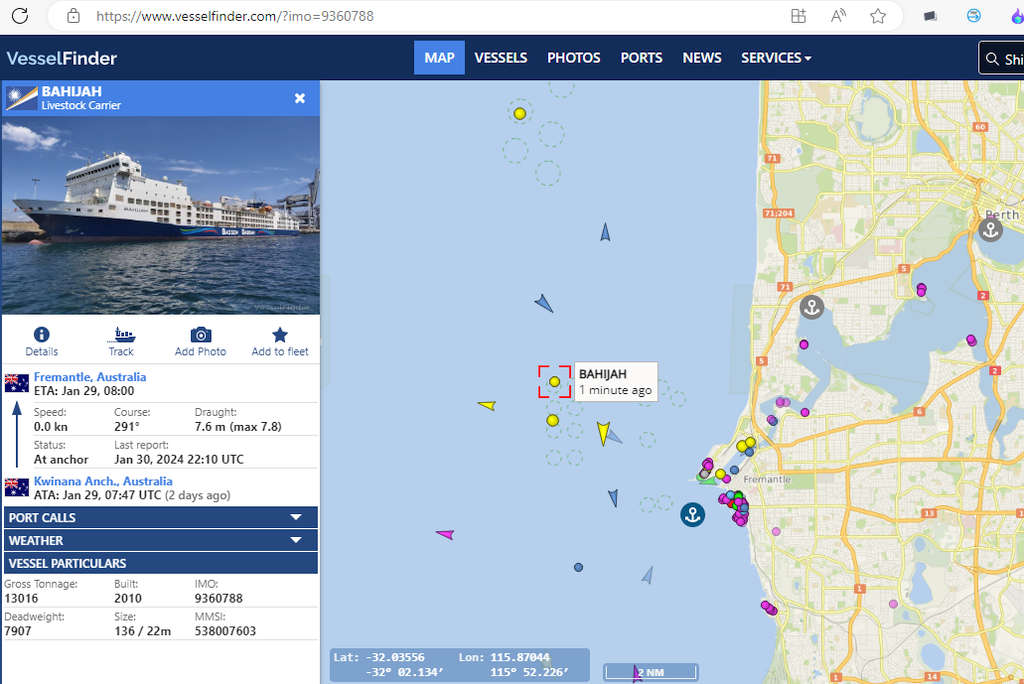
“The barbaric and ruthless nature of the live export industry has been put on show again with the whole MV Bahijah fiasco,” Mr Wilkie said. “The vessel is currently stuck in limbo off Western Australia carrying thousands of sheep and cattle that have endured weeks of inhumane conditions after being sent back to Australia from the Red Sea due to security concerns. I don’t doubt these animals would have suffered from extreme heat stress, motion sickness and exhaustion, and were very likely standing in their own waste since the journey commenced on 5 January.
“Moreover, as a likely Houthi target, the exporter, Dabbagh Shipping, should have never been granted a permit to begin with. This decision by the regulator is completely inexcusable. Now the Bahijah is sitting off Western Australia during a heatwave with poor ventilation and the animals are not allowed off because they’re now considered a biosecurity risk. What a disaster.
“If the industry was to have its way, the animals would be re-exported to the same market at even longer distance around the Cape of Good Hope with no consideration given to the welfare of the animals. The fact that these poor animals face the very real possibility of having to endure another gruelling journey is unconscionable and undermines any considerations of these animals’ welfare.
“To ensure another debacle like this doesn’t happen again, there must be a suspension of all shipments to the Red Sea until the conflict in the region is over. Moreover the Federal Government must commit to a timeline for their phase out of live sheep exports, with a view to legislating an end date as quickly as possible. There is little community support for this vile industry and it’s beyond time to ban the live animal export trade outright, because the only way to end the cruelty is to end the trade.”
Featured image courtesy vesselfinder.com.