Sink or swim. They’re the alternatives facing small scale producers in today’s super-saturated wine market.
The world is awash with billions of litres of surplus wine. And with around 2,500 producers doing business here in Australia, many need only look over the fence to see their key market competitors.
It doesn’t help when large companies account for 65 percent of all domestic wine sales. That leaves more than 2000 wine companies – including all those in Tasmania – competing for that precious 35 percent market segment.
It’s little wonder few consumers know much at all about local small fry like Cape Bernier Vineyard. That’s a pity. Wine quality from the 4ha site on Tasmania’s southeast coast is riding waves of success after the period of consolidation that followed its purchase in late 2014. The 2019 Rosé and 2017 Pinot Noir were awarded silver medals in highly competitive classes at the 2020 Tasmanian Wine Show, while the 2017 Chardonnay won silver at the previous event.
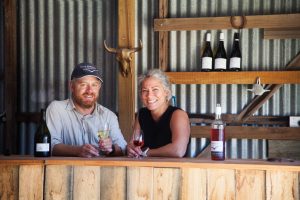
Cape Bernier’s Andrew and Jenny Sinclair. Image supplied.
Vineyard owners Jenny and Andrew Sinclair moved from Sydney to Bream Creek in an attempt to escape the rat-race of day-to-day living in Australia’s largest city.
“The real driver of getting into the Tasmanian wine industry was just wanting to get out of Sydney and going somewhere else in the country where we could enjoy life while maintaining our existing work arrangements,” Andrew explains.
“We considered all sorts of opportunities – including having a market garden and raising pigs – but we loved what we found here. We discovered the vineyard was for sale while visiting friends in the state. It’s a stunning location.”
“We had already identified a set of business criteria that needed satisfying,” Jenny continues.
“We wanted something in a semi-rural setting that was close to an airport. We also needed enough land to allow us to develop a business that would provide a living once we had retired from our busy professional lives.
What we didn’t take into account is how much worked is involved. It’s certainly more than just a hobby vineyard.”
Indeed, it’s not.
The site was a former dairy farm, located on the slopes of Bream Creek’s Ragged Tier, when vineyard founder Dr Alastair Christie planted it with a mix of grape varieties back in 1998.
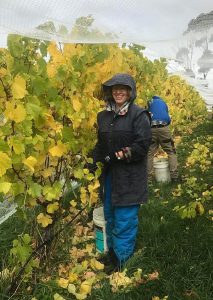
Chardonnay harvest, 2017. Image supplied.
Like the Sinclairs, Christie had moved to the sunny, east coast property primarily for lifestyle reasons. The former government policy adviser and strategy consultant claimed he wasn’t even a gardener when he first took up viticulture. But that didn’t stop him from turning an acknowledged ‘romantic dream’ into an industry showpiece as the winner of the 2010 Tasmanian Vineyard of the Year award.
The Sinclairs have similar aspirations. And like their vineyard’s creator, they intend to take their journey into viticulture one step at a time. Right now, the couple have employment resumés that clearly identify them as over-achievers.
Jenny Sinclair has an honours degree from the University of Texas and a PhD in biological sciences from Sydney’s Macquarie University. As Chief Scientist and Head of Research & Technical at GreenCollar, Australia’s largest environmental markets investor and project developer, her current focus is improving water quality in the Great Barrier Reef’s vast catchment area.
Andrew, meanwhile, is an IT professional, specialising in the development of cloud-based video software. The vineyard purchase coincided with his appointment as principal software engineer at Brightcove. The US-based company is an acknowledged world leader in online video hosting and online video player solutions. For a brief moment, a move to San Francisco seemed much more likely than a journey south to Tasmania.
“When we first came down, we only had ADSL coverage, so we had to install our own high-speed microwave link before NBN connection became available in the district,” Andrew recalls.
“Running the vineyard fits in well with my other work arrangements. We employ people for major undertakings like picking and pruning. Living on the property allows me to get out into the vineyard each day. Working across international time zones means I usually have my meetings out of the way by 9:00am. I then let the dogs out and go for a walk to see what needs doing and keep a close eye on everything.
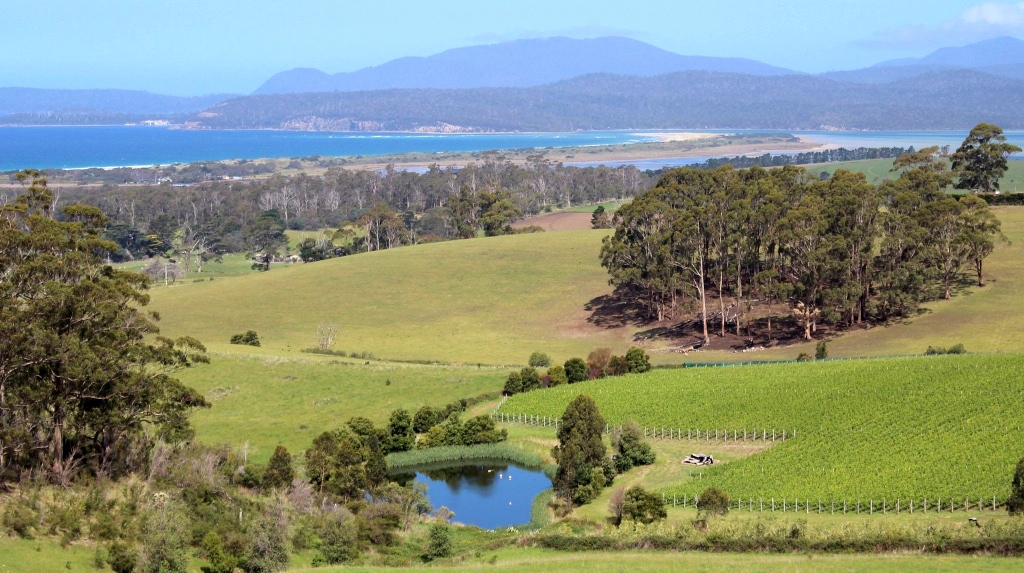
Summer sun on the Cape Bernier vines. Image supplied.
“Our Sydney friends thought we’d only last a year or so and we’d move back there. But it’s been great. Sure, there are challenges, but we’ve learnt so much already. People in the industry here are all so helpful and friendly. Our winemaker Alain Rousseau is very practical and to the point. We also have Fred Peacock just down the road. We’d often give him a call in the early days here.
“Our goal now is to develop a strong retail business. We’d been doing regular live music events up until March, and a lot of visitors were developing a real affinity with our brand. With the COVID-19 pandemic, all that’s changed. We’re really working hard now to renovate our cellar door, ready for better weather in a few months. This is a passionate, labour-of-love industry. But done right, you can survive and prosper.”
New Wine Companion
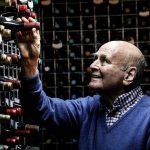 It’s been 25 years since internationally recognised writer and critic James Halliday AM won the Maurice O’Shea Award for outstanding contribution to the Australian wine industry. A fitting acknowledgment of a career spanning three decades, it seemed at the time Halliday’s prestigious 1995 award might prompt the country’s most prolific wine commentator to begin winding back his writing commitments. He couldn’t be expected to keep up his frenetic pace, criss-crossing the wine world for much longer, could he?
Take a look at the 2020 edition of the Halliday Wine Companion (Hardie Grant) and you soon understand why acclaimed Tasmanian producers – like House of Arras, Meadowbank and Shy Susan – are glad the author decided not to rest on his critic’s laurels all those years ago.
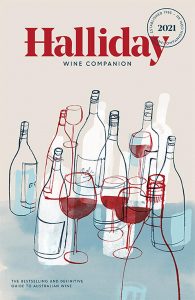 The coming week has been set aside for the online release of the 2021 edition of the trusty consumer guide to Australian wine. Normally a ticket-only gala event held alongside a grand degustation dinner, this year’s annual Halliday Wine Companion awards are being live streamed on Wednesday 5 August from 8:00PM AEST.
Key category awards include Winery of the Year, Winemaker of the Year, Wine of the Year, Dark Horse Winery of the Year and Best New Winery. A bevy of other awards – including Best Riesling, Best Chardonnay, Best Pinot Noir and Best Sparkling Wine – provide ample opportunities for Tasmanian wine producers to shine.
With more than 8,775 samples being tasted for the 2020 edition, it’s little wonder all wine assessments for the Halliday Wine Companion these days are carried out by a panel of six highly accomplished tasters, including the man from Coldstream Hills. Wednesday’s live stream event should help many consumers add faces to that fortunate half-dozen.
Hobart’s Mark Smith wrote his first weekly wine column back in 1994. Now more than 1700 features and 25 years later, he continues to chart the successes of Tasmania’s small scale, cool climate wine industry with regular contributions to some of Australia’s leading industry publications.
PICK OF THE CROP
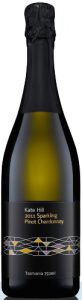 Mark gives you his honest opinions about the best wines available right now from Tasmania’s wine makers.
2011 Kate Hill Pinot Noir Chardonnay $45
Charles and Kate Hill’s Four Winds Vineyard and cellar door are located on Dowlings Road, just a few kilometres outside Huonville in Tasmania’s Huon Valley. It’s the first really visible sign of a successful family business that began almost 15 years ago. Wines like this late-disgorged sparkling suggest the couple deserve to be better known. It’s a lovely dry aperitif style, displaying the vibrancy expected of its cool climate origins. A neatly constructed, smooth mid-palate is improving with age. Drink or cellar 2-3 years. www.katehillwines.com.au
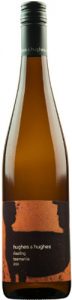
2019 Hughes & Hughes Riesling $30
Based at Flowerpot in Tasmania’s D’Entrecasteaux Channel, south of Hobart, winemaker Jonny Hughes is a man on a mission. Acclaimed as Australia’s Best New Winery in the 2019 Halliday Wine Companion, his Mewstone portfolio of estate-grown wines also features some impressive Hughes and Hughes products made from purchased fruit. This blend of Derwent, Coal River and North-West Riesling has a distinct Germanic feel, albeit in full bodied form. Rich lime/citrus characters are highlighted by a touch of sweetness and fine balancing acidity. Clever and delicious. www.mewstonewines.com.au
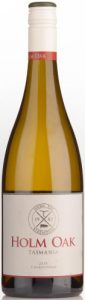
2018 Holm Oak Chardonnay $35
Holm Oak’s Rebecca Duffy is no stranger to Chardonnay. Long before she moved to northern Tasmania, the former King Islander spent 5 years honing her Chardonnay craft at Capel Vale in WA. This elegant, barrel-fermented beauty from the warm 2018 vintage in the Tamar Valley has great depth of flavour. Quality French oak is used sensitively to showcase complex winemaking skill, without disturbing the wine’s intrinsic freshness and regional citrus/tropical fruit characters. Grilled hazelnut and honey nuances add interest, enabling it to be roast pork-ready right now. www.holmoakvineyards.com.au
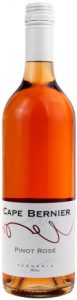
2019 Cape Bernier Pinot Rosé $30
This former Tasmanian Vineyard of the Year is located in one of the State’s coolest wine-growing districts. Owners Andrew and Jenny Sinclair are determined their Bream Creek site should produce wines that are cool by nature, too, perfectly suited to modern living. Contract winemaker Alain Rousseau has done a fine job crafting this attractive dry wine. It opens with plenty of berry, almost confectionary aromas. What follows is a more restrained and serious rendition of the popular style, with a bit of grip and bright acidity controlling the wine’s finish. It works a treat with smoked salmon. www.capebernier.com.au
ADVERTISEMENT – ADVERTISEMENT – ADVERTISEMENT