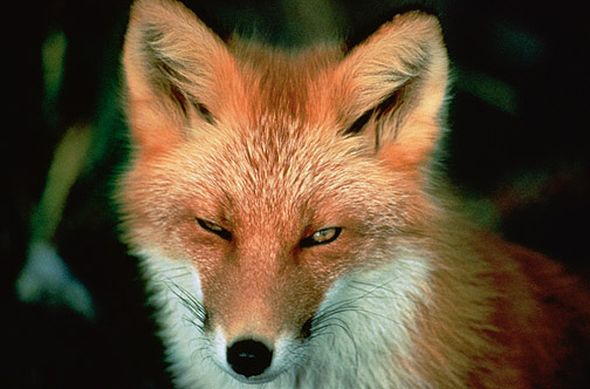

Was the Tasmanian ‘false fox’ program based on an already successful business model?
There is a case to be made that what became a A$50 million enterprise based on non–existent foxes could have been based on New Zealand practice.
In what looks like a parallel situation, we now have the evidence that New Zealand has – for around 45 years – been running a similar program based on little more than a hunch that possum caused TB in cattle.
The only real differences seems to be that where the Tasmanian exercise cost $50 million and was stopped, New Zealand has probably spent well over a $billion, and is still going.
In New Zealand it started with infected possum being found where there was an outbreak of TB in cattle near Westport in the late 1960’s. Without ever formally establishing any epidemiological link, it seems some civil servants got some money from the Ministry of Agriculture.
Over time it seems a circle of bureaucrats grew within a growth program in the ministries bureaucracy. In 1993, it became an independent entity , the Animal Health Board (AHB), set up as an Incorporated Society to carry out the National Pest Management Plan (NPMP) for bovine TB using powers granted it by the 1993 Bio-Security Act.
In 2013 the AHB morphed into OSPRI. Its mission statement is “To protect and enhance the reputation of New Zealand’s primary industries”. It is set up as a limited liability company and is a registered charity!
OSPRI’s CEO, Michelle Edge, has bold visions for making a greater contribution to New Zealand agriculture, as well as exciting opportunities for OSPRI’s two wholly-owned subsidiaries which includes TBfree New Zealand.
“There’s also a range of business development prospects on the horizon,” she has claimed.
This bold and exciting business development programme is being run by a company with an $80million annual turnover which is based upon a simple assumption. That is, TB-infected possum spread TB to cattle. Even from the first discovery of TB in possum near Westport, the default position has always been that it is possum that have infected the cattle and never the other way round. In a move to support that, TBFree have offered as “proof” the following:-
http://www.tbfree.org.nz/how-bovine-tb-is-transmitted-from-possums-to-cattle.aspx
As proof, we are offered the vague wording … “but the link between possum and cattle was not proved until 1971. Initially the route of transmission was thought to be via TB pus on pasture but it was later shown direct contact was needed. As this video shows, cows are capable of contact with possums.” And “Naturally inquisitive cows will nuzzle lethargic possums and potentially become infected.” The wording “capable” and “potentially” are no more than conjecture! There is not a shred of “proof” in the whole document that possum pass TB to cattle.
The included video shows two sedated-looking possum blundering amongst a herd of cattle. They are being licked and in otherwise close contact with the animals. As one possum definitely looks to be tethered, a reasonable person would suspect a staged event.
Questions in the house from New Zealand First MP, Richard Prosser have raised doubts about the transmission of disease from possum to cattle.
The first, in May 2015, the Minister of Primary Industries, advised that levels of TB in possum were minimal. Of 124, 213 possum autopsied over 10 years, only 54 infected animals were found, i.e., around 0.04%. As there was clearly almost no TB in possum, they would be an unlikely source of disease in cattle.
A second question by MP Richard Prosser to the Minister drew the following reply … “I am advised that OSPRI does not collect information about the likely source of infection for individual animals found with TB. When a newly-infected herd is identified, the likely source of infection is determined through a veterinarian’s epidemiological investigation. However, the scientific uncertainties associated with determining the source of infection at the individual animal level and the resource required to do so mean that it is not considered an efficient use of time and resources to routinely make such a determination. This response also answers 07406 (2015) and 07407 (2015)”.
The Minister makes it quite clear that there is no epidemiological evidence whatsoever linking TB in possum to TB in cattle and what is more, they are not looking for it! The word “likely” is only opinion; it is not verifiable evidence of any transmission of disease from possum to cattle.
As OSPRI is still conducting email campaigns claiming that nearly half of all TB infections in cattle are caused by possum, I lodged a complaint with the Advertising Standards Authority (ASA). That was finally upheld on appeal (Appeal No 16/116). OSPRI’s claim that possum are a significant cause of TB in cattle has been disallowed, but as it is not enforceable in law, OSPRI is continuing to make their claims and say they will continue to do so in defiance of the ruling.
In the preparation of the appeal, it was also discovered that OSPRI’s science provider, Landcare Research, has for years been secretly liberating large numbers of deliberately infected possum in the wild.
New Zealand is a member country to the Office International des Epizootes (OIE) which is an affiliate to the UN and it is the world standard accepted by the World Trade Organisation (WTO) for international trade in livestock products. The world standard for a country to declare “TB free” is 0.2% for TB-infected herds and 0.1% for infected cattle.
Figures obtained by MP Richard Prosser’s office showed New Zealand rates of TB infection in cattle were slight, i.e. 0.0019% average over the past nine years. It is so far below the 0.1% required by world standards for a TB-free declaration – that New Zealand must be one of the world’s most TB-free countries. By world standards, even possum are TB free!
At this level of detectable disease, the OIE suggests, a trace back on any infected animals turning up at the works is all that is required. This can be addressed locally. The millions of dollars being spent annually through costly herd-testing programs using unreliable tests are totally unnecessary. These programs have resulted in many thousands of otherwise healthy animals being slaughtered as well as millions spent on mass poisoning the landscape to eradicate disease-free wildlife.
Instead of celebrating their success, OSPRI conceals it. In releasing its future plans, it advises that it has achieved further funding from the Minister of Primary Industries with which it intends to continue its expensive program to “eradicate” TB from TB-free livestock by 2026 and from wildlife by 2040. Having by now eradicated everything, it then intends to continue its program of poisoning the land for another 15 years to 2055. At some point, a reasonable person has the right to ask “Just what is going on here?”
The pointer is a response by OSPRI spokesman Nick Hancox in the New Zealand Farmer of 22/8/16. Here he claims that eradication doesn’t mean 0.2% or any other low infection rate in cows or possum, “it means zero, zilch, none.”
What zero means is the impossible dream. It is like “infinity” – where is infinity? Where is zero? Like infinity, how do know you’ve reached it? Do you have to go on forever, even after 2055, seeking a holy grail of zero, which is what Hancox is suggesting. More cynically, is what OSPRI wants is jobs for years, paid for by taxpayers and farmer levies? If that is its ploy, I think sooner or later, farmers and taxpayers are going to see through this and want it stopped …
*Bill Benfield comes from Christchurch, New Zealand. After a misspent youth fly fishing, exploring the mountains and rivers as well as travelling round the South Island, he settled down and studied architecture. After graduating, he left to see the world, ending up working in both Australia and the UK. On his return to New Zealand in 1974, he was alarmed at the pace of development that was occurring without any thought to the long-term planning or the consequences. He joined with others, and was involved with several major campaigns of the time, including the hearings on nuclear energy and the case brought against the Wellington City Council and the BNZ over the consents given for the BNZ tower. After setting up an architectural practice, Bill along with his wife Sue Delamare established a small vineyard and winery back in the mid 1980’s. In a time of flux in the industry, they set up using traditional French and Italian practices. Not only were the wines successful, but the winery was awarded a Ballance Farm Environment Award for sustainability in 2005. In the last 10 years, Bill has had more time to devote to environmental concerns, such as appearing at the ERMA hearings on the use of 1080 poison in 2007. He has also written the books, “The Third Wave” and “At War with Nature”, both published by Tross Publishing of Wellington.
• Ian Rist in Comments: What a sad indictment on Tasmania this fox saga is…politicians of all colors are turning a blind eye to all of this. Too many in too deep and we don’t want any egg on our faces.When I was working ‘at the coal face’ all those years ago I raised issues of evidence fabrication and evidence tampering with Liberals, Labor and The Greens, no-one wanted to know. I was aware in 2008 fox scats were coming into the State by the Eski full but when I raised the issue at the 2009 PAC Foxes Inquiry I was ridiculed, laughed at and it was suggested I was smokin’ something to suggest such a thing could be happening. In the few months leading up to the PAC fox Inquiry in 2009 Dr Tony Peacock from The Canberra based Invasive Animals CRC wrote many letters to the Tasmanian papers, especially my hometown paper ‘The Advocate’ and tried to destroy my fox knowledge credibility before the upcoming Inquiry. I am pleased I kept the letters because now in the light of recent events this person has put themselves in a difficult situation. Peacock also had supporters down this end of the Island …
• David Obendorf in Comments: The former CEO of the Invasive Animals CRC had a conflict of interest in my opinion. He became a critical influencer and lobbyist for a unsubstantiated claim that foxes were in Tasmania and simultaneously the organisation he headed became a substantial beneficiary of the government funds that followed. If nothing else is achieved, a thorough scientific and administrative review of this single program should recognise the need for reform in the governance the provision of vast amounts of public funds spent over long periods of time. Increasing the efficiency, cost-effectiveness and scientific credibility of such undertakings must be learnt out of this fiasco …