
The wine industry welcomes all manner of people into its fold – the dreamer and dilettante; the dogged and dynamic.
When New Zealand-born Samantha Connew first entered university in the early 1990s, her goal was a double degree in Arts and Law. Switching career paths some years later to take on a postgraduate Diploma of Viticulture and Oenology was probably furthest from her mind.
But Connew is an optimist, ever willing to follow hunches and chart her own course in life.
It’s just as well. This state’s small scale, cool climate wine industry would be much the poorer without the talented Stargazer winemaker who now calls Tasmania home.
“I’ve never even worked a New Zealand vintage, despite being born in Blenheim and seeing it become the epicentre of Marlborough’s wine industry,” Connew says.
“I’m really passionate about producing great Pinot Noir, Chardonnay and Riesling. Tasmania is the only place in Australia that can do really well with all three varieties, so it’s become the perfect home for me.”
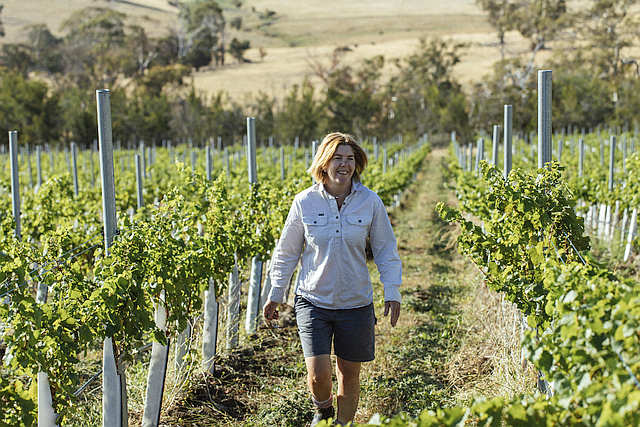
Winemaker of the Year nominee Samantha Connew.
Image courtesy Wine Australia.
Five years have slipped by since Connew purchased her Palisander Vineyard at Tea Tree, 30km north of Hobart. Hardly any time at all to become acclimatised to a new wine venture in the Coal River Valley.
Time enough, though, to attract the attention of critics, both here and abroad, not to mention a small but growing number of adoring fans for her Stargazer portfolio.
Last August, Connew’s 2019 Tupelo sold out almost overnight when it was named Best Other White and Blend in the 2021 Halliday Wine Companion Awards.
That same month, Connew was named among three finalists in the 2020 ASVO Winemaker of the Year Awards.
Fast forward to June 2021 and we find Connew is among the first four finalists announced in the Gourmet Traveller WINE Winemaker of the Year competition.
Other 2021 award nominees include Matt Harrop (Curly Flat), Sue Bell (Bellwether) and John Hughes (Rieslingfreak). The leading food, wine and travel publication will complete its shortlist of eight talented Australian winemakers in a forthcoming issue before its major announcements are made in early October.
Last year’s award finalists included Tasmania’s Peter Dredge, winemaker for Dr Edge and Meadowbank Wines.
Renowned Clare Valley Riesling specialist Jeffrey Grosset won the inaugural Gourmet Traveller WINE Winemaker of the Year way back in 1998.
Tasmania’s cool climate winemaking endeavours were first recognised more than a decade later when House of Arras incumbent Ed Carr became Winemaker of the Year 2011.

The publication’s 2019 award went to Jim Chatto, owner/winemaker of Chatto Wines in Tasmania’s Huon Valley. Mewstone winemaker Jonny Hughes, meanwhile, did double duty for the Huon/Channel district as Gourmet Traveller WINE’s Young Winemaker of the Year 2019.
Other recipients of the Young Winemaker of the Year award have included Fran Austin of Delamere Vineyard (in 2005) and Glaetzer-Dixon Family Winemakers principal Nick Glaetzer (in 2011).
When Gourmet Traveller WINE added Viticulturist of the Year to its list of industry plaudits in 2013, Tasmania did not have to wait long for a local hero to receive national recognition. That came in 2018, with Bream Creek Vineyard’s Fred Peacock.
“Sam Connew seems to have been pretty much everywhere and done everything to get to her tiny, 3ha Tasmanian vineyard,” observed Gourmet Traveller WINE contributor Peter Forrestal.
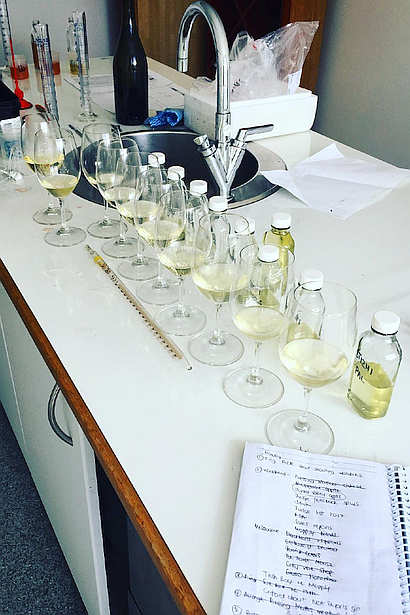
Stargazer Chardonnay lab samples. Image supplied.
“She chose her overseas experience carefully to give her a firm grounding in cutting-edge winemaking: Elk Cove and Beaux Frères (Oregon), Firriato Winery (Sicily), Telmo Rodríguez (in Rueda and Galicia), as well as prestigious local heroes, Cape Mentelle and Brokenwood.
“The name (Stargazer) is an evocative tribute to the voyaging of Abel Tasman and Connew’s attraction to the local lifestyle, living in the exuberant and emerging metropolis of Hobart with a vineyard just 30 minutes from home.
“It’s a stunning portfolio: like no other in the country.”
Readers with an eye for detail may have noticed another Tasmanian connection among the current list of Gourmet Traveller WINE nominees – Bellwether’s Sue Bell.
Currently chair of judges at the Royal Hobart Wine Show, the Coonawarra-based winemaker has been a staunch supporter of the Tasmanian wine industry since creating her Bellwether brand in 2008.
In 2009, Bell began a very productive, long-term arrangement to purchase small parcels of Chardonnay and Riesling from Relbia wine producers Bundaleera Vineyard. More than a decade later, the 2014 ASVO Winemaker of the Year continues to champion the Tamar Valley and those same varieties in her Bellwether portfolio.
Like Connew, Bell is a consummate wine professional who also changed career paths. She began her tertiary studies at the age of 16 but switched from engineering to oenology (wine science) after taking a 12-month break from university.
Bell’s passion for cool climate Chardonnay has its roots in the heady years of the late 1990s when she was an assistant winemaker in the high-profile Penfolds Yattarna project.
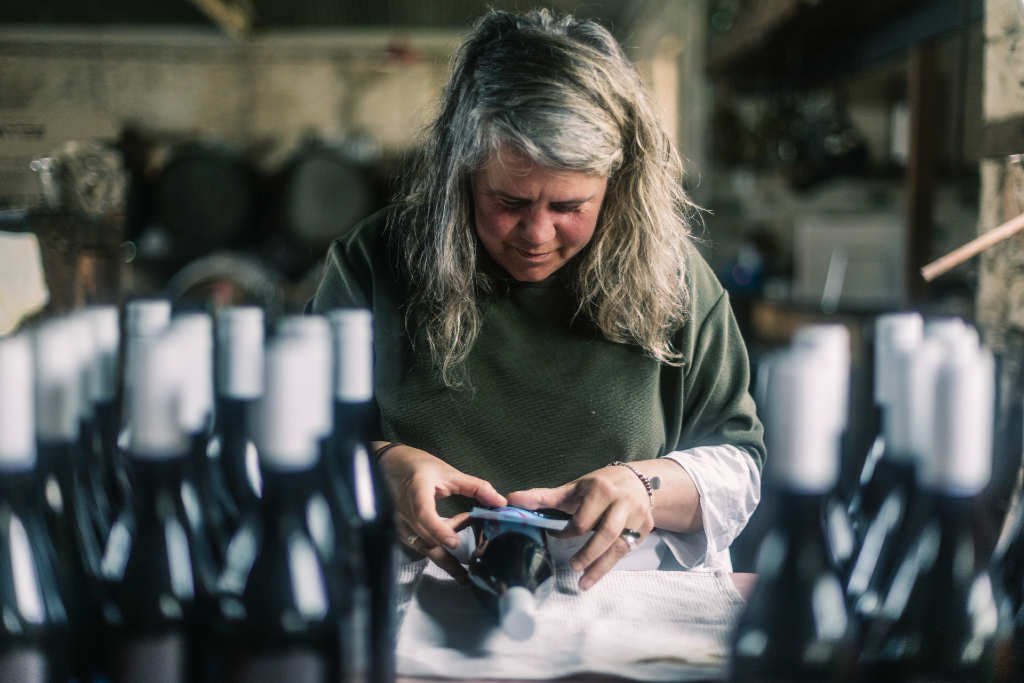
Winemaker of the Year nominee Sue Bell. Image courtesy Wine Australia.
From September 1999 to September 2008, Bell helped put Padthaway on the wine map during a highly successful stint as manager/senior winemaker at the 12,000-tonne Stonehaven Winery, owned by BRL Hardy and its Constellation Wines iteration.
“When I worked with Hardys and Penfolds, I saw fruit from everywhere, especially whites from the cold climates,” Bell recalls.
“I really love Tasmania. My focus is always on getting excellent fruit from small growers that enjoy being part of a close working relationship. My first Bellwether wines were a 2006 Coonawarra Cabernet and a 2009 Tasmanian Chardonnay.
“Tassie’s climate is just super for Riesling.
“Generally speaking, I think the mainland has become a bit too hot for Riesling. In any case, I’ve always thought Tassie was the ideal place for aromatic Germanic varieties.”
Climate change may well be a reality but Bell reckons being successful in growing grapes and making wine isn’t simply a matter of attuning your senses to the vagaries of the weather.
Indeed, she sees the irony that comes with having turned her back on soil science and engineering to become a cool climate winemaker in two regions of Australia that have distinctive and truly unique geological history.
“That puts everything into perspective,” Bell admits.
“You need to respect the ground from which you grow grapes and make wine. And with soil profiles and rock formations dating back over tens of millions of years, vintage variation and your own personal impact pale into insignificance.”

Hobart’s Mark Smith wrote his first weekly wine column back in 1994. Now more than 1700 features and 25 years later, he continues to chart the successes of Tasmania’s small scale, cool climate wine industry with regular contributions to some of Australia’s leading industry publications.
Tasmanian Times exists to amplify your voice
Please support our crowdfunding campaign to
rejuvenate independent media in Tasmania!
PICK OF THE CROP
Mark gives you his honest opinions about the best wines available right now from Tasmania’s wine makers.

NV Ninth Island Sparkling Rosé $25
Christmas and New Year may have gone, but Australians continue to revel in their passion for Rosé. Indeed, dry styles are definitely on trend for still and sparkling styles. This non-vintage release from Ninth Island is not only a very smooth and refined bubby, Champagne and sparkling wine expert Tyson Stelzer calls it ‘the smartest bargain sparkling Rosé.’ Its subtle red berry fruit has a distinct floral/rose petal dimension, thanks to the blend’s Pinot dominance. Fine natural acidity enables it to drink well, with or without food. Generous pricing is occasionally discounted by retailers. www.kreglingerwineestates.com
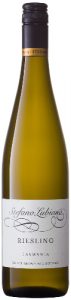
2019 Stefano Lubiana Riesling $33
Winemaking is a process of constant re-invention for Steve and Monique Lubiana. Best known for their stylish bottle-fermented sparkling wines, the couple have produced top notch Rieslings since the mid-1990s. Changes to viticulture and winemaking over the years – including biodynamic management – result in today’s wines seeming far removed from those of the past. The 2019 is a very attractive and rather youthful current release – juicy/limey, with engaging freshness and length of flavour. Residual sugar is low by modern standards but nicely matched to lingering natural acidity. www.slw.com.au
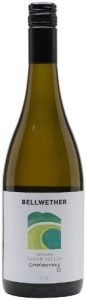
2015 Bellwether Tamar Valley Chardonnay $N/A
Like former Hardys colleague Ed Carr, Sue Bell is captivated by the way in which wines from well-managed Tasmanian sites evolve over time. This classy, barrel-fermented white featured among the best wines this columnist tasted in 2020. Sourced from Relbia, outside Launceston, it displays the richness that helps define this surprisingly warm, dry sub-region south of the Tamar Valley. At five years of age, there’s a sense of Old World meets New World, courtesy of a clear citrus and white peach thread woven into its French oak structure. This is a lovely Tasmanian Chardonnay approaching maturity. www.bellwetherwines.com.au
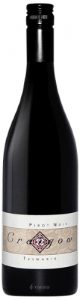
2020 Craigow Pinot Noir $50
Barry and Cathy Edwards’s historic property of Craigow lies on the top side of Richmond Road, not far from Cambridge in the Coal River Valley. Pinot Noir was first planted on the sunny and relatively dry site back in 1987 and it’s those 33-year-old vines that contribute to the surprising intensity of this new release. Significant reworking of vine architecture has resulted in a very contemporary expression of Pinot Noir with great charm and considerable refinement. Look for red cherry fruit, a hint of plum and nuanced oak in this light-bodied and very elegant dry red. Encore! www.craigow.com.au
ADVERTISEMENT – ADVERTISEMENT – ADVERTISEMENT