
The arrival of rotting salmon carcasses at Verona Sands on Christmas Day mirrors a similar environmental crisis that devastated the local community twelve months ago. Last summer, the Huon River shoreline was marred by dead fish, raising serious questions about industry transparency and the impact of industrial farming on public beaches.
Neighbours of Fish Farming Vice President Lisa Litjens labelled the recurrence an insult to the seaside environment. Litjens noted that residents are increasingly concerned about antibiotics in the water and the safety of their children. The discovery of entrails and fish flesh by local Dan Broun has intensified calls for Premier Rockliff to intervene.
The organisation is demanding that multinational companies Huon Aquaculture and Tassal be held accountable. Litjens argued that industrial salmon farms must be transitioned out of sheltered waterways to prevent further damage to the region.
 Media release – Lisa Litjens, Vice President, Neighbours of Fish Farming 25 December 2025
Salmon Industry and Government’s Christmas Present to Verona Sands
NOFF Demands Action on Yet Another Summer of Disease and Antibiotics!
The dreaded news of yet more dead salmon washing up on Verona Sands beach, on the shores of the Huon River, Tasmania, is the most unwelcome Christmas present for locals—the same community who endured last summer’s debacle. Locals turned up at Verona Sands for a Christmas swim this morning only to discover whole and rotting salmon carcasses along the beach.
“Not only is this disgusting and dangerous for local communities, it will do enormous damage to Brand Tasmania, the island’s tourist industry, and the right of locals to enjoy their own beach,”
said Lisa Litjens, Vice President of Neighbours of Fish Farming.
“Industry spin and advertorials only seek to hide the ugly truth. We call on Premier Rockliff to come down immediately to fix up this mess, for good.” Litjens said.
“Southern Tasmanians have to live with this ongoing insult to our seaside environment, and the foreign-owned, non-tax-paying industrial salmon industry doesn’t give a damn and nor are they held accountable,” said Litjens.
“Locals have been dreading this for some time. With tonnes of antibiotics being dumped in our pristine seaside environment, many locals have stopped swimming and are worried about their children going near the water.”
“Thousands of Tasmanians feel abandoned by the state and federal governments. We want open transparency from multinational fish farming companies Huon Aquaculture and Tassal about diseased and dead salmon. We want action now! Industrial salmon farms must be transitioned promptly out of our sheltered and shallow waterways, as recommended by the Fin Fish Inquiry several years ago.”
“I found a dozen or so sets of salmon entrails and then noticed hundreds of tiny pieces of fish flesh on the high tide mark,” said local Dan Broun, “It’s so disgusting.”
“It’s just so distressing to see this happening again, the people of the Huon and Channel used to live in a paradise but it’s being trashed by these awful salmon farms.”
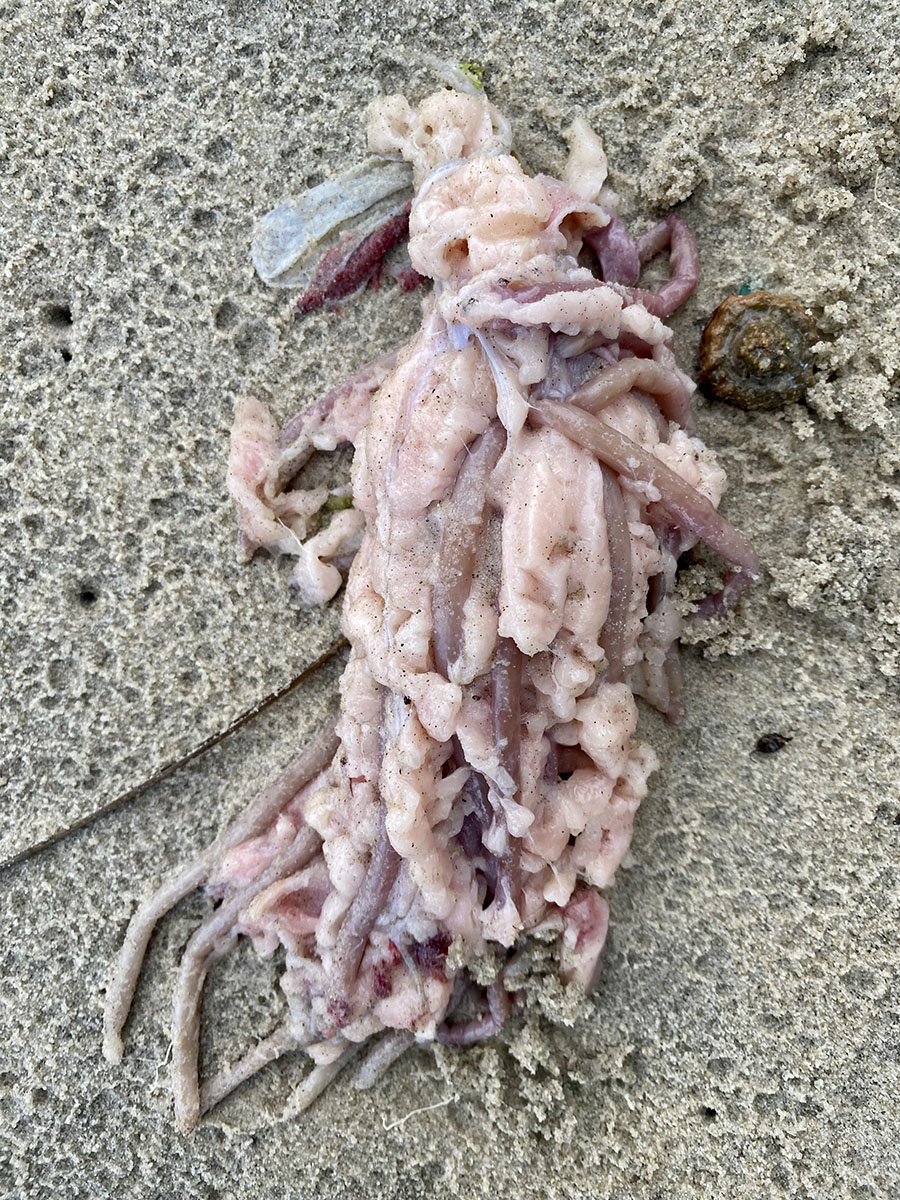
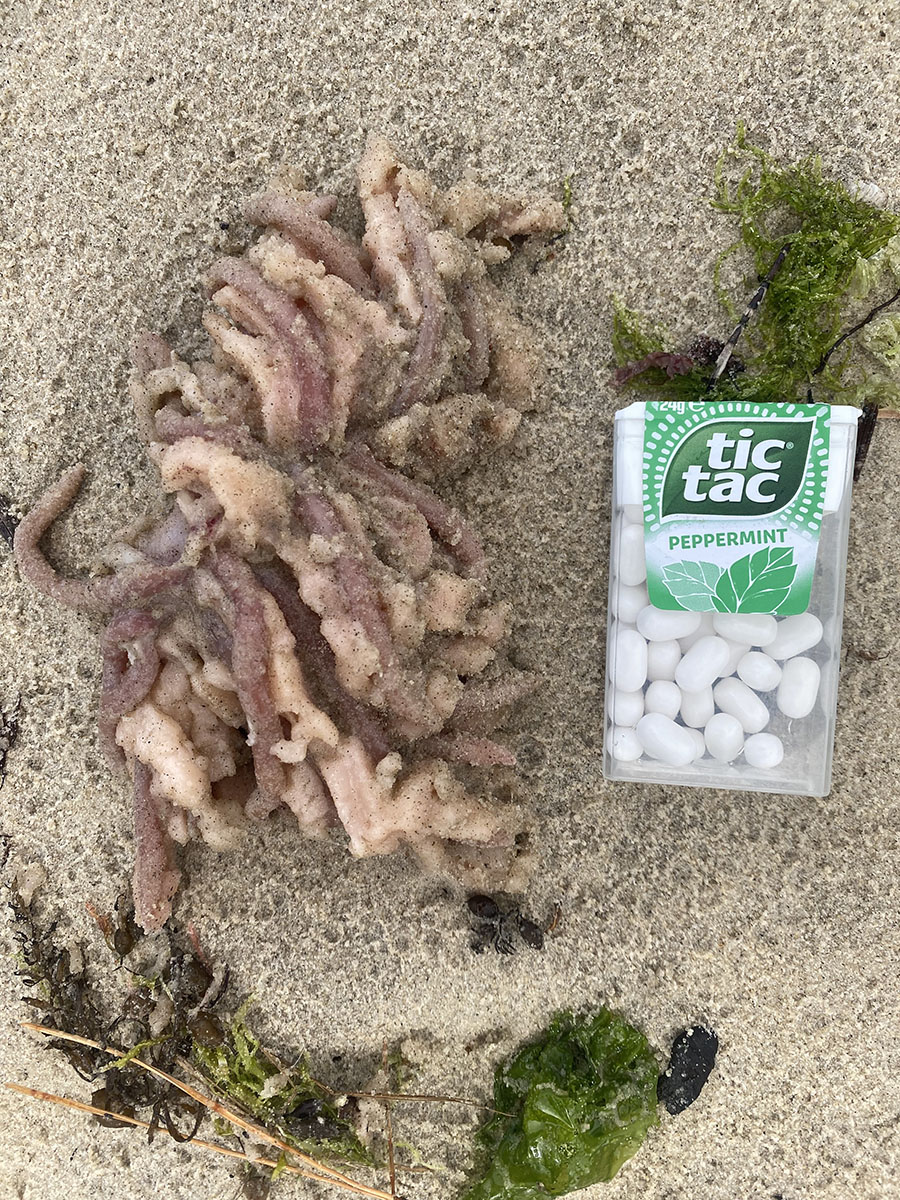
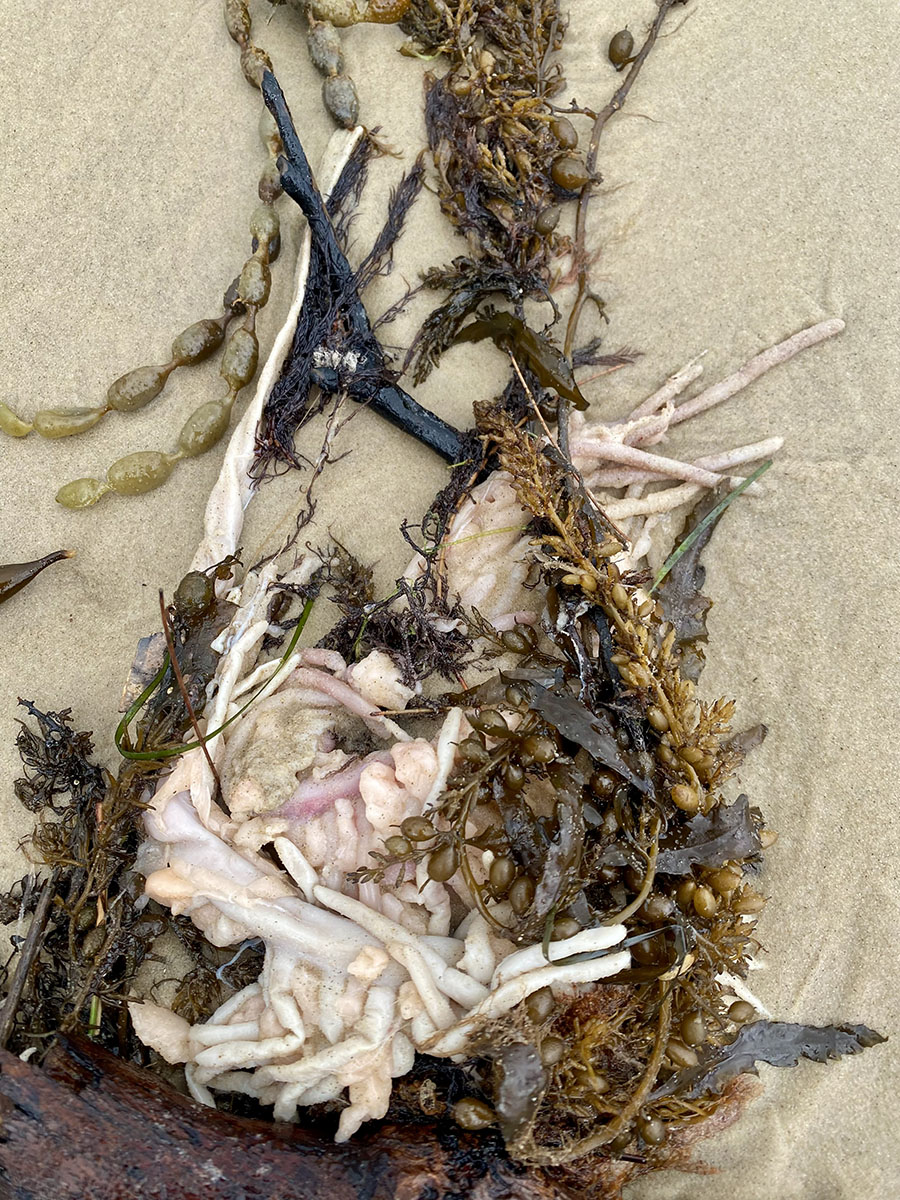
Images courtesy Dan Broun.
Tasmanian Times (TT) is a community-based news and current affairs service covering the island state of Tasmania. It exists to provide a diverse presentation of Tasmanian issues. TT creates and supports independent media content utilising the best of modern technologies and tried-and-true practices of public-interest journalism.
Support us in expanding our coverage and developing new content by and for Tasmanians.
New initiatives on the way include … what our contributors and readers suggest! Please get in touch with your suggestions.