The Tasmanian Planning Commission has recommended that the Macquarie Point Multipurpose Stadium Project should not proceed, concluding that its disbenefits [something disadvantageous or objectionable] outweigh its benefits.
The commission’s recommendation, prepared by a panel of delegates [Paul Turner SC, Martin Wallace, Lynn Mason AM, Gary Prattley, Shelley Penn AM] is detailed in a report submitted to the Minister on 15 September 2025.
The recommendation report references the Panel’s Integrated Assessment Report (‘IAR’), which is published contemporaneously and should be read in conjunction with the recommendation report. The integrated assessment report indicates that the stadium’s construction will significantly impact the state’s net debt, with the associated debt estimated to grow to approximately $1.83 billion at the end of 10 years.
Read the full report here: https://www.planning.tas.gov.au/__data/assets/pdf_file/0009/829377/Project-of-State-Significance-Macquarie-PoinRecommendation-report.PDF
Economic and Social Disadvantages
A cost-benefit analysis conducted by the panel found that the ratio of benefits to costs for the stadium is less than 0.5, a result consistent with other independent assessments. The panel’s assessment indicates that the project would result in a substantial net social cost to the Tasmanian community. While proponents estimate economic benefits in terms of employment, incomes and Gross State Product, the report states these benefits are very small, representing less than 0.1% of Gross State Product and total employment.
The cost of constructing the stadium equates to about $5,900 for every Tasmanian household not reliant on Commonwealth income support.
The panel concluded that the project would diminish the economic welfare of Tasmanians as a whole and would need to be paid for by raising state taxes by approximately $50 million per year, reducing public services or abandoning other state capital projects.
Urban and Heritage Concerns
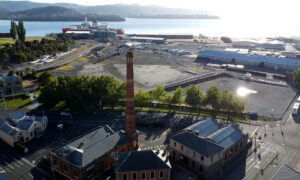
The panel found that the stadium’s size, scale, and form would be dominant within the landscape, diminishing the significance of the Domain headland and acting as an obtrusive element in the Sullivans Cove urban form.
The report states that the project’s form and scale would be a “repudiation of a number of long-standing planning principles” applied in Sullivans Cove. The panel also concluded that the project would cause extensive and irreparable damage to the historic cultural heritage of several significant places, including the Cenotaph, the Royal Engineers Building and buildings along Hunter Street.
The stadium’s design and the site’s physical constraints mean that the area not consumed by the stadium would be unlikely to support viable ongoing retail businesses or be an attractive place to visit outside of major events.
Conclusion
The report concludes that the fundamental problem is that the site’s size and geographical features cannot support the “disproportionately large, monolithic building proposed”.
The project is described as being “incongruent with the valued characteristics of its spatial context”. According to the panel, proceeding with the project would lead to irrevocable and unacceptable adverse impacts on Hobart’s urban form, landscape and historic cultural heritage.
RESPONSES: Government Faces Mounting Pressure to Scrap Stadium Plan
Tasmanian Times (TT) is a community-based news and current affairs service covering the island state of Tasmania. It exists to provide a diverse presentation of Tasmanian issues. TT creates and supports independent media content utilising the best of modern technologies and tried-and-true practices of public-interest journalism.
Support us in expanding our coverage and developing new content by and for Tasmanians.
New initiatives on the way include … what our contributors and readers suggest! Please get in touch with your suggestions.