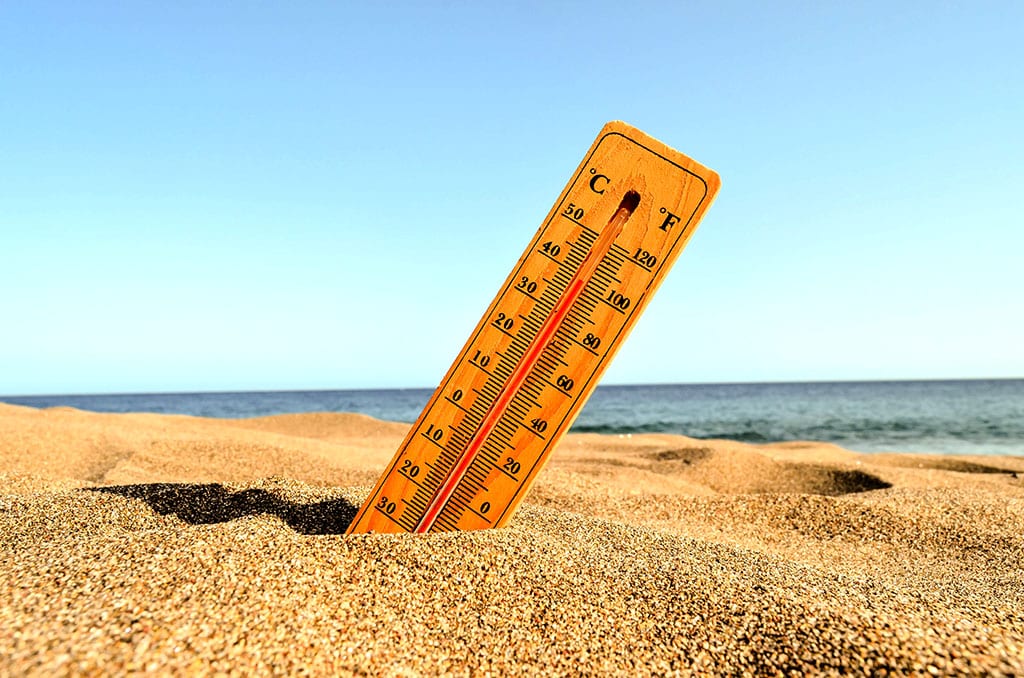
A new national climate risk assessment has identified Tasmania as the Australian state most exposed to climate hazards. The report highlights that the island is one of the most “hazard prone places in the country,” facing severe impacts from bushfires, floods, extreme weather events and rising sea levels.
These challenges are already putting a strain on the state’s environment, economy, and community well-being.
The assessment forecasts significant changes for Tasmania’s environment.
Average temperatures are projected to rise, leading to more frequent heatwaves. For instance, the number of hot days is projected to double in major cities like Launceston and Hobart. While total annual rainfall may not change significantly, its distribution will, with some regions experiencing drier conditions and others facing more intense rainfall events.
The State of the Environment Report for Tasmania paints an alarming picture, noting that sea temperatures are warming faster than the global average, leading to the decimation of unique ecosystems like kelp forests.
Rising sea levels pose a particularly severe threat to coastal communities and infrastructure.
The national assessment points to the Tamar Estuary in Launceston as a specific case study, highlighting its vulnerability to flooding and saltwater intrusion. A current 1-in-100-year coastal inundation event could become a near-annual occurrence by 2090 in some exposed areas.
The findings underscore the urgent need for a clear climate adaptation strategy to embed resilience into Tasmania’s communities, infrastructure, and ecosystems.
While the Tasmanian government has a statewide climate change risk assessment and is working on a response, the report serves as a wake-up call for accelerated action. The risks are not limited to the environment, but extend to human health, social cohesion and the state’s economy.
On a positive note, the reports highlight opportunities for economic growth through the development of renewable energy and other new industries that provide adaptation and resilience solutions.
In the following media releases the Greens call for an end to native forest logging and a clear climate adaptation strategy, while The Australia Institute links the report’s findings to Australia’s role as a major fossil fuel exporter, urging an end to new fossil fuel projects and subsidies.
The full Australia’s National Climate Risk Assessment 2025 report can be found here.

Media release – Cassy O’Connor MLC, Greens Climate Spokesperson, 16 September 2025
It’s Time for an Informed Community Conversation About a Safe Climate Future
The release yesterday of the National Climate Risk Assessment report the Albanese Government tried to hide is a massive wake up call for Tasmania.
The report finds that by 2050, severe climate impacts will be felt across all regions, with Tasmania one of the most hazard prone places in the country.
More heatwaves, droughts, bushfires, floods, sea level rise and coastal inundation are a certainty for our island as the atmosphere continues to trap heat. There will be stress on our water supplies, food production systems, public infrastructure and cascading impacts on our health and community services.
Launceston is a case study in the assessment report.
The city is projected to face increased risk, with the Tamar Estuary vulnerable to rising sea levels leading to increased flooding, erosion and potential saltwater intrusion.
The report states, “The analysis in this compound flood assessment identifies the need to raise the levee heights to make them more resilient to climate change.”
The risk assessment paints a frightening picture, but sticking our heads in the sand – as governments have done for too long – and hoping it will go away is not the answer.
Political leadership is urgently needed. We must make a choice now to be climate ready.
The climate risk report demands an urgent and comprehensive response to keep Tasmanian communities safe and mitigate damage to our environment and island economy.
The Rockliff Government must step up, work with the Parliament, local government and communities, to deliver real adaptation planning.
The time for tinkering around the edges is over.It’s time for an informed community conversation about the future.
Media release – Nick McKim, Greens Senator for Tasmania, 15 September 2025
Climate Risk Assessment shows danger to Tasmania
Tasmania is the state most exposed to climate hazards according to the National Climate Risk Assessment released today, which considered frequency, severity and location of climate hazards.
“Tasmania’s high vulnerability to climate hazards like bushfires, floods, extreme weather events and sea level rise should be a clarion call for us to finally stop logging our native forests,” Greens Senator for Tasmania Nick McKim said.
“Nationally we need to stop approving new fossil coal and gas projects, end fossil fuel subsidies, stop logging native forests and set a 2035 emissions reduction target of net zero.”
“In Tasmania we need a clear climate adaptation strategy to embed resilience into our communities, infrastructure and ecosystems, and an end to native forest logging.”
“This report should make it abundantly clear to the Labor and Liberal parties that it is in Tasmania’s interests to end native forest logging.
“Protecting our precious forests would make Tasmanians safer, not just from bushfires but a range of significant climate risks.”

Media release – The Australia Institute, 15 September 2025
Devastating climate risk assessment shows fossil fuel exports must end
Just three days after approving an extension of one of the largest fossil fuel export projects in the world, the North West Shelf, the National Climate Risk Assessment reveals the devastating consequences facing Australia.
The assessment describes “severe” risks to defence and national security; regional, urban and remote communities; health and the environment; as well as “very high” risks to the economy and food production.
These include:
1.5 million Australians living along the coastline would be under threat of rising sea levels by 2050.
Deaths caused by heatwaves will soar by more than 400% in places like Sydney and Darwin.
63 “nationally significant” climate risks identified, including threats to social cohesion, supply chains and essential services.
Australia Institute research shows burning fossil fuels (coal, oil and gas) compromises the fundamental systems underpinning Australia’s security, wellbeing and prosperity.
Coal and gas exports from Australia are also playing a major role in the destruction of the world’s climate, and climate change is having a devastating impact on Australia’s neighbours in the Pacific.
“Coal and gas exports from Australia are playing a major role in destroying the world’s climate, with devastating consequences for all the systems underpinning the security, wellbeing and prosperity of Australians,” said Richard Denniss, Executive Director of The Australia Institute.
“Climate change is making fires, floods and heatwaves more frequent and extreme. This isn’t just devastating in itself; it is driving our insurance premiums through the roof and making many homes uninsurable.
“Almost a fifth of Australia’s domestic emissions are from fossil fuel exports.
The Australian government can’t pretend to be meeting our climate commitments while it keeps approving new fossil fuel export projects.
“The enormous emissions from the Australian government’s approval of new fuel export projects make a mockery of the government’s incremental climate policies and expose the Prime Minister’s promise to our Pacific neighbors to take urgent action as empty platitudes.
“Approving new fossil fuel exports is destroying the future. It isn’t just a betrayal of our Pacific neighbors, it is a betrayal of all Australians, putting the profits of foreign-owned fossil fuel corporations ahead of our wellbeing, security and prosperity.”
KEY FACTS:
- Australia is the second largest fossil fuel exporter and fifth largest fossil fuel producer in the world.
- Emissions from Australia’s fossil fuel exports are around 1.15 billion tonnes CO2e annually, greater than the emissions of all countries except China, the United States, India and Russia.
- Australia is expanding fossil fuel exports with around 100 new fossil fuel projects under development.
- Nearly a fifth of Australia’s domestic emissions now come from sending fossil fuels overseas.
- The 45-year extension of Woodside’s North West Shelf gas export terminal, approved by the Australian Government last Friday, will add around 90 million tonnes of emissions to the atmosphere, equivalent to opening 12 new coal power stations.
- The Australian government gives most of the gas exported from Australia global oil and gas giants for free.
- No gas export project has ever paid Petroleum Resource Rent tax (PRRT) and the government collects more revenue from HECS than the PRRT. 99.7% of Australians do not work in the oil and gas industry.
Tasmanian Times (TT) is a community-based news and current affairs service covering the island state of Tasmania. It exists to provide a diverse presentation of Tasmanian issues. TT creates and supports independent media content utilising the best of modern technologies and tried-and-true practices of public-interest journalism.
Support us in expanding our coverage and developing new content by and for Tasmanians.
New initiatives on the way include … what our contributors and readers suggest! Please get in touch with your suggestions.