Bang Bang
Gunfire will soon shatter the peace and tranquility of Tasmania’s wetlands and waterways as the annual senseless cruel slaughter of the state’s harmless native waterbirds continues under the guise of ‘sport and recreation’! Poet Ogden Nash put it into perspective when he penned the following words many years ago:
The hunter crouches in his blind
‘Neath camouflage of every kind,
and conjures up a quacking noise
To lend allure to his decoys.
This grown-up man with pluck and luck,
Is hoping to outwit a duck.
– Jim Collier, Legana
Saving Giants
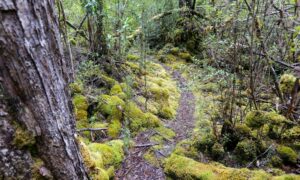
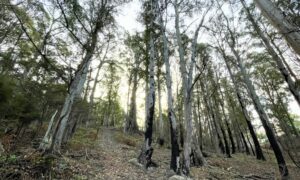
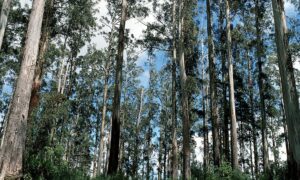
I would like to bring your attention to a most unique forest in the Huon Valley. It is called the Grove of Giants, a 100-hectare area of forest that contains the largest Tasmanian blue gum in the world. I believe this forest should be protected as a formal reserve for all to enjoy.
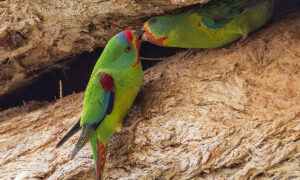
The Grove of Giants is one of the best remaining patches of old-growth blue gum trees. It is an extremely important habitat for the critically-endangered swift parrot, who also rely on these trees as an important food source. It is also an essential home to lots of other native fauna and flora.
Walking through this area on the weekend, I was in awe of the significant amount of giant trees. It has been counted that 150 of these trees are over four metres in diameter. Not only are they giants, they are also diverse, with four different species, all of which are giants. Now, that is amazing, it’s spectacular and unique. However, I was also emotionally saddened to see that on the edge of this forest area, some giant trees had already been cut down. I cannot fathom how we can allow this to happen. In fact the surrounding area has been decimated by logging.
I believe this forest known as the Grove of Giants is a unique carbon dense forest and an important home to our unique local flora and fauna. It is a special patch that needs our protection immediately. Please visit this area and most importantly please help protect this area. This forest and all of our forests need us to stand up for them and protect them for now and the future.
– Susanne Thomson, Abels Bay
That’s Not Gonna Fly
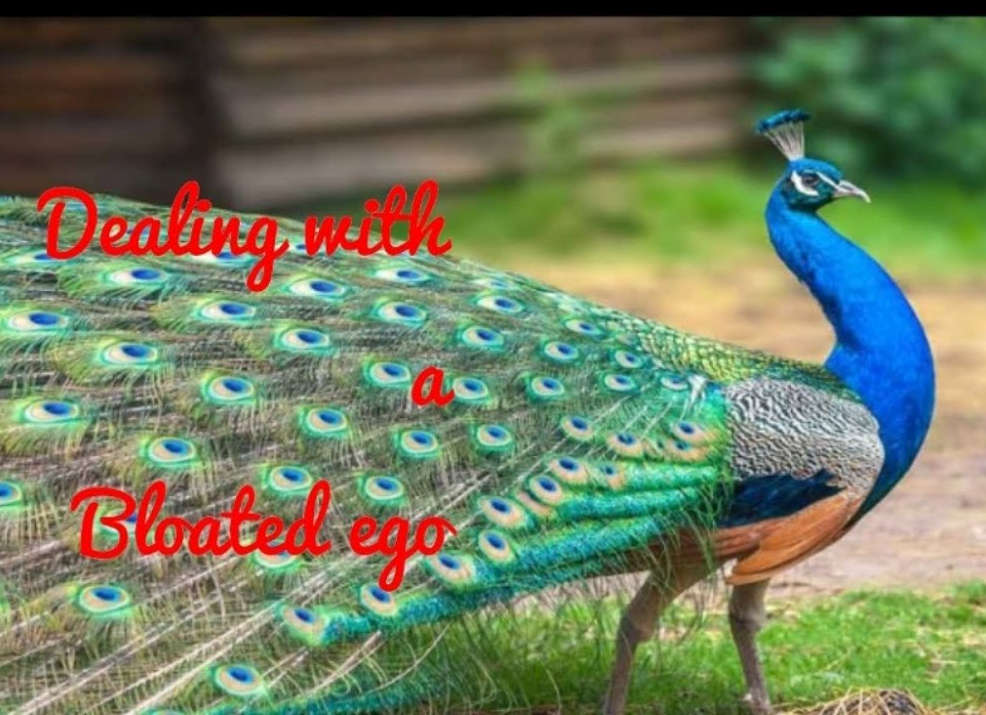
Before we even contemplate building a billion-dollar football stadium it may first be necessary to upgrade the airstrip for planes big enough to accommodate the bloated egos of the vexatious AFL men constantly arriving on our shores making chucklesome ultimatums.
– Dr Ian Broinowski, Battery Point
Climate Means No Coal
For months and months scientists have patiently and deliberately spelled out the risks of inaction when it comes to our changing climate. More recently their voices have become louder and more insistent, and rightly so. Tasmania may have so far escaped the worst of the floods and bushfires that have proved so devasating in recent months for communities in WA, Qld and NSW – most notably in Lismore – but we aren’t immune. These climate events are representative of the increasing climate extremes that numerous climate scientists around the world have warned us about for years. Unless people have been living under a rock for the last decade or so, it’s also been made abundantly clear that the mining of coal and gas is a major contributor to these extreme weather events.
So for any government to even contemplate approving the opening, or expansion, of new coal or gas mines just beggars belief. Yet the Rockliff government is reportedly doing just that by considering providing approval for an extension to the permit that would see a coal mine near St Marys reopen. The world has already passed the 1.5C threshold of emissions considered ‘safe’, and the level is continuing to rise. Governments everywhere should surely therefore be doing all in their power to ensure this steadily rising level is lowered. And fast. How else can the lives of our children, grandchildren, and all the other countless species who are struggling to adapt and survive on this planet we all call home, be protected and safeguarded?
– Anne Layton-Bennett, Swan Bay
Justice is broken
Sue Neill-Fraser’s appeal for leave to the High Court was rejected on the grounds that an appeal would be unlikely to have succeeded. That judgement can only be made if the appeal had been allowed and in fact didn’t succeed. Otherwise, the statement is circular.
In the Neill-Fraser case, the courts, in the initial hearing and in appeals, heard no direct evidence of her guilt: no body, no murder weapon, no witnesses, no evident motive. Her conviction relied entirely on circumstantial evidence, which means that there may be no plausible alternative as to who committed the crime. After that initial determination, subsequent appeals can only be based on the legal technicalities being followed correctly. But if the initial conviction is wrong, the appellant is trapped if, say, her lawyers have messed up.
In this case, however, there was a plausible alternative, which is that a gang of youths given to robbing yachts in the presumed absence of anyone on board, made a ghastly mistake. Bob Chappell was on board, according to a witness who admitted she was there at the time, and that in a scuffle she saw Chappell being killed and who by. That alternative account was sworn to in the Tasmanian Supreme Court in May 2021 – but under pressure the next day the witness retracted what she had said. Even if she was telling the truth in her retraction, she did clearly outline a plausible possibility as to how Chappell was killed that excluded Neill-Fraser, and that should have resulted in the withdrawal of the charge, based as it was only on circumstantial evidence.
The High Court also stated that they are not there to seek the truth; it is not an inquisitorial court. Their role is to see that ‘due process’ has been carried out. Due process is held in place by legal technicalities and it is the appeal court’s job to see that all the technicalities have been served. But surely the legal process is a means to an end: to establish the truth of what had occurred. To deny justice on the grounds that the means were flawed is putting the cart before the horse. It is making the legal process more important than the guilt or otherwise of the accused.
The High Court’s admission that it is not concerned with the truth is therefore a shocking admission. Surely an accused’s guilt or innocence is indeed a matter of fact: did she or didn’t she commit the crime? That surely is the most important question, not whether the rules have been followed exactly. Under our adversarial system, the accused’s fate then turns on purely technical issues, on which lawyers win the ‘what is fresh and compelling evidence’, for example.
Several countries use an inquisitorial systems. where the court’s job is precisely to discover the truth. Had Neill-Fraser been tried in such a court she likely would not have been convicted.
If any good can be retrieved from the Neill-Fraser case it is the recognition that that our adversarial system is broken. How an inquisitorial system works, and why it serves justice better than our adversarial system, is explained in Our Corrupt Legal System (2010) by legal historian Evan Whitton.
– John Biggs, Mt Nelson
Team Yes, Stadium No
As much as I like AFL football, we don’t need a new stadium. The capacity of the existing York Park and Bellerive Oval grounds will be fine for a start-up, and in any case they can be upgraded as required. I am sure that most Tasmanians who would like to become members of the proposed club recognise that games should be split north-south so that the team is truly representative and accessible. So there’s no ‘football’ argument as such for a new stadium.
And as we have seen with the so-called business case, prettily drafted to order by Rose-Tinted Speculations Pty Ltd, even with optimistic predictions about usage it’s going to be a huge money-flusher. Don’t kid yourself, megastar band of your choice is not going to play Hobart for 30,000 people – given the costs of bringing a show this far south – when they can play any of the five mainland state capitals for twice or thrice as many. It’s all about the money, see. Yeah, and that includes money that the state of Tasmania doesn’t really have to lavish on a vanity project like this.
– Ralph Garnett, Lindisfarne
Letters are welcome on any Tasmanian subject, up to 300 words (we allow a few longer ones occasionally but you’d be surprised how much people appreciate you getting to the point). Letters should be concise, respectful of others and rely on evidence where necessary. No links please! Letter writers should provide a real name and town / suburb. Letters can be send on behalf of organisations or groups. Submit letters in the body of an email to [email protected]
Comments are turned off on this post…send us a letter!