Media release – Department of Natural Resources and Environment Tasmania, 20 March 2023
Investigations continue into small hive beetle detection
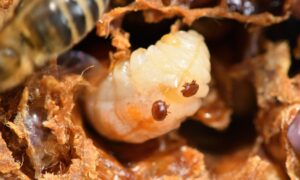
Biosecurity Tasmania continues to investigate the detection of a single small hive beetle in a guard hive located in the Devonport area.
This detection does not mean that small hive beetle is established in Tasmania. At this point there has been no additional detections.
Tasmania’s Chief Plant Protection Officer has declared a General Biosecurity Direction, which establishes a 15km Bee Movement Restriction Area around the detection site and restricts the movement of bees and bee products within, into and out of the zone.
Our apiary inspectors have been visiting properties with beehives within the Bee Movement Restriction Area and installing surveillance traps for small hive beetle.
If you keep bees within the Restriction Area and have not been visited by our apiary inspectors, please call 6165 3777 to arrange a visit.
You can use this interactive map to find out if your apiary or any other property where hives are kept is within the Restricted Area: Bee Movement Restriction Area interactive map.
On 12 March, Biosecurity Tasmania placed a moratorium on the opening of hives, harvest of honey and honeycomb, and movement of beekeeping equipment for any beekeepers that are in the 15km Bee Movement Restriction Area as declared in the General Biosecurity Direction. Initially, the moratorium will be in place until 31 March 2023. All beekeepers within the 15km Bee Movement Restriction Area are asked to avoid opening hives during this period.
Registration, which is one of our best tools for managing and stopping the spread of pests and diseases, is compulsory for all current Tasmanian commercial and recreational beekeepers.
There is no cost to register, and registration will remain free until 31 March 2025.
For more information or to register visit www.nre.tas.gov.au/beekeeper-registration
Biosecurity Tasmania acknowledges and appreciates the significant contribution to the response from affected beekeepers, key stakeholders, industry representatives and the community.