Media release – Jo Palmer, Minister for Primary Industries and Water, 15 July 2022
Have your say on a 10-Year Salmon Plan
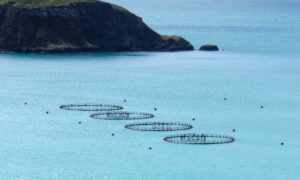
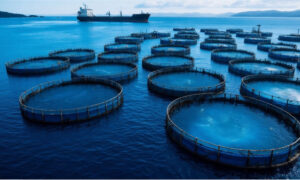
The Discussion Paper: Towards a 10-Year Salmon Plan has been released and is now open for public consultation.
The Discussion Paper outlines the current drivers for the salmon and aquaculture sector, as well as the focus areas the Tasmanian Government is considering in the development of the new Plan.
The 10-Year Salmon Plan will be centred on innovation, continuous improvement and world-leading practices.
Hard work, innovation, dedication and investment in Tasmania’s salmon industry has seen it rise to become the single biggest primary industry sector in our state.
It provides a substantial economic contribution to our regional communities through employment, transport, feed and other supplies.
This is something we should all be proud of.
We encourage industry and the community to help identify new long-term actions that will support a vision for a sustainable, resilient, and innovative salmon farming industry.
Feedback on the Discussion Paper can be provided via web-based submission and interested stakeholders are also encouraged to join an online feedback session. Feedback received will help inform the development of the Draft 10-Year Salmon Plan, which will also be released for consultation later this year.
Public consultation on the Discussion Paper closes on 24 August.
For more information, to make a submission or join an online listening session, visit: www.nre.tas.gov.au/salmonplan.
Media release – Tasmanian Alliance for Marine Protection, July 15 2022
Salmon Discussion Paper Highlights Industry’s Failings
Today’s government discussion paper on the salmon industry highlights Tasmanians’ collapsing confidence in the industry, its regulator and the independence of the science that lies behind its expansion.
It provides clear proof that the efforts of communities across the state to draw attention to the impact on waterways and marine life by industry practices is thoroughly justified.
The first five outcomes outlined in the discussion paper (below) all address the vital concerns on which the Tasmanian Alliance for Marine Protection (TAMP) and its members have been campaigning for years. (https://nre.tas.gov.au/Documents/Discussion%20Paper%20Summary.pdf)
It also recognises the highly critical independent Legislative Council investigation into the industry as “a significant body of work” and diminishing social licence.
TAMP, which represents communities across the state, says the document’s words read well but the government will be judged by what real action it takes to protect the state’s waterways, introduce genuine independent, fully-resourced regulation and ensure the industry’s operations and impacts are genuinely transparent.
“It’s unfortunate but true that we’ve seen many promises made by government and industry to clean up their act but precious little real action,” says Peter George, chair of TAMP.
Multinationals are harder to control
“It’s now critical to impose stringent controls and achieve real benefits from an industry increasingly dominated by foreign multinationals with no stake in the state’s future health and reputation.
“Where once the industry hid behind the mantra of ‘local owners, local jobs’, that defence is no longer viable. Instead, the government is grappling with two voracious multinationals with the probability of a third taking over Tassal and declining jobs.
“The question now is whether the government has the courage and wherewithal to hold the salmon barons to account, to rein them in and to put Tasmania’s best interests above those of multinational profits.”
Five Government aspirations:
- Intergenerational economic, social, and environmental opportunities are enhanced.
- Healthy ecosystems are maintained through robust environmental and biosecurity frameworks.
- Independent and robust scientific evidence continues to inform planning and operational decisions.
- Research and innovation assist climate change resilience and continuous improvement of
practices. - The community’s understanding of the aquaculture regulatory framework and confidence in planning, operational and environmental compliance decisions is improved.