Home Schooling
I would like to write about why I have decided to home educate my children.
I am a single mum of 2 girls, ages 8 and 12, and I have been homeschooling officially since late last year. However they started to stay home from school from late July 2021.
The reasons I homeschool are because both my girls are neurodivergent and at the time were yet to be diagnosed ( one has been now and one is still on the waitlist) there is no one-on-one support in schools for undiagnosed ASD or ADHD students and limited once they are. My girls lacked the support they required at both the mainstream and a non-mainstream school due to their neurodivergencies and due to one being transgender. My transgender daughter came out at her non-mainstream school and the school and the community struggled to accept her which saw us unenroll from this school and enroll in a mainstream school as a ‘girl’. This seemed to go well however due to her anxieties and neurodivergence she needed my support at school on a daily basis. We also suffered abuse from her class teacher due to me being at the school supporting my daughter, even though I had the full support of the head and the leaders of the school and I am a qualified teacher assistant.
Covid-19 played a part with us in that during lockdown it allowed my transgender daughter to be comfortable within herself at home, however once she retruned to school that comfortability left her and the masking and anxieties took over. My child struggled to fit in and get the support she needed at school from term 2, 2020 until July 21.
However I have now learnt that a structured, tested, rushed and timetabled education does not work for my neurodivergent children. Giving them time and space in a loving and comfortable environment does.
So even though our homeschooling journey started from a place of survival and not chosen, it is now a chosen way of educating my children. Where they are loved, supported and comfortable.
– ID withheld but known to Editor, Tasmania
Custody and essential medications
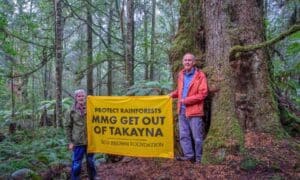
Recently I was arrested in takayna/Tarkine trying to stop MMG from building a tailings dam in ecologically important forests. I was refused bail and was kept in remand for over 24 hours awaiting a decision from the magistrate.
While I was in remand I requested to see a medical professional because I am on a daily dose of 6x types of medication. I supplied a medication letter from my GP, and my lawyer requested I be given my medication at the earliest convenience, but for the entirety of my stay in prison I was not given my prescribed medications.
Popular opinion may indicate that I do not deserve my medication because I have broken the law. But how do people decide whether prisoners can have access to essential medication? What if the medications being withheld cause the prisoner to have seizures, or to have a cardiac arrest? And what if that prisoner is later cleared of all charges? But has ongoing issues due to not getting their medication?
I am likely to go to jail for being a peaceful forest defender. I will pay the price for breaking the law. But I hope that the system recognises that just because we break the law does not mean we shouldn’t get timely medical attention.
– Colette Harmsen, Tinderbox
Government corruption and mining protections
I have many friends who protest peacefully against government inaction and climate change. State and federal governments bend over backwards to support failing industries such as native forest logging, and money rich companies such as MMG mining, but it appears that when these industries break the law, they do not receive fair and just punishment for doing so. Why are these climate criminals left to freely break laws, but environmental defenders get harsher and harsher penalties.
– Andy Davies, Cremorne
Too Cold for Footy
Why are we even talking about spending millions and millions and millions of dollars on some doltish football club when people are sleeping in tents by the roadside in the middle of a freezing winter?
– Dr Ian Broinowski, Battery Point
Interest rates and inflation
It appears to be political heresy to question the role of the Reserve Bank of Australia (RBA). Much is made, at times by both sides of politics, of the political neutrality of the RBA. Regrettably, such a statement is nonsense because the way we manage the economy is in itself a political decision.
All that the supposed neutrality of the RBA means is that the function of the RBA is agreed by both sides of politics. It appears beyond comprehension to think that both parties could be wrong.
The supposed political neutrality of the RBA does not mean the role of the RBA in times like those coming is to assist the poor and struggling employed. In fact the effect of the RBA’s inevitable intervention will be felt disproportionately by the poor and struggling employed.
The RBA is by statute and I suspect nature conservative in the true sense, as in resistant to change. Its job is to keep a steadying hand on the economy and prevent wild fluctuations in asset prices and incomes by its control over the cost of borrowings, interest rates. It is also supposed to promote full employment but it has not been too good at that.
Economic theory tells us a rise in interest rates reduces discretionary spending and therefore inflation. Inflation being considered a major evil.
The space allowed for this letter is insufficient to explore the benefit to some of the community from inflation. That analysis is vexed as in terms of fairness. And a topic in itself.
What is more straightforward is the blunt instrument of interest rate rises depressing the economy so as to keep inflation in check. The human cost in the reduction of monies to be spent because of the raising of interest rates is largely untold. The Murdoch press will speak of cigarettes, pizzas, booze and other selfish wasteful expenditure the poor can do without. They rarely have a story about children going hungry despite a parent’s best effort. For the better off a reduction in discretionary spending may mean a new BMW rather than a Porsche.
Inflation is not always universally bad. Punishing the poor to reduce inflation is.
– James Crotty, Hobart
On Masks … (1)
I read with some concern an article by Dr Rosalie Woodruff in The Examiner desiring masks to return in schools in Tasmania.
The rates of infection have grown with the new strain, however it would do well to quote accurate data with how infection has impacted hospital rates, your article suggests that masking children will reduce the strain on hospitals. Since the borders opened 8 school age children in Tasmania have been hospitalised, out of just over 46,000 reported cases. How exactly have those 8 children contributed?
It’s also quite concerning that Tasmania has the highest rate of COVID-19 per capita in the country. We have the second highest vaccination rate and our children were masked until a few weeks ago. I for some time have wondered if the masking of students contributed to a high infection rate, this has been purely anecdotal evidence and talking to other parents. Parents have also suggested their children have been sicker because of mask wearing with other viruses.
I know so few people who haven’t had COVID-19 in Tasmania. Yes schools have been disrupted. The mental toll of the students being masked when most of the community and other states haven’t has had a significant impact. Is their mental health not worth considering? The last 24hrs have seen much dialogue in the media regarding masks.
Where exactly is the scientific evidence that shows masks reduce transmission in schools? And at what risk benefit? I appreciate that there are some still not wishing to contract covid, there are people with serious health conditions. Why must our children be responsible for their health? Your government would do far better in supporting these people with correctly fitting masks that work, and also making sure they have easy access to antivirals and medication to help them when they contract COVID.
As has been mentioned, any further consideration about mask mandates or requesting anyone to wear a mask must be made with accurate and up to date scientific evidence. The public deserves that, we have all been through enough the last few years.
– Kate Brumby, Launceston
On Masks … (2)
Ever been on aeroplane? Most of us have. And we know there is safety equipment that must be used, and we are advised how to use it. Every time. It’s the law.
Australia on track to record around 15,000 COVID-19 deaths this year. That will be more than deaths from every mode of transport, diabetes, suicide and melanomas put together.
COVID-19 is undoubtedly dangerous. We also face the prospect of newer variants that evade existing immunity, whether from vaccination and prior infection. We are just beginning to understand that even ‘mild’ or asymptomatic infections significantly increase the risk of poor health outcomes in a variety of ways.
The pandemic can end we end it. We end it by using all the tools available, consistently. We don’t end it by pretending it’s over when it isn’t, regardless of how ‘over it’ you feel.
Safety equipment and precautions are everywhere in modern life, including workplaces, commercial spaces and recreational venues. From hair nets to rubber gloves to steel-capped boots, from illuminated exit signs to anti-slip flooring to schedules of bathroom maintenance, our whole society runs on the premise that collectively we can and should work together improve health outcomes.
Masks are part of this. They are relatively simple to use, inexpensive and quickly deployable. They have been proven to significantly reduce aerosols, which are the main vector of COVID-19 transmission. Virus-laden air can be filtered effectively at source (infected person) and recipient (uninfected person).
Do yourself a favour, and do everyone else a favour, by masking up. Yes you and your friends and family. COVID-19 really doesn’t care what inane rubbish you heard on Sky News, it’s coming for you anyway.
– Roy Collins, Central Midlands
Letters are welcome on any Tasmanian subject, up to 300 words (we allow a few longer ones occasionally but you’d be surprised how much people appreciate you getting to the point). Letters should be concise, respectful of others and rely on evidence where necessary. No links please! Letter writers should provide a real name and town / suburb. Letters can be send on behalf of organisations or groups. Submit letters in the body of an email to [email protected]
Comments are turned off on this post…send us a letter!