The vexed issue of climate change has become standard fare on our nightly news during the winter months of recent years.
Frequent images of wildfires and heatwaves in North America have provided Australians with plenty of distraction from their regular mid-year diet of AFL footy, minor local events and political intrigue.
But this year has been like no other.
Wildfires and heatwaves in the US and Canada in 2021 have not just set new records, they have blitzed the old ones.
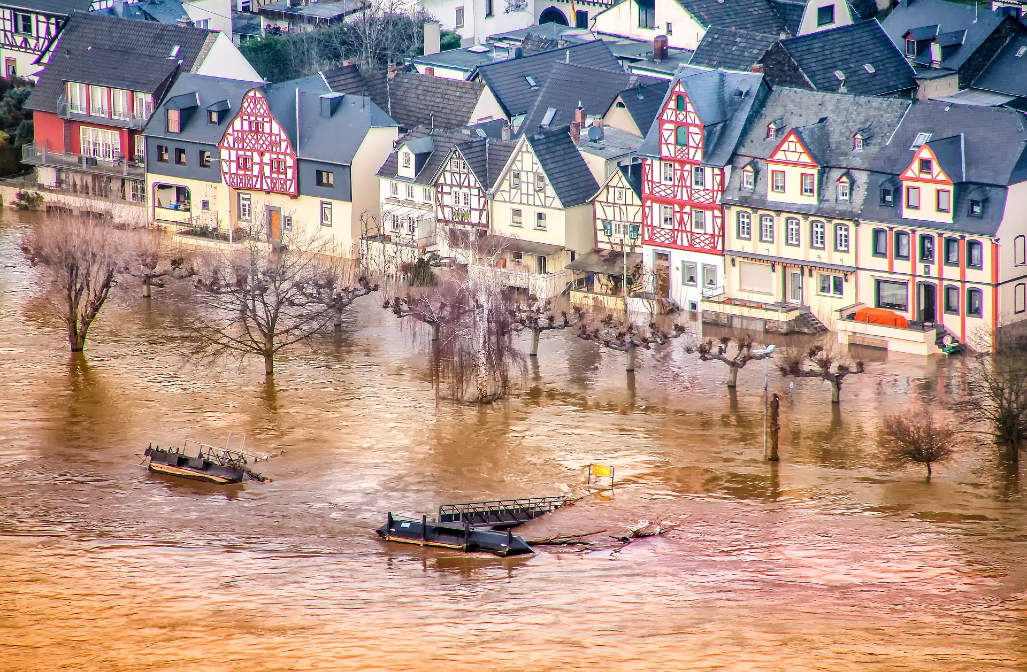
In July, parts of Germany and neighbouring countries were impacted by floods and landslides that brought loss of life and widespread devastation to urban centres. August, meanwhile, ushered in deadly wildfires in Greece, Italy and Turkey.
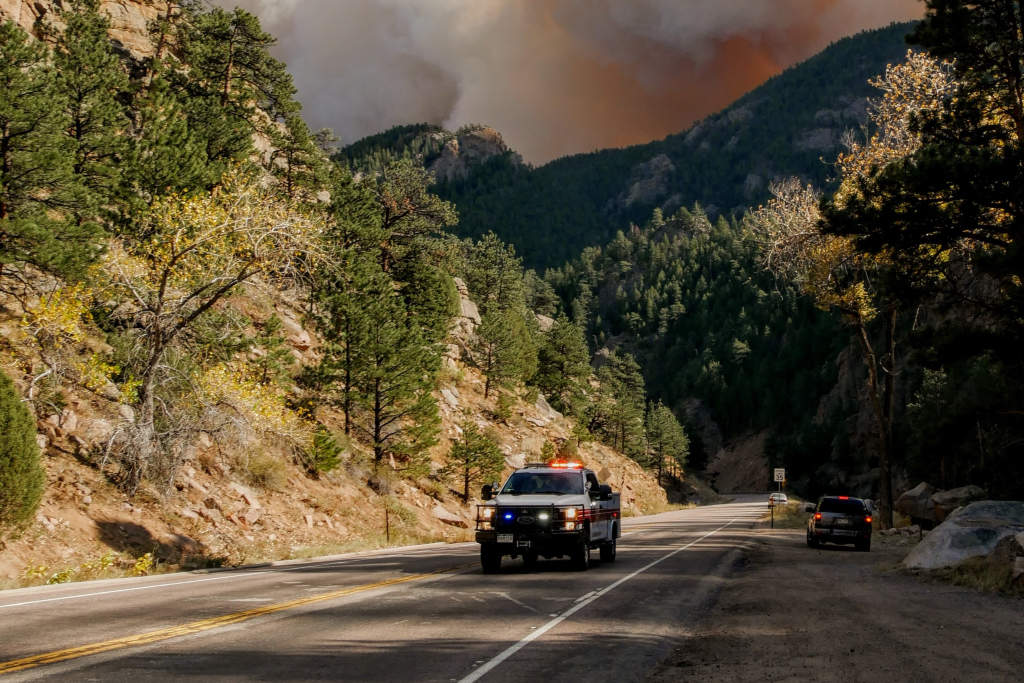
Northern Hemisphere fires, climate-induced. Image courtesy Unsplash.
And while the scale and magnitude of these events may have shocked even climate-savvy researchers like Dr Tom Remenyi, their seemingly chance occurrence has not.
“We’ve been saying for a long time now that 2020 was going to be the point at which the climate we’re actually experiencing diverges from what we might call the historical climate,” says the University of Tasmania climate research fellow.
“We are living in a new climate. What we’re seeing are not just extreme weather events we’re never going to have to deal with again. As the planet continues to warm, eventually we’ll reach a point where they’ll stop being extreme statistically and just become part of the new normal.
“They’ll still be extreme in terms of their damage to the ecology of a region. That’s one of the things that concerns us most as climate scientists.”
Like his many colleagues and collaborators in climate research, Remenyi has spent the past two weeks digesting the fine details laid out in the latest report published by the Intergovernmental Panel on Climate Change (IPCC).
Released in Geneva on August 9, it is the panel’s sixth report since the body was established in 1988. It’s also the largest and most comprehensive study of climate change to date.
Weighing in at 3,949 pages, the document provides detailed explanation and analysis of current scientific data and understanding of the climate system and climate change itself. It brings together the expertise of some 234 authors from 66 countries, including Remenyi’s colleague and former University of Tasmania climate research fellow, Dr Michael Grose.
Remenyi says a further IPCC report – to be published in February 2022 – will focus on the impacts of climate change and vulnerability. Another – on mitigation of climate change – will appear in March.

Climate change ‘lived experience’ for wine growers. Image supplied.
This month’s contribution to the debate on climate change did not mince words. ‘It is unequivocal that human influence has warmed the atmosphere, ocean and land,’ the report states.
Tasmanian wine producers will find few flaws in these IPCC findings, including one that asserts Australia has already experienced warming of 1.4º Celsius since 1910. Indeed, many believe their lived experiences render notions of climate change self-evident.
“Wine is sometimes said to be the ‘canary in the coal mine’ in global warming because wine production is very sensitive to climatic conditions,” says Bream Creek’s Fred Peacock.
“The difference between regions that produce high quality wine and those that do not is actually quite small in climatic terms: a couple of degrees Celsius, a few per cent in humidity, a couple of hundred millimetres of rainfall.
“Wine producers are very much aware of that and concerns over climate change have been longstanding. We’ve not only seen it occurring, we’ve become acutely aware that the rate of change is probably accelerating much more rapidly than we could have ever expected.”

Well before publication of this latest IPCC report, winegrowers understood many of the world’s best known wine regions would experience marked changes in climate in coming decades. For some, Peacock says, increases in temperature will take them well beyond ranges regarded as ideal for the wine grape varieties being grown there.
What’s more, these impacts will not go unnoticed by consumers. Warmer growing conditions will see a significant number of varietal wines lose their characteristic aromas and flavours. Producers wanting to stay ahead of the curve will need to plant or replant vineyards with varieties, clonal selections and rootstocks best suited to warming climates.
It’s not just growing season temperatures that will see marked increases in the near future. Aridity – a measure of soil dryness that takes into account rainfall and evaporation – is also projected to increase across the globe.

UTas climate research fellow Dr Tom Remenyi. Image supplied.
“As the climate warms, evaporation rates will increase,” Remenyi explains.
“To maintain moisture balance, rainfall needs to increase too. However, this isn’t happening and we see drying of the landscape. This is evident globally already.
“And it will get worse, causing water storages to be put under stress in many regions of Australia and around the world. Finding new water is going to be critical as this climate scenario moves forward,” he warns.
Remenyi notes key industry bodies like Wine Australia are already well underway in developing mitigation and adaptation strategies.
This time last year, the Hobart-based scientist was playing a key role in disseminating a 487-page dossier on climate variability and global warming, undertaken by six researchers from the University of Tasmania.
Entitled Australia’s Wine Future: A Climate Atlas, the work was funded by Wine Australia. It represents three years of data-crunching and an additional 12 months of writing and editing. Remenyi was a lead author.
“Six global climate models were used to determine Australia’s projected climate to June 2100, according a high emissions scenario referred to as RCP8.5,” he notes.
“It’s the ‘business as usual’ path we are on right now. Commonly used climate measures – such as growing season temperature, growing season rainfall, frost risk days, and aridity – were married with a handful of other climate indices to create an extensive set of climate predictions.
“These were published and made available to readers in the form of an atlas.”
Remenyi believes it will serve as a road map for growers, providing them with enormous opportunity to choose their future.
“They might do that by adapting their management practices in the vineyard, for example, or by selecting grape varieties that are going to be most appropriate for the climate of the future,” he says.
UTas researchers are now preparing a natural hazards atlas for publication in 2022. Major components of that document will include current work on heatwaves and fire risk. Covered extensively in the latest IPCC report, they are topics that are bound to resonate with Tasmanian wine producers. In 2019, vineyards south of Hobart suffered total crop losses due to the smoke taint induced by prolonged bushfire activity in the region.
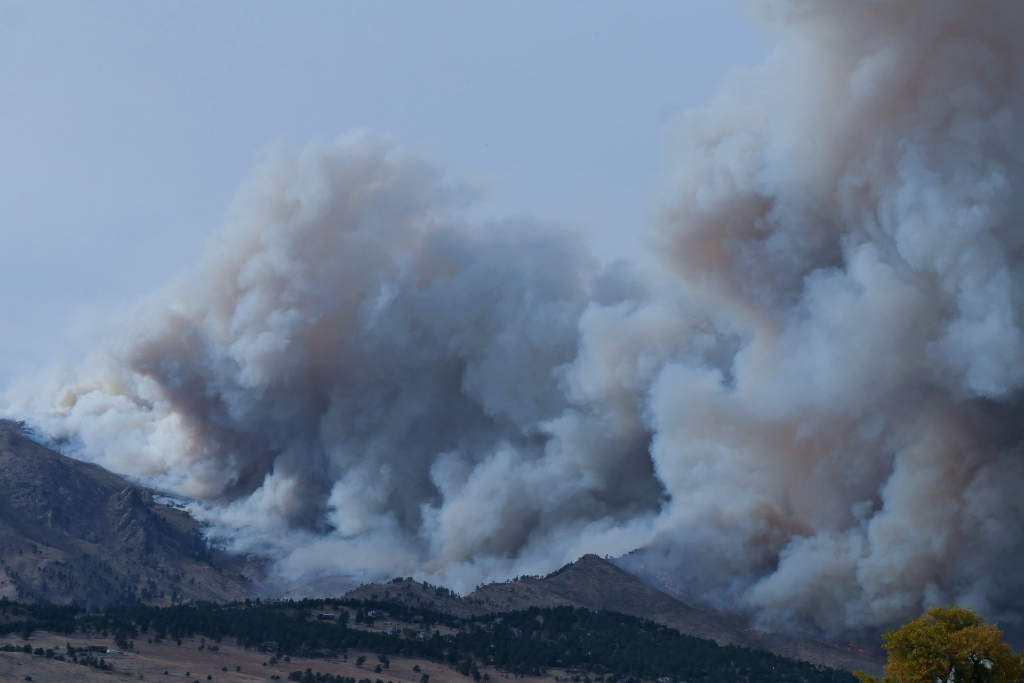
“The intensity of the fires we have been seeing across the globe in recent weeks have been off the show when you look at them as natural events,” Remenyi says.
“They’re actually referred to as climate fires. We’ve seen climate fires well before these recent ones in Greece and Turkey. The fires we saw in Australia back in 2019 were termed climate fires.
“Increasing fire risk is not simply due to declining rainfall patterns. It’s being driven by a severe drying of the landscape caused by increased evaporation. Recent research has noted the whole planet has experienced a 10 percent increase in evaporation in comparison to historic records.
“That figure varies across the planet of course, with some places exceeding 10 percent. This general drying means forested locations are often being hit by longer fire seasons with more frequent, more intense and more dangerous fires; ones that are much more damaging to the ecology, even where the ecology is one regarded as fire tolerant.”
OK, the heat is on. Time to act.

Hobart’s Mark Smith wrote his first weekly wine column back in 1994. Now more than 1700 features and 25 years later, he continues to chart the successes of Tasmania’s small scale, cool climate wine industry with regular contributions to some of Australia’s leading industry publications.
PICK OF THE CROP
Mark gives you his honest opinions about the best wines available right now from Tasmania’s wine makers.
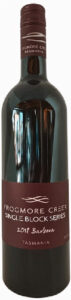
2018 Frogmore Creek Single Block Series Barbera $48
Our climate is changing. So what reds might prove worthy successors to Pinot Noir in Tasmania? Frogmore Creek has narrowed the field to 10 varieties, with Barbera showing outstanding potential in recent vintages. This Coal River Valley release has the richness, generosity and structure you’d expect from a warm, dry year on a special site. Barbera’s attractive plummy fruit shines like a beacon. Ripe and well rounded, those flavours are supported by a hint of dark cherry, fine tannins and well-balanced natural acidity. Good stuff. It will be fascinating to watch this wine evolve. www.frogmorecreek.com.au

2020 Meadowbank Gamay $N/A
Meadowbank in the Derwent Valley is among the state’s oldest vineyards, with original plantings dating back to 1974. The first Gamay vines were added in 1987. What foresight the Ellis family showed by rolling their dice in favour of the rich red grape of Beaujolais. It seems well suited to the valley’s somewhat continental climate. Hot summer days promote ripening; cold summer nights aid acid retention. The resulting wines are crunchy and vibrant, brimming with fruits of the forest. Gold medal and trophy winner, 2021 Tasmanian Wine Show. Sold out ex-vineyard but still featuring on good restaurant wine lists. www.meadowbank.com.au
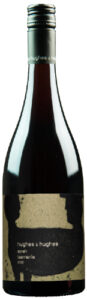
2020 Hughes & Hughes Syrah $37
Acclaimed as the 2018 Young Gun of Wine Best New Act and Australia’s Best New Winery in the 2019 Halliday Wine Companion, Mewstone is going from strength to strength in the cool D’Entrecasteaux Channel. The Hughes & Hughes brand features wines crafted from purchased fruit. Stylish and well-priced, this Syrah is an attractive, well-ripened style with a delightful vibrancy and juiciness that’s suggestive of the Northern Rhone or New Zealand. Brambly peppery elements are clearly varietal, on the lighter side of medium weight. Yes, Shiraz (aka Syrah) has a real future in Tasmania. www.mewstonewines.com.au

2015 Grey Sands The Mattock $45
Grey Sands at Glengarry can be found 7km east of Exeter in the Tamar Valley. First planted in 1989, the vineyard plays host to no less than 17 grape varieties. Ripening can be slow here as the site is more exposed to the elements than those closer to the river. Low-yielding, old-school Merlot, Malbec and Cabernet Franc combine to create a convincing red blend. Ripe plum, dark berry and cassis flavours offer a hint of black olive before neat savoury notes dry the finish and add to palate length. It’s drinking well now. Partner with Tasmanian spring lamb. www.greysands.com.au
ADVERTISEMENT – ADVERTISEMENT – ADVERTISEMENT