
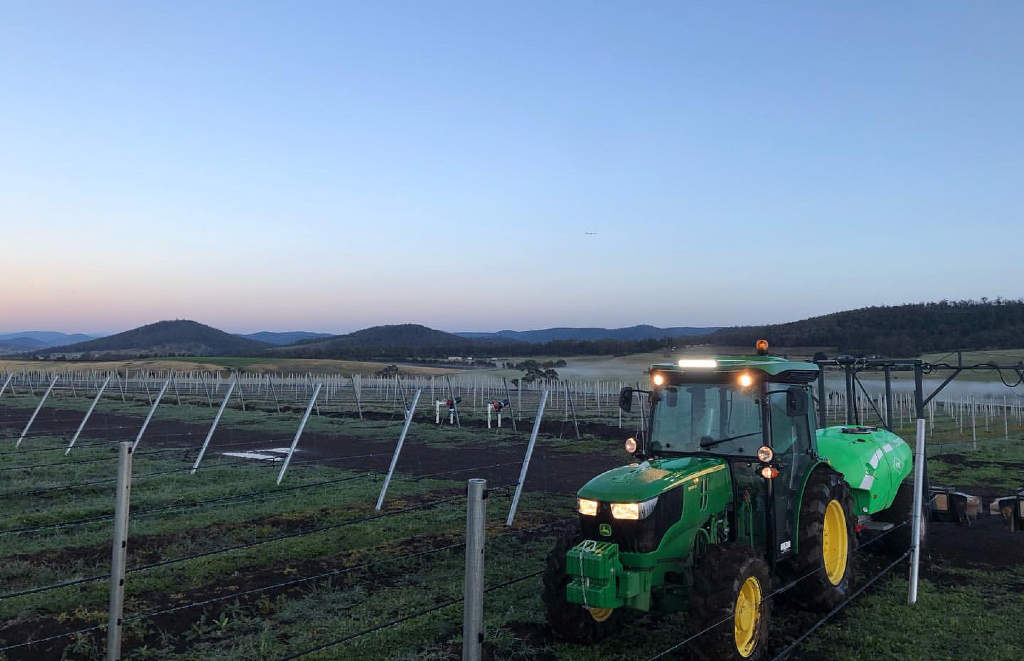
With row upon row of vines now basking in winter sunshine at Margaret River, Pemberton and the Perth Hills, it’s not hard to see why anyone would want to plant a vineyard in the well-established wine regions of Western Australia.
Why someone like Peter Fogarty would want to plant vines on greenfield sites in southern Tasmania – so far removed from his home base in the city of Perth – isn’t quite so easily explained.
What’s the point of it all?
The executive chairman of Fogarty Wine Group must have had that question put to him many times since the company announced two years ago it was investing in vineyards here.
It’s all about commitment to quality, of providing uncompromised and consistent excellence in every wine his company produces. That’s the Fogarty way, he says, and he has a 20-year track record to prove it.
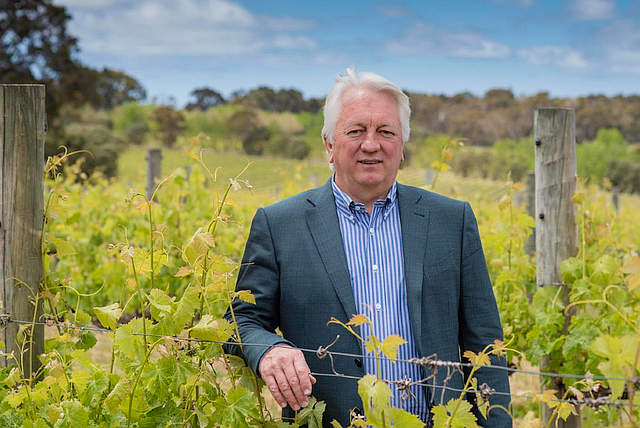
Fogarty Wine Group CEO Peter Fogarty. Image supplied.
“A focus on quality and innovation from vineyard site selection and management to finished wines is at the forefront of our approach to our individual and collective wine brands,” he adds.
“Our wines from the Hunter Valley, Pyrenees, Perth Hills, Margaret River, Pemberton and Tasmania stand out as among the best in Australia.”
Indeed they do. Fogarty Wine Group has a wealth of wine treasures when it comes to highly prized brands held in family ownership – Dalwhinnie, Deep Woods Estate, Evans & Tate, Lake’s Folly and Smithbrook.
In mid-2019, the WA company joined Tasmania’s wine fraternity and added to that list.
First came the purchase of long-established Lowestoft at Berriedale, a 3ha Pinot Noir vineyard little more than a grape toss from Moorilla Estate and MONA, just north of Hobart.
Then, in what seems like no time at all, Fogarty Wine Group purchased large tracts of land at Forcett and Penna and took up 50 percent ownership of the state’s biggest contract winemaker, Winemaking Tasmania. Renowned Tasmanian businessman Rod Roberts acquired the remainder of the distressed company.
Part ownership of renamed Tasmanian Vintners brought Tasmanian brands Terra Verde and Anon into the Fogarty fold.

The WA company had barely allowed the dust to settle on its land acquisitions and it was announcing plans to establish 200ha of new vineyards in southern Tasmania. Progress towards achieving that goal has been quite extraordinary to date. No wonder consultant viticulturist and vineyard contractor Marty Smith has become just as much a local bloke in Richmond and in Penna as he is on home turf on the east coast.
Sorry, did we not mention his former stamping grounds of Pipers River and the Tamar Valley?
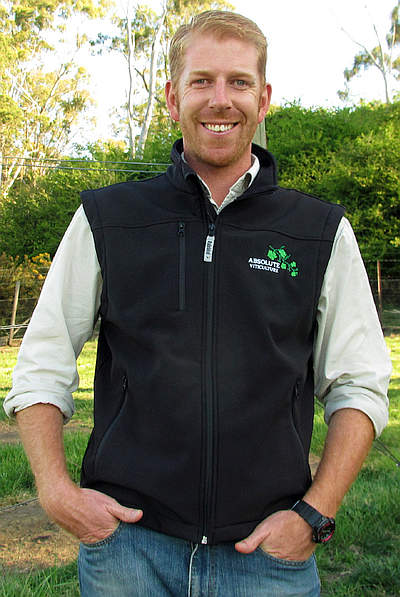
Absolute Viticulture’s Marty Smith. Image supplied.
On top of all that, Smith’s Absolute Viticulture – a small family company he founded with wife Lisa in 2013 – is one of Tasmania’s largest contract harvesting operations. In 2020, his fleet-footed work crews and mechanical harvester brought in 15 percent of the state’s entire wine grape crop. It was the second vintage in a row he had managed that.
“This year it was more like 20-25 percent,” Smith says, acknowledging his company’s purchase of a second, French-built state-of-the-art harvester. The Cranbrook-based contractor reckons that was one of the smartest moves he’s made in recent times.
Smith’s approach to tasks is up close and personal. So it’s no surprise to find he is at ease with his pivotal role in so many diverse projects around Tasmania. He’s spent almost his entire life living among vines.
Back in 1986, his father Chris Smith had the daunting job of establishing Clover Hill Vineyard for Victorian company, Taltarni Vineyards. As Clover Hill’s technical officer from 2002 to 2009, the young bloke learned a good many tricks of the trade from his dad.
Barely a decade later, the fully qualified viticulturist and CASA-licensed drone pilot was being engaged to design and oversee the planting of 37 hectares of new FWG (Tasmania) vineyards at Forcett. The Gilling Brook Road site is not far from Sorell on the road to Port Arthur.
These Fogarty Wine Group developments are a short distance from the 40ha Woodside Vineyard owned by the Hill-Smith family. FWG’s near neighbour was established in 2017 to support Hill-Smith’s Dalrymple and Jansz Tasmania wine brands.
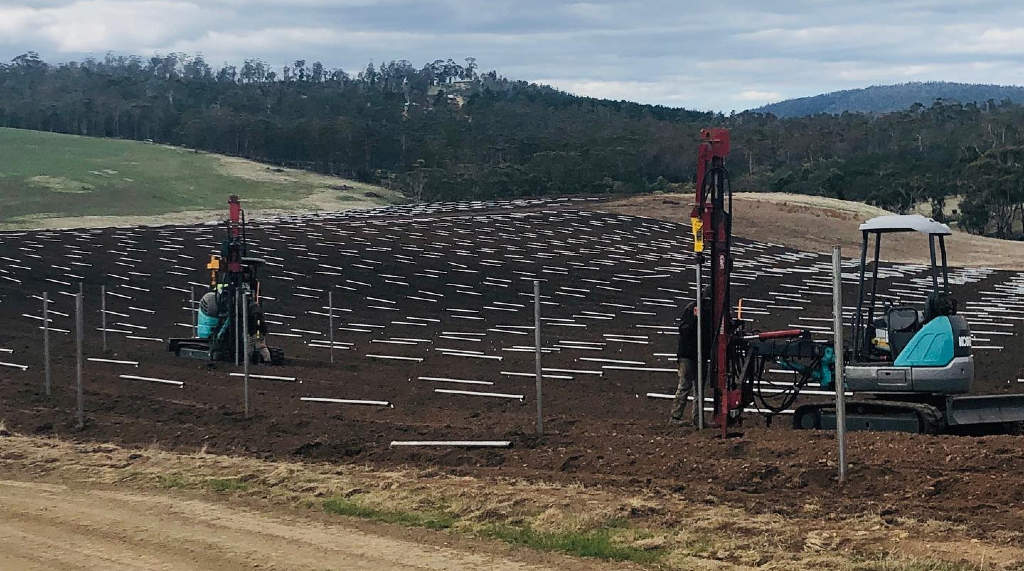
Vineyard preparations, Gilling Brook Road. Image courtesy Northern Vineyard Services.
In June 2020, major earthworks began on a 170ha parcel of FWG land, just outside Richmond in Tasmania’s Coal River Valley. Two plantings on that site – called Strelley Farm Vineyard – have created a 40ha production base that is set to receive another 40ha of vines during the coming spring.
“We’ll have 80ha in the ground for FWG by the end of the year,” Smith notes.
“We had planned another 20ha for Gilling Brook Road as well, but we had to navigate our way around some vine supply issues. The vineyard is 62ha at the moment. We’ll be putting in another 22ha of vines there in 2022. We’ll also have another 15ha to go in the ground at Strelley Farm.
“A lot of good work has been done already. We’ve been surrounded by some pretty talented and hardworking contractors. The job is only as good as the people you work with.”
If you think all that sounds impressive, Smith has a sizeable number of other projects on the drawing board.
Just outside Tea Tree in the Coal River Valley, award-winning winemaker Sam Connew is looking forward to expanding her small-scale Stargazer brand this year. Smith is adding 2.5ha to her Palisander Vineyard.
Meanwhile, the Bresnehan family have a 4ha planting planned for the valley this spring. That will be followed by a further 11ha next year and 10ha in 2023.
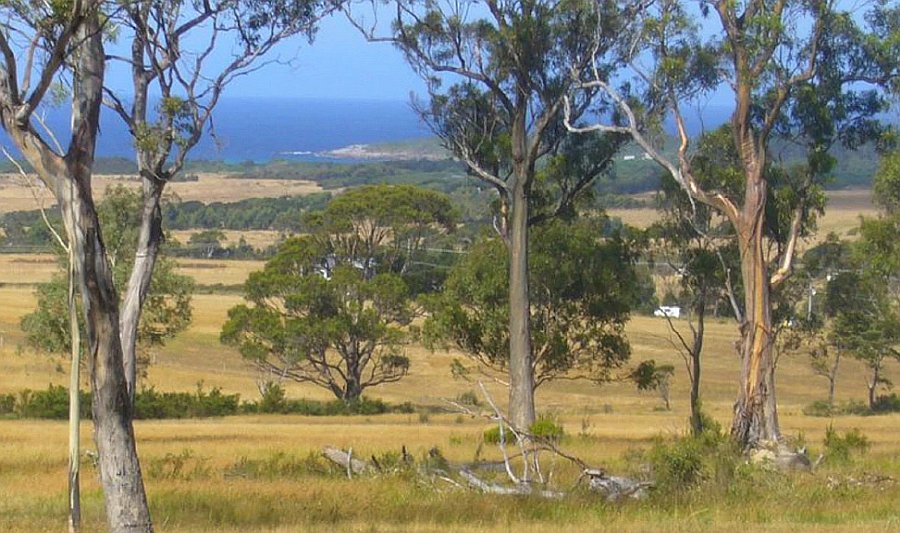
Earlier this week, another mainland wine producer took their first bold steps into the Tasmanian wine industry. Adelaide Hills wine producer Bird in Hand has an ambitious 60ha vineyard on the drawing board. Contractors broke ground on Wednesday at the Seymour site, 16 km north of Bicheno.
New Bird in Hand site. Images supplied.
Details of the Bird in Hand developments were announced by company founder Andrew Nugent in mid-February. The project sits at the edge of the Douglas Apsley National Park. Its 180ha of prime agricultural land will be transformed into a contemporary viticultural showpiece and managed according to industry best practice, according to Nugent.
An initial planting of 5ha of vines will commence this spring. Construction of a 300ML dam starts in a few weeks’ time, Smith says. The multi-purpose water storage will help drought-proof the property, while contributing its own special aesthetic qualities to the site as a form of land art.
“In addition to creating an irrigation scheme, we’ll also be putting in place a form of wetland,” he explains.
“The dam itself has an area of about 10ha. Over time, native vegetation will be restored and various endemic plants will be added to enhance biodiversity. The resulting wildlife corridors will enable animals and birds to access the nearby coastline and national park. It sounds amazing.”
Absolutely.

Hobart’s Mark Smith wrote his first weekly wine column back in 1994. Now more than 1700 features and 25 years later, he continues to chart the successes of Tasmania’s small scale, cool climate wine industry with regular contributions to some of Australia’s leading industry publications.
PICK OF THE CROP
Mark gives you his honest opinions about the best wines available right now from Tasmania’s wine makers.
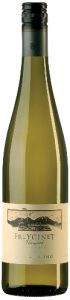
2020 Freycinet Vineyard Riesling $30
No doubt about it, Freycinet Vineyard on Tasmania’s sunny east coast makes crackerjack Riesling. Claudio Radenti’s new releases are always a joy to behold and this one has real class. It’s a lovely, fresh, vibrant white, with subtle white flower fragrance to enhance its varietal lemon and lime aromas. The palate is crisp and clearly defined, with delicious citrussy flavours that are dry, beautifully intense and very well balanced. These wines develop gracefully with extended cellaring. See for yourself during September’s Great Eastern Wine Week. www.freycinetvineyard.com.au
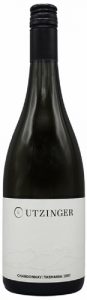
2020 Utzinger Tasmanian Chardonnay $N/A
New developments are springing up all over Tasmania. In 2015, Swiss winemaker Mattias Utzinger moved to the Tamar Valley, north of Launceston, to plant vines at Legana. Last summer, he and wife Lauren added a winery, providing a new home for their elegant, handcrafted wines. This light-bodied, sensitively oaked Chardonnay is just being released and is a smart response to the cool, damp 2020 vintage. There’s a neat mix of youth and restraint evident here, suggesting the wine should evolve nicely over the next couple of years. Partner with garlic butter scallops. www.utzingerwines.com
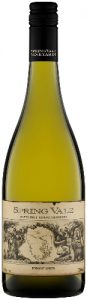
2021 Spring Vale Pinot Gris $30
When Spring Vale released its first wines in the early 1990s, it was quick to develop a strong following for Pinot Noir. A white stablemate of similar stature seemed elusive for quite a while. A decade of good Chardonnay appears to have made up for lost time. This Pinot Gris is a surprise packet, perhaps the property’s best yet. The wine has impeccable balance, fine natural acidity and a delightful mix of poached pear and floral/allspice characters. It’s seen some oak but only a serenely smooth texture hints at that. Top marks, winemaker Barry Kooij. Good stuff. www.springvalewines.com
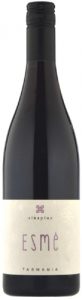
2020 Sinapius Esmé $38
Gamay. What will Tasmanian producers think of next? Who would know, but recent releases from Frogmore Creek, Meadowbank and Sinapius are proving that the trusty red variety made famous by Beaujolais has a real future in the state. Despite the sad loss of winemaker Vaughn Dell, vintage 2020 produced another mouth-watering example from the Pipers Brook site. Intense red cherry and dried herb notes lead the palate into subtle red fruit and pomegranate territory before finishing with hints of white pepper and crunchy freshness. Time in large oak provides welcome grip and structure. Très bien. www.sinapius.com.au
ADVERTISEMENT – ADVERTISEMENT – ADVERTISEMENT