
by Heidi Heck
A recently-arrested forest protester in takayna/the Tarkine suggests that a new approach is needed to the social acceptance of mining.
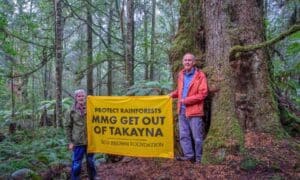
On Tuesday the 22 June, Jai Onya was arrested protecting the takayna rainforest from new construction by the Chinese mine MMG. Onya is amongst 48 protesters to be arrested. After being on the ground, he believes the situation would benefit from a new perspective.
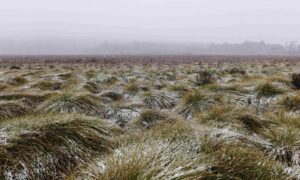
takayna is Australia’s largest temperate rainforest. Being over 90% intact, it is a rare untouched natural phenomenon. Mining activities by the Chinese mine MMG are encroaching onto the pristine forest and threatening to pollute and degrade the quality of the takayna.
For six weeks now protesters have been blockading the entrance road to a new tailings dam, as yet unapproved by the federal Minister for the Environment.
The forest has huge cultural and natural significance. The Bob Brown Foundation states on its website that:
‘The Australian Heritage Council found takayna / Tarkine to be of outstanding heritage value and recommended it be entered on the National Heritage List. In 2013 the Australian Government failed to list the full recommended area…’
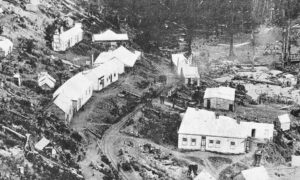
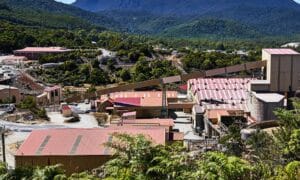
Chinese mining company MMG is attempting to construct a new tailings dam for their Rosebery mine. The Rosebery mine is a zinc, copper and lead mine located 300kms north-west of Hobart on the edge of the takayna rainforest. According to MMG ‘The mine employs approximately 500 people, of which 97.94% are Australian nationals’.
The new tailings dam would serve to store by-products of mine mainly heavy metals; these by-products are highly toxic. The planned dam would be within the area that is suggested to be heritage-listed.
“Tailings dams leak all the time…, the likelihood of this dam polluting the forest is fairly high,” says Jai Onya. “The reason we are protesting is that the risk to the forest is significant.”
Jai Onya is a student of the University of Tasmania, studying a Bachelor of Natural Environment & Wilderness. “The issue is important to me because I think it’s my responsibility to act to protect the environment where I can.” Working on the ‘think globally, act locally’ principle, Onya is involved in direct action activity on behalf of the Bob Brown Foundation.
He believes more needs to be done and new perspectives need to be explored. Regarding the protest action, he says: “We don’t have a thousand people, we have maybe twelve at any time. From 6 am to 12 pm I was chained to the machine, but after police arrested me work continued as normal. The protests are just another procedure at this point.”
From the view of a takayna protester, a more community- and state-based approach needs to be adopted.
“I am so proud to be part of the Bob Brown Foundation and the direct actions involved in protecting natural phenomena,” says Onya. “However wew perspectives need to be explored because our current methods aren’t working as well as they could.”
“Some locals are supportive of our work, others, not so much,” he reflects. “Obviously for many locals of the northwest mining is an important part of their lives, they’ve grown up being told that it’s the only way. In a sense, both sides are being destructive of the other’s way of life.”
Onya believes the key to change is to engage the local community and open a dialogue. “We should go to the pub and talk to those who scream at us from the road and hear why mining is important to them and they should hear why the forest is so important to us.”
Furthermore, he is imploring the wider community of Tasmania and Australia to become more informed and more vocal on their opinion about mining activities in the state.
“We need more voices and more feet because this beautiful forest is so important to so many Tasmanians, Australians and the wider world.”
Featured image above courtesy Matthew Newton.
A poem by Jai Onya on the Tarkine
I will be protecting my Mother Earth.
I will love you, and let you heal.
And you, will give me strength and faith,
Because there are no evil people.
But the wooden handle of an axe cutting a tree would feel so hurt.
Trauma? Would one be desensitised growing in the manipulations of industrial slavery?
But you wouldn’t blame them, they only need to heal. They’ve been hurt also.
So to my brothers and sisters I will give so much positive energy and love.
Because trauma is never your fault, but healing is your responsibility, so go heal, all you’ll need is the right environment and then to allow time.
Heidi Heck is a student of Journalism/Economics at the University of Queensland. Originally from Brisbane she now lives in Hobart. Her areas of interest are economics, politics and environmental reporting.