Queenstown is the largest town on Tasmania’s west coast.
History
The Queenstown area was first explored in 1862 by surveyor Charles Gould, who thought it was a possible source of gold deposits.
In 1881, Irish prospector Cornelius Lynch found gold at Lynch Creek, 3.4 kilometres from where Queenstown now stands. When news of the discovery spread, miners and other prospectors moved in and established a mine. The ten-head stamper battery that was installed at the mine in 1887 was the first on the West Coast to crush gold-bearing quartz.
Another mine, Iron Blow, was established in 1883, drawing even more miners to the area.
A shanty town named Penghana gradually grew up around the two locations. It caught fire in 1896 and burned to the ground. It was promptly rebuilt and renamed Queenstown. It became Tasmania’s third-largest town in 1901 (it had a population of 5,051 people).
The Mount Lyell Mining and Railway Company was established in 1893. Its first smelters were in operation by 1895, mainly producing copper.
In 1914, a hydro-electric power station was built nearby to provide electricity to the area. A major local refinery had been built by 1928.
The first road from Hobart to Queenstown was opened in 1932 (all traffic before this had been by sea from Macquarie Harbour).
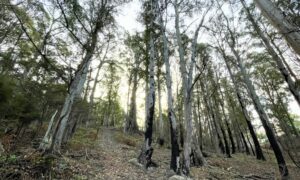
The rainforest surrounding Queenstown was gradually destroyed due to tree-felling, sulphur smoke, and fire.
In 1972, Renison Goldfields Consolidated took over the Lynch Creek mine. The nearby power station was taken over by Hydro Tasmania in 1985.
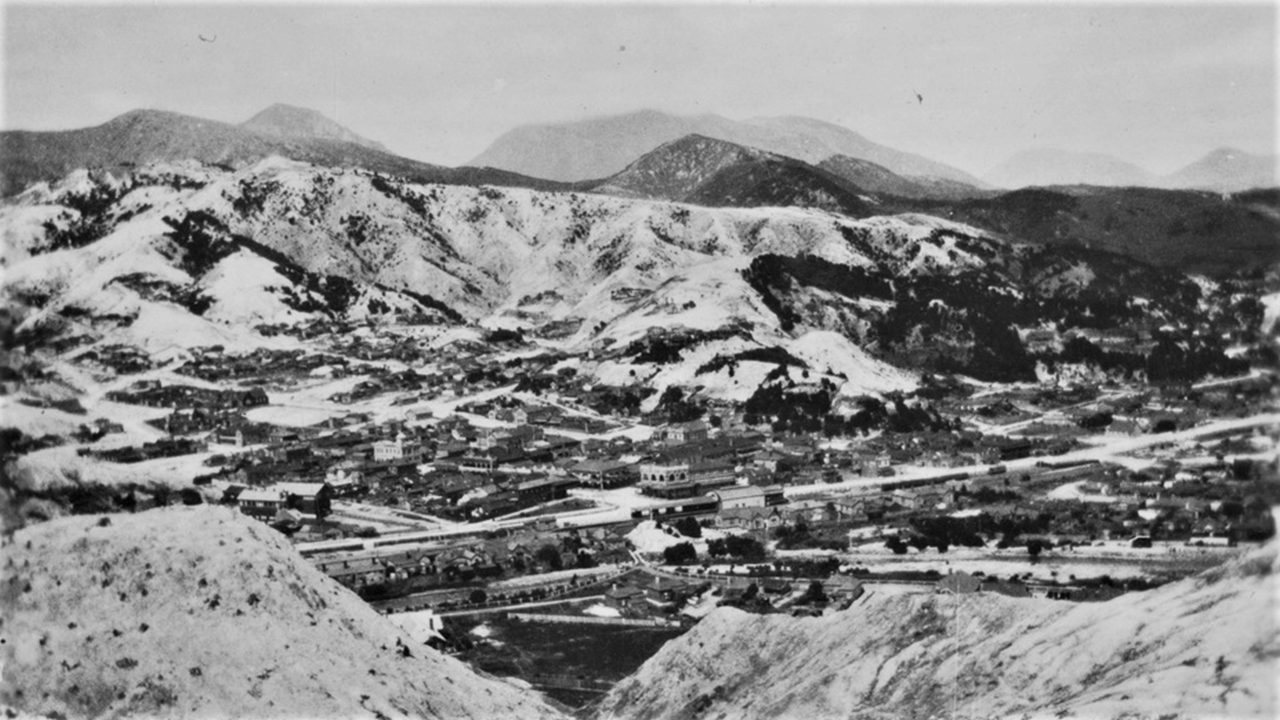
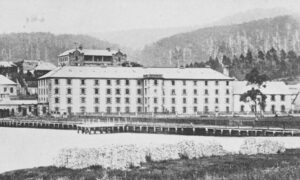
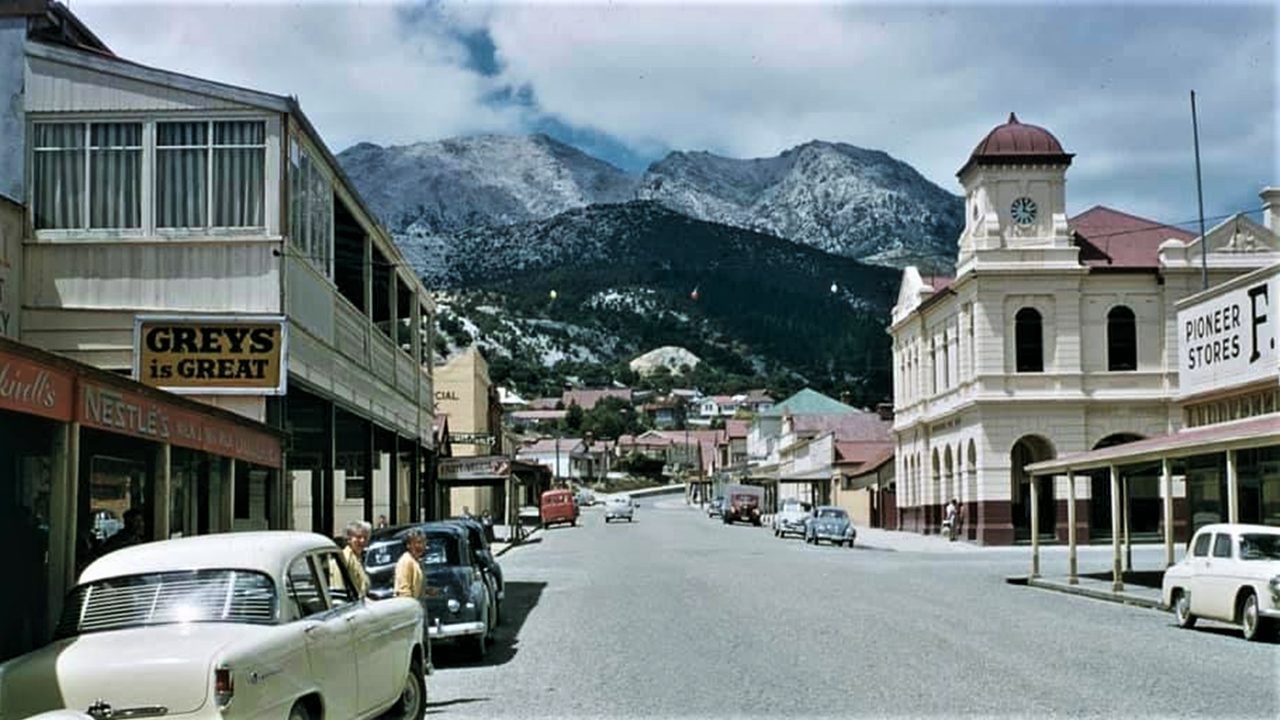
An old photograph of Queenstown.
Today
Queenstown’s workforce has declined since the 1970s, but the Lynch Creek mine still operates today.
The town had a population of 1,755 people in 2016.
Visitors to Queenstown can view relics from the old mining days at the local museum.
There has been some debate in recent times about reforesting the landscape surrounding Queenstown. Some locals have claimed that it is a tourist attraction, while others have expressed the desire to see the rainforest regrow.
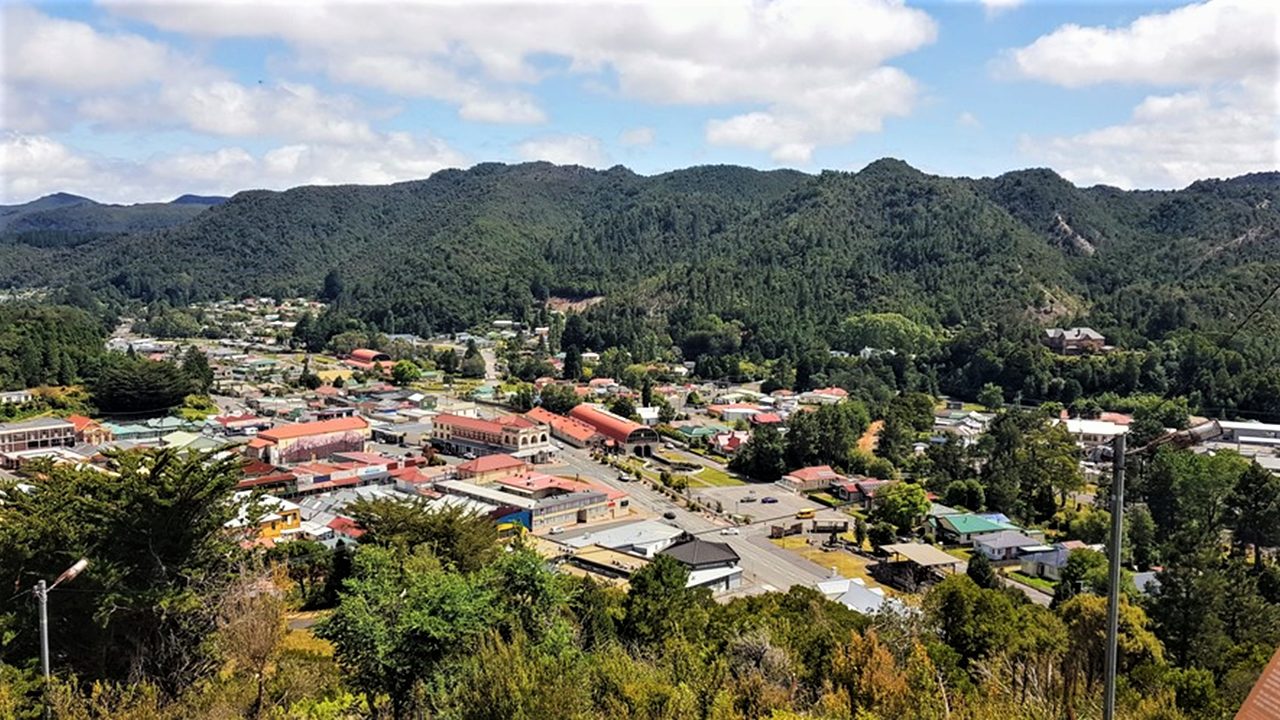
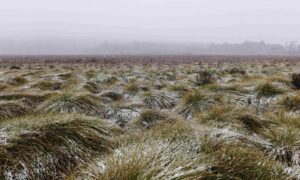
Queenstown today.
Bibliography
- Queenstown (The Companion to Tasmanian History).
- Queenstown, TAS (Aussie Towns).
- Queenstown (Discover Tasmania).
- Queenstown (The Sydney Morning Herald).
- Map of Upper Lynch Creek Mine, TAS (Digital Atlas).
- ‘King River Mine: A Brief Historical Summary’ (Mineral Resources Tasmania).
- 2016 Census QuickStats – Queenstown (Australian Bureau of Statistics).
* * * *
Tas That Was is a column that includes:
- anecdotes of life in Tasmania in the past;
- historical photographs of locations in Tasmania; and/or
- documentaries about locations in Tasmania.
If you have an anecdote or photograph you’d like to share with us, please send it to [email protected].