“Even petty power can corrupt.”
Prison & Power: Coercion and Corruption in the Convict Settlement is a new play that includes three ‘sketches of life’ at Port Arthur during the mid-1800s. It is performed by two actors (one young, one old) in the central hall of Port Arthur’s Separate Prison.
In the first sketch, a new constable, Watts, arrives at the Separate Prison for his second shift. He’s flabbergasted when he learns that the warder in charge, Smith, likes to bend the rules. Smith encourages Watts to bend the rules as well, and when Watts tries to protest, Smith shuts him down. Because Smith is his superior, Watts has no choice but to do as he’s told.
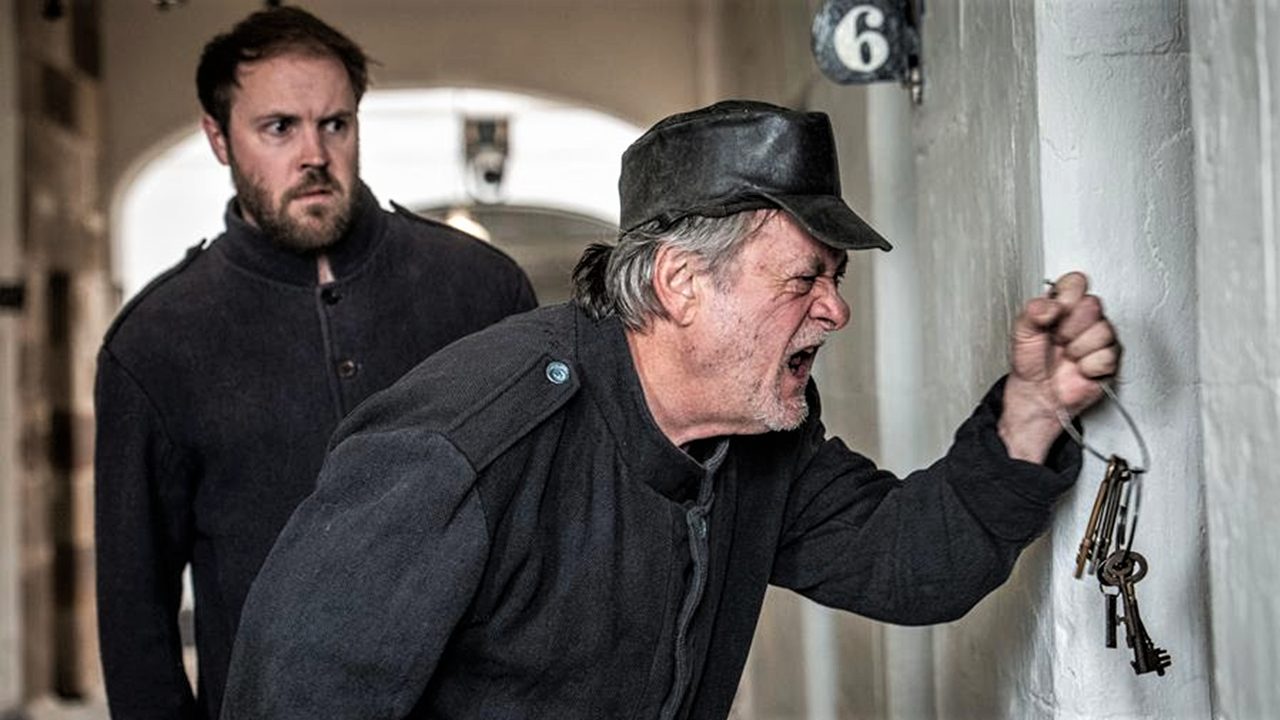
Smith encourages Watts to bend the rules.
The second sketch is centred on a meeting between Commandant Charles O’Hara Booth and non-commissioned prison officer John (‘Jack’) Longworth. After discussing the escape of a small group of convicts from Port Arthur with Longworth, Booth informs him that his services at the prison settlement will no longer be required. He’d taken the liberty of checking Longford’s military record, and found that he had deserted multiple times only to be reappointed in positions of power. Jack is angry and upset (he and Booth go back a long way), but because Booth is his superior, he has no choice but to accept his fate.
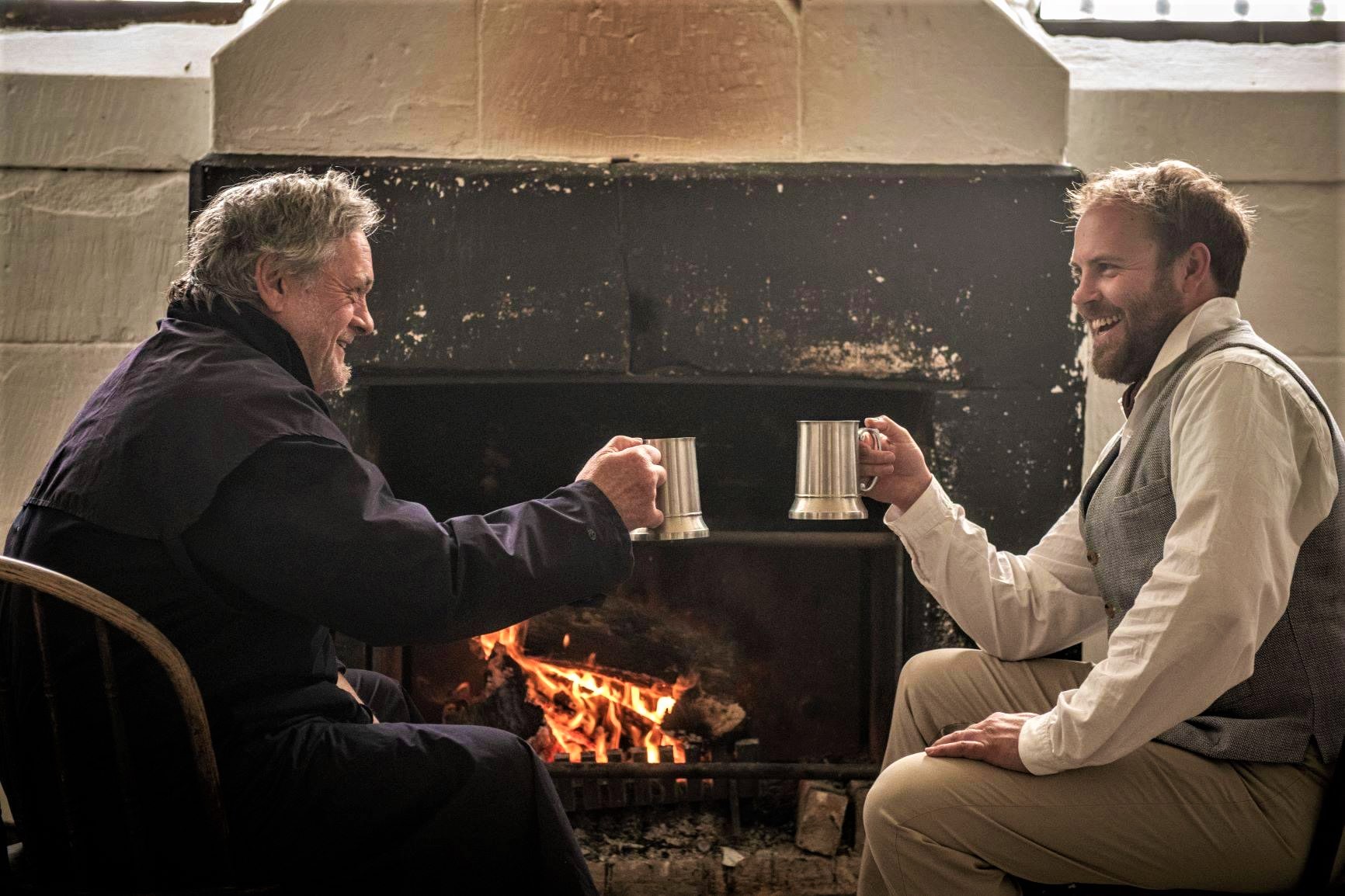
Booth and Longworth share a drink.
The third sketch takes the form of a court session in which a visiting magistrate sentences a convict to five days’ solitary confinement for disrupting a church service. When the magistrate reads out the convict’s past crimes, the convict tries to justify them, but he’s shut down by the magistrate every time. This is the only sketch of the three to be humorous.
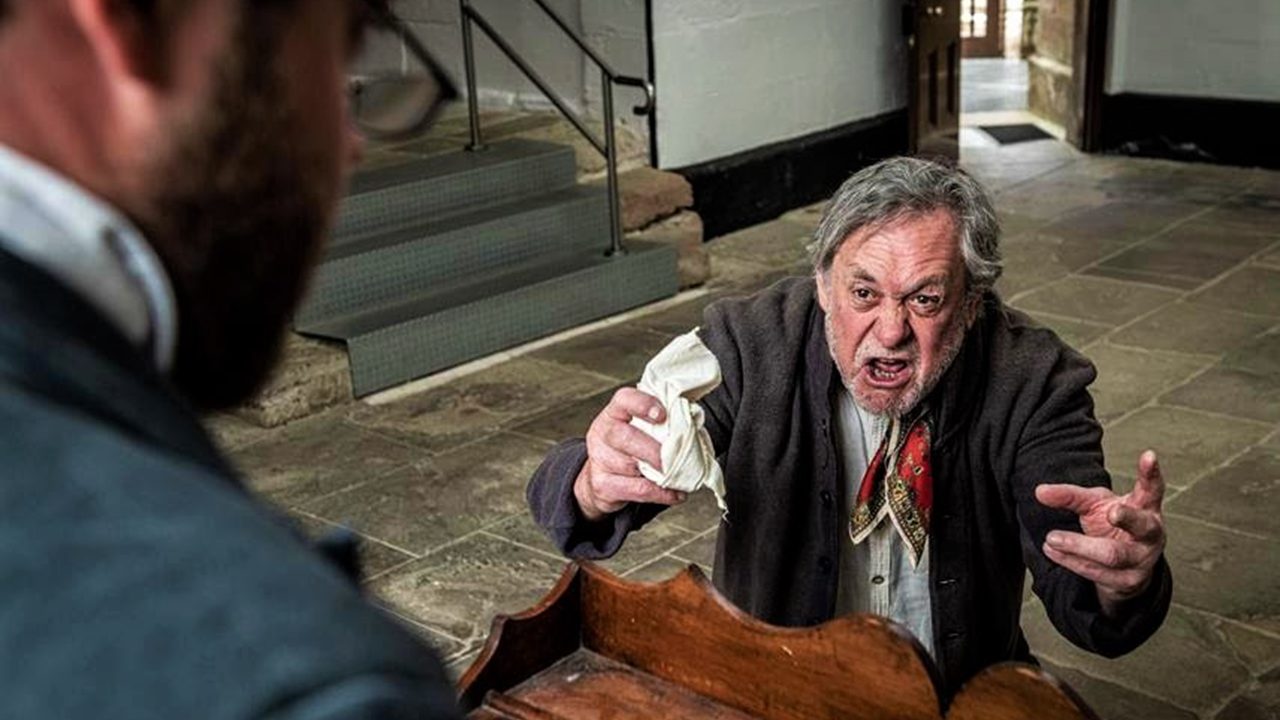
The convict tries to justify his crimes to the magistrate.
In-between each sketch, the actors would tell stories about some of the convicts who served time at Port Arthur. They explained that Port Arthur is a paradox: while it serves as a great monument to the Australian convict system, it was not where the average convict was sent. It was a place of secondary punishment. Only one in ten convicts saw a place like Port Arthur.
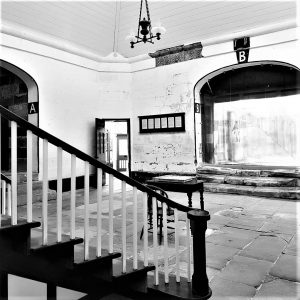
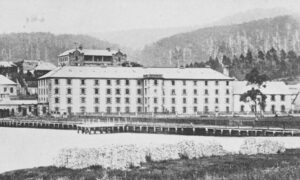
Prison & Power is performed by two actors in the central hall of Port Arthur’s Separate Prison, pictured here.
The characters in Prison & Power were real people who lived and worked at Port Arthur during the mid-1800s. The two actors do an amazing job at bringing them back to life. They adopt convincing, accurate accents and mannerisms for each individual, and do not over-act.
The play’s overall production design is great. The props and costumes that are used look authentic, almost as if they were plucked right out of the mid-1800s. Performing it inside what used to be a prison added even more authenticity and depth to it.
An abundance of natural light poured into the Separate Prison’s central hall via skylights. The play was therefore not marred by lack of light.
Though the play’s two themes (corruption and coercion) are prominent, there are other themes that make it interesting and compelling. These include friendship, politics, and making hard decisions.
The only bad thing about Prison & Power is that the actors did not memorise the stories of convicts they told in-between each sketch. They simply read off pieces of paper. Constantly looking down at notes during a performance or presentation shifts your gaze from audience members and limits your interaction with them. Your delivery therefore loses the personal touch it always needs.
I would strongly recommend going to see Prison & Power, especially if you’re a history buff and/or a theatre goer.
Behind-the-scenes fact
I attended a performance of Prison & Power on Thursday, 14 January. I had a brief conversation with its production manager afterwards. He told me the actors spent a lot of time during rehearsals getting their enunciation right because the acoustics inside the Separate Prison are not great. They ended up doing a terrific job – there was hardly any echo!
Performance details
Performances of Prison & Power are held on Thursday, Friday, Saturday, and Sunday evenings. Tickets are limited, so bookings are essential. Dinner packages are available with the 1830 Restaurant and Bar (located at the Port Arthur Visitors Centre). More information can be found at www.portarthur.org.au.