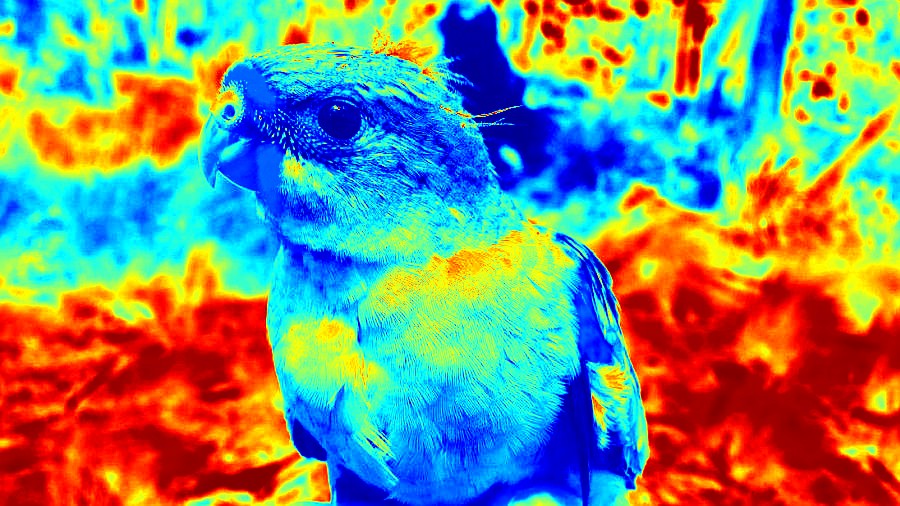
Cooking the parrot – Unsustainable Timber Tasmania is still without Forest Stewardship Council (FSC) Certification
In 2003 El Grande, possibly the largest living object on the planet, was cooked from the inside during a regeneration burn by Forestry Tasmania now renamed Sustainable Timber Tasmania.
Such was the power of the logging industry in Tasmania that no mention of this ecological disaster appeared in the columns of either The Examiner, The Mercury or more understandably in the anti-Green, climate change denying Murdoch press. The cooked carcass of El Grande is viewable some 33min and 52 seconds into this important film that records the rape of Tasmania for woodchips by the Tasmanian logging industry.
With this cover up behind them, then Premier Paul Lennon and Gunns were emboldened to go for a pulp mill. Lennon left office abruptly after his preferred rating as Premier fell to 17%, when it became apparent that serious corruption regarding due process had tainted his government’s fast-tracked planning approval of the Gunns Bell Bay Pulp Mill which had bypassed normal planning procedure. At the Gunns annual general meeting I asked John Gay why a Gunns subsidiary Hinman Wright and Manser, had restored the Premier’s sandstone mansion at Broadmarsh seemingly without payment, Gay the company Chairman and CEO asked a crony in the audience who cleverly replied that the matter was in dispute!
From experience, if we give Tasmanian governments control over major developments such as pulp mills or prisons, a small but privileged group trouser large sums of money. Systemic corruption is alive well and deeply embedded in the Tasmanian body politic.
RICK PILKINGTON: The Great Pulp Mill Swindle: A Chronicle of Deceit.
The current Major Projects legislation is designed to undermine the fairness and democracy of our planning system and will allow further destruction of Tasmania’s forests for private gain and public loss.
If you can buy political power to protect a poker machine licence, carry lumps of coal into parliament, and jeer at that those who try to protect the planet, you can rest assured the shysters in Tasmania will continue to rape the Tasmanian landscape.
This in a state with no landscape protection legislation which allows the corrupt to legally pillage our old growth native forests.
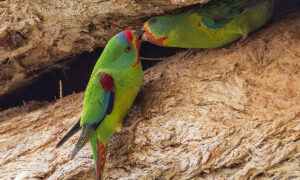
Barnett, the Tasmanian Minister for Resources is the people’s representative on the board of Unsustainable Timber Tasmania. He must occasionally wonder why this badly run, bankrupt business he is supposed to oversee cannot get FSC accreditation. It has yet to strike him that the principal reason is the logging of the habitat of the swift parrot which is driving a species to extinction. How and why can this be?
On the 24 June 2014, the Abbott federal Liberal government in a world first applied to UNESCO to delist more than 70,000 hectares of forest from Tasmania’s World Heritage Listed forests.
To be registered on the World Heritage List, sites have to be of outstanding value to humanity, unique landmarks which are geographically and historically identifiable, and have special cultural or physical significance. For example, World Heritage sites might be ancient ruins or historical structures, buildings, cities, deserts, forests, islands, lakes, monuments, mountains, or wilderness areas. A World Heritage site may signify a remarkable accomplishment of humanity and serve as evidence of our intellectual history on the planet, or it might be a place of great natural beauty.
The Liberal mafia of Abbott, Abetz, Barnett and Colbeck could see a political advantage in the destruction of an internationally recognised beautiful landscape that would allow them to wedge and denigrate the Greens in Tasmania; for this they were prepared trash our national reputation.
The United Nations’ World Heritage Committee, meeting in Doha, took just ten minutes to reject the Abbott government’s application pushed by the Tasmanian federal politicians Abetz and fellow Liberal Senator Richard Colbeck, The latter, the parliamentary secretary to the Minister for Agriculture and one of the major proponents of delisting the forests, stated: the ruling would hurt Tasmania’s struggling timber industry. As the ‘best’ Tasmanian Liberal in Federal Parliament he is currently the Minister for Aged Care and Senior Australians and his performance to date in this now vital portfolio has been equally woeful.
I suggested that within 20 years of the death of El Grande those who saw fit to ignore this major news story, namely The Examiner and The Mercury, will be no more, for they, like El Grande will vanish in a puff of smoke. People power via the internet will hold to account our unqualified, third-rate pollies who will do anything, and say anything, to keep their snouts in the trough. The likes of Abetz, Colbeck, Barnett et al will no longer be able to bluff their way into the corridors of power and play party politics with our planet which is being incinerated by global warming.
If I am correct, El Grande will have claimed a Pyrrhic victory over those whose incompetence caused her demise and the loss of the world’s largest living tree will not have been totally in vain.
El Grande was a massive Tasmanian Eucalypt, (Eucalyptus regnans), Australia’s largest tree by volume. It was located on a ridge in the upper Derwent Valley, adjacent to the World Heritage Listed Area of the Florentine Valley, approximately 100 kilometres (62 miles) from Hobart.
The tree stood 79 metres (259 ft) in height, had a girth of 19 metres (62 ft), and a volume of 439 cubic metres. While it was not the tallest tree in Australia, it was considered to be the largest in terms of volume, and the world’s biggest-stemmed flowering plant.
Approximately 350 years old, El Grande was burnt in April 2003, and died in December 2003, as the result of catching fire in a burn-off of the debris remaining after the clear-felling of old-growth forest in the tree’s immediate vicinity. Australian forestry officials admitted responsibility for killing the tree. Its hollow trunk acted like a furnace so that it was cooked from the inside.
Now also burnt but not yet dead under the watch of Unsustainable Timber Tasmania is a new giant tree, Centurion, which had not been discovered before the death of El Grande, having been overlooked by Forestry Tasmania.
I wrote this fully referenced article in 2017 and published it on Tasmanian Times: Forestry Tasmania’s Destruction of El Grande.
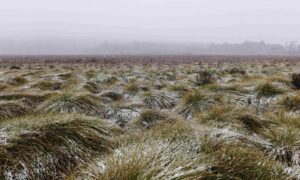
It is of interest that in the latter half of 2003, Forestry Tasmania under Lennon decided to remove the individual names from all the state’s giant trees – why was obvious but never explained – however thanks to public protest they were forced to relent. Other giant trees in the area of El Grande are now protected by Unsustainable Timber Tasmania under their Giant Trees Policy. The future giants are still being felled and left as may be seen in the attached photograph.
Eucalyptus regnans is the tallest of all flowering plants, although no living Tasmanian specimen can currently make that claim. The tallest measured living specimen, Centurion, stands at 100.5 metres (330 feet). Before the discovery of Centurion, the tallest known specimen was Icarus Dream, which was rediscovered in Tasmania in January, 2005 and is 97 metres (318 ft) high. It was first measured by surveyors from Forestry Tasmania at 98.8 metres (324 ft) in 1962 but typically the documentation was lost. A total of 16 living trees in Tasmania have been reliably measured in excess of 90 metres (300 ft).
Erich Abetz the Green-hating former federal Minister for Forests (under Abbott), a grinning acolyte always one step behind a Prime Minister famous for his one liner ‘climate change is crap’, was charged with protecting and promoting the now failed plantation tax scams that cost the nation over 4 billion dollars in losses. This failed Tasmanian pollie has recently tried to blacken the name of Dr. Jennifer Sanger, a passionate forest ecologist at the University of Tasmania who had written a key article for the Conversation republished on Tasmanian Times regarding Tasmania and its big trees.
Dr. Sanger has spent over a decade studying forests and the charismatic plant species which inhabit them; is the co-founder for The Tree Projects, an environmental outreach organisation which educates people about the world’s most notable trees; and is a member of the Independent Science Council of Tasmania.
Abetz was a patron of the now prosecuted and jailed Damien Mantach who kept the dirt files for the Liberal Party in Canberra, which files brought down Turnbull and gave the nation Abbott.
The above rarely-discussed information is provided here as background to the article by Sanger and Pearce published in The Conversation and republished here on Tasmanian Times which draws attention to the plight of the swift parrot and the felling of its habitat by Unsustainable Timber Tasmania.
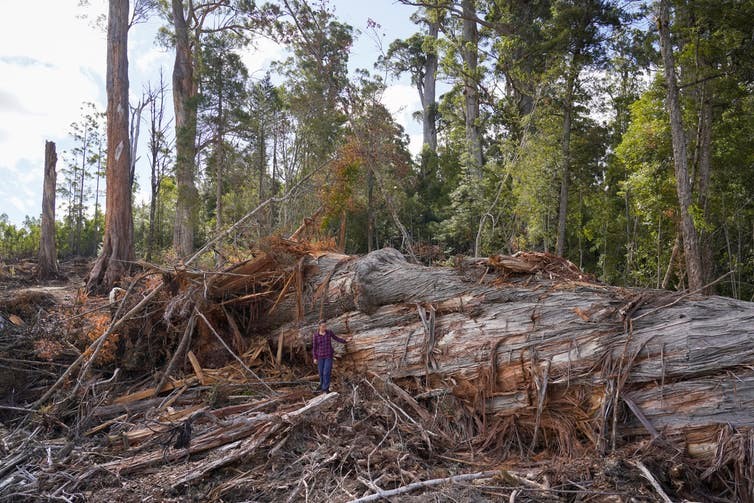
Image courtesy Steve Pearce.
Sanger published this photograph of a giant tree recently felled and left by Unsustainable Timber Tasmania in a logging coupe. This state owned company cannot get FSC accreditation because it continues to log the swift parrot habitat.
Other giant trees were cut down in this coupe, many of which provided excellent nesting habitat for the critically endangered swift parrot.
Centurion, a Eucalyptus regnans in the Huon Valley and Australia’s tallest tree has recently been severely burnt as a result of the recent fires. El Grande took 8 months to die, time will tell if Unsustainable Timber Tasmania has failed to protect yet another Tasmanian living legend and one of the world’s greatest trees.
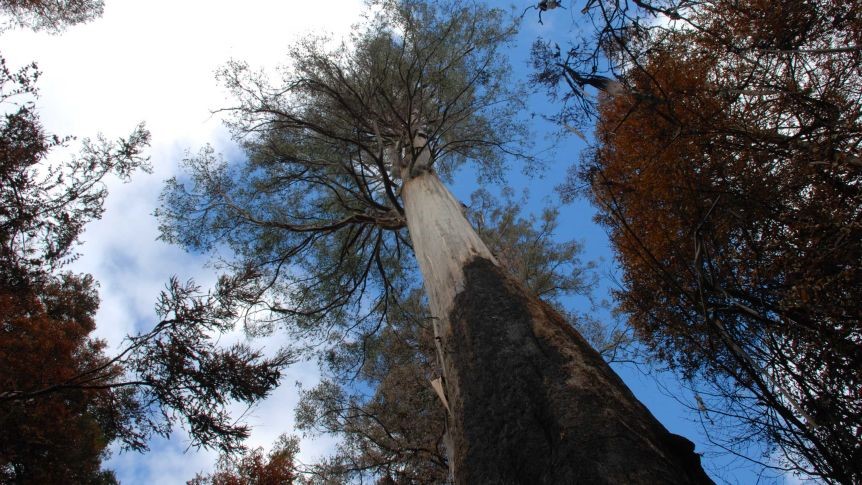
Image courtesy Sustainable Timber Tasmania.
More than ten years ago Dr Bob Brown at his own cost tried to protect the habitat of the swift parrot in one of its principal breeding grounds the Wielangta state forest selling his possessions and mortgaging his house to prosecute this important case. The case was won. The Crown under the auspices of the then Tasmanian federal Liberal Minister for Forests, Eric Abetz, appealed and the ruling was overturned after his Liberal government changed the law.
The matter is summarised in the following case notes published in The University of Tasmania Law Review Vo128 No 1 2009, by Imran Church:
The Wielangta Forest litigation has provided a major test of the relationship between the EPBC Act and the Tasmanian Regional Forest Agreement, and the extent to which both these instruments can and do in fact provide protection of endangered species in Tasmanian forests. The conclusion reached is that the legislation affords scant protection to threatened species in Tasmania’s forests. According to the Full Court, the RFA imposes an obligation to protect threatened species, but this obligation is, on the face of it, not legally enforceable; and in any case, this obligation imposes no more on Forestry Tasmania and the state government than to provide a system designed to protect threatened species, regardless of whether the system is actually effective. This interpretation is remarkable. Read literally, the original clause 68 obliged Forestry Tasmania and the state to protect threatened species through the CAR Reserve System. Surely if the CAR Reserve System were not effective, Forestry Tasmania and the state would not be protecting the species…
It appears that in cases of conflict between environmental and forestry industry interests in Tasmania, industry wins out. The decision of the Full Court of the Federal Court means that Forestry Tasmania and the Tasmanian Government have fulfilled their obligation to protect threatened species merely by establishing a System designed to protect threatened species that was found at trial to be incapable of. providing adequate protection. If any good for environmental protection is to emerge from this saga, increased scrutiny will be given to ensuring that the CAR Reserve System does indeed provide the protection that the RFA says it does. This is the only protection for threatened species that can be expected. Should the populations of the broad-toothed stag beetle, the wedge-tailed eagle and the swift parrot in the Wielangta Forest deteriorate further, serious questions will need to be asked of the Regional Forest Agreement (and its development) that allows the viability of three threatened species to potentially rest upon Forestry Tasmania and the Tasmanian state government’s willingness to fulfil a practically unenforceable, possibly non-existent and ultimately empty promise. http://www.austlii.edu.au/au/journals/UTasLawRw/2009/5.pdf
The states are granted exemptions to the federal environmental protection for logging operations under so-called Regional Forest Agreements, these are supposed to ensure that the operations are conducted in accordance with strict environmental regulations. The agreement under which Tasmanian logging is conducted lacks proper enforcement mechanisms, Sustainable Timber Tasmania’s practices are not sustainable, and the state and federal governments are failing to properly enforce environmental standards.
With the swift parrot now virtually extinct and the big trees under serious threat, Bob Brown is trying again this time through his Foundation by launching a legal action to end native forest logging in Tasmania. This by establishing that the industry is still breaking federal environmental laws. The Foundation has lodged the case against the Tasmanian government, the federal government and the Tasmanian state-owned logging corporation, Sustainable Timber Tasmania, at the Federal Court in Melbourne.
Former Greens leader and the founder of the world’s first Green Party, Dr. Brown notes: You can see as clearly as the nose on your face that this is not sustainable logging…the swift parrot, which travels between Tasmania and Victoria, had gone from endangered to critically endangered while its habitat was logged.
All Tasmanians should join Dr. Brown in his efforts to save the swift parrot and its habitat from the forces of evil that have run logging in Tasmania for far too long.
In Tasmania no one is held accountable no one is held responsible and the slaughter of bird and bough continues.
Compare this vandalism with public outrage over Rio Tinto and its CEO Jean-Sébastien Jacques, Chief Executive Iron Ore, Chris Salisbury and Corporate Relations Group Executive, Simone Niven. All have now been sacked for their perceived negligence over the blowing up ancient Aboriginal sacred sites.
As a state-owned Government Business Enterprise, the Board of Directors of Unsustainable Timber Tasmania are directly responsible to its two shareholder Ministers whose job is to act on behalf of the people of Tasmania. The shareholder ministers are the Minister for Resources (Barnett) and the Premier and Minister for Climate Change in his role as Treasurer (Gutwein).
These two men must also be held responsible for the lack of FSC accreditation for the people’s forests due to lack of enforcement over the logging of the habitat of the swift parrot thereby causing further horrendous losses to be foisted on the taxpayer.
The power over enforcement lies with the politicians and these egregious limpets on the public purse are liquidating the swift parrot.
If it is good enough for the public to turn on Rio Tinto, it is good enough for the public to question Unsustainable Timber Tasmania over their activities which cause untold harm to our natural world.
I suggest that this will never happen in corrupt Tasmania where the right of the Liberals to govern was bought and paid for at the last election by donations of 4 million dollars by unknown interests related to the gambling industry to protect the extension of a highly profitable poker machine licence. These donations will never be declared and are protected from public scrutiny by of our bent and twisted Parliament.
The federal Liberals have gagged debate in the House of Representatives in an effort to give the keys to the EPBC Act to the Tasmanian Government. If Lambie in the Senate agrees then Barnett can unmask the owl, build the prison on protected habitat, and celebrate this disaster by cooking the parrot.
MARIA RIEDL: Submission to Review of Tasmanian Forestry Agreement.