Planting a few vines in your own patch of dirt is the stuff of dreams for those pursuing the romantic notion of making a little bit of home brew for themselves.
But for those who choose viticulture for a livelihood, planting and maintaining a profitable vineyard is no place for dreamers. Every vine planted and every vine tended has to pay its way in the world of commerce. It’s revenue not romance that drives decision-making.
When Geoff and Susan Bull first planted Freycinet Vineyard on Tasmania’s idyllic East Coast, Sauvignon Blanc was included among the couple’s pet selections.
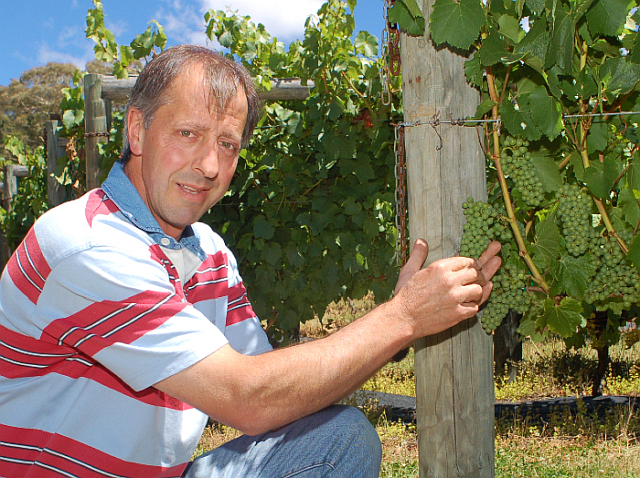
Claudio Radenti, Freycinet Vineyard. Image courtesy Mark Smith.
That was 40 years ago, says Freycinet winemaker Claudio Radenti.
“Geoff was quietly confident that wine grapes would do well on this site,” he adds.
But by the time the quietly spoken bloke from Launceston arrived to make wine on the Bicheno property back in 1992, the vineyard’s Sauvignon Blanc vines had long since gone. They had given way to Riesling and expanded plantings of Pinot Noir and Chardonnay.
“The variety was really difficult in the vineyard,” Radenti explains.
“I don’t know whether it was because Geoff didn’t have the right clones for the site, or what it was, but it just wouldn’t crop reliably. It was always boom and bust. After a while, Geoff just gave up on it and pulled it out.”
Two decades later, Radenti and his winemaker life partner Lindy Bull found themselves sharing a gotcha moment. The Bull family’s purchase of the neighbouring Coombend Vineyard in 2013 included several hectares of well-established Sauvignon Blanc.
What seemed less than ideal at the time proved a master stroke for the property that has become synonymous with world-class Pinot Noir, Chardonnay and Radenti sparkling wine.
Last week’s trophy announcements in the 2020 Winewise Small Vigneron Awards provided further proof of Freycinet’s unerring recent success with the pesky French variety. The vineyard’s wines were included three times among Winewise’s 16 category winners – twice for wines made from Sauvignon Blanc.
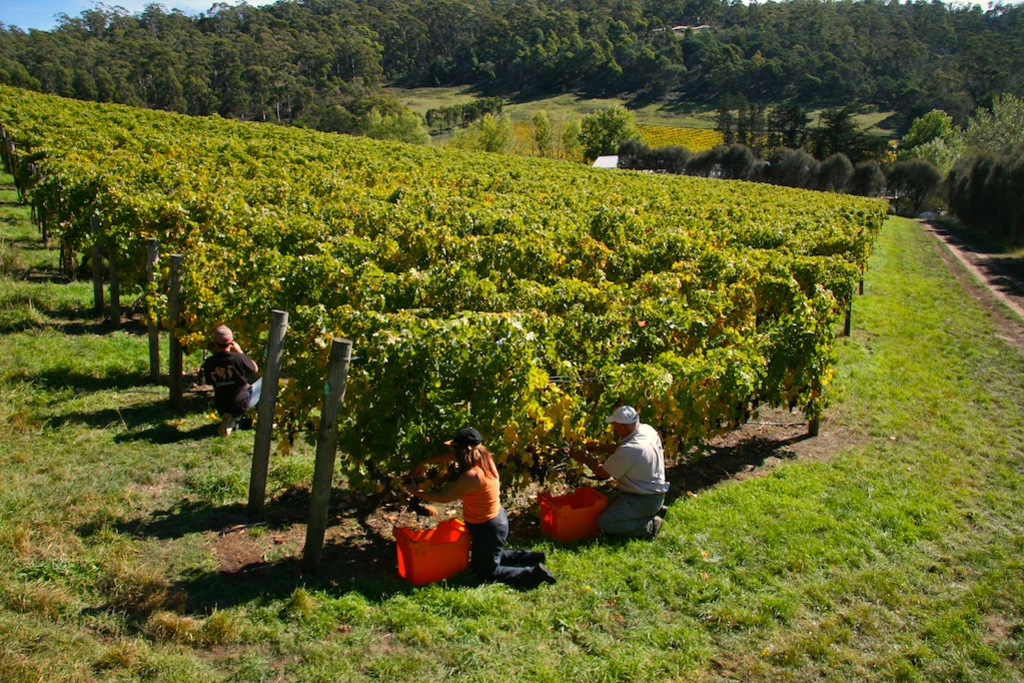
Freycinet Vineyard harvest. Image supplied.
The winning wines were 2018 Wineglass Bay Sauvignon Blanc (Best Sauvignon Blanc or Blend); MV Freycinet Botrytis (Best Sweet White) and R3 Vintage Radenti (Best Sparkling Wine).
Based in Canberra, the subscription-funded consumer publication Winewise has been a sourced of informed wine commentary since 1985. Its annual Small Vigneron Awards are conducted for Australian wine producers that crush 250 tonnes of grapes – or less – each vintage. Around 1300 entries are judged blind by its panel of professional tasters before various award recipients are decided.
“We’re really pleased with our results in this year’s competition,” Radenti muses.
“All three trophy wines won gold medals at the Tasmanian Wine Show back in January. Our Botrytis wine was also a gold medal winner and runner-up to the trophy winner at last year’s Six Nations Wine Challenge, held in Sydney.”
The latter result is especially noteworthy. Entry into the Six Nations Wine Challenge is by invitation only. It is made at the request of each of the six international wine judges that take part. A total of 1600 entries are assessed. These are drawn from six countries – Australia, Canada, Chile, New Zealand, South Africa and the USA.
Freycinet’s 2018 Wineglass Bay Sauvignon Blanc bears little resemblance to your average Marlborough Sauvignon Blanc, New Zealand’s wine gift to the world.
“It’s very much top-end premium wine, rather than the highly-mechanised, almost industrial wine you see from many Marlborough vineyards,” Radenti explains.
“By incorporating around 30% of wine made by barrel-fermentation in 3-4-year-old French barriques, we can create a style of Sauvignon Blanc that’s really smooth and creamy in texture, but without distracting oak flavours.”
The vineyard’s gorgeously decadent MV Freycinet Botrytis combines small parcels of Mother Nature’s handiwork in the vineyard with winery skill and extraordinary sensory perception at the laboratory tasting bench.
Sweet and luscious on the palate, the wine is a blend of 3 vintages: 2016 (50%), 2017 (25%) and 2018 (25%). The letters MV, stated on the label, denote Multi-Vintage. That puts it somewhere out of left field when compared with more conventional dessert wines produced from a single season.
“Multi-vintage blends are well accepted in the creation of many sparkling wines, but there’s a bit of a perception that table wines made in a similar fashion are in some ways lower in quality,” Radenti observes.
“For me, it was clearly a matter of the sum of the component parts being far superior to any one of the components tasted on its own. When the wine was on the tasting bench, I thought ‘Boy, is anyone going to buy a multi-vintage dessert wine?’
“The answer was in the glass. In the end, I was happy to go with a blend, because in terms of wine quality, it was just the best wine I could make. That’s all that matters.”
Freycinet Vineyard’s cellar door is open 10am-5pm, every day of the year, except Christmas Day.
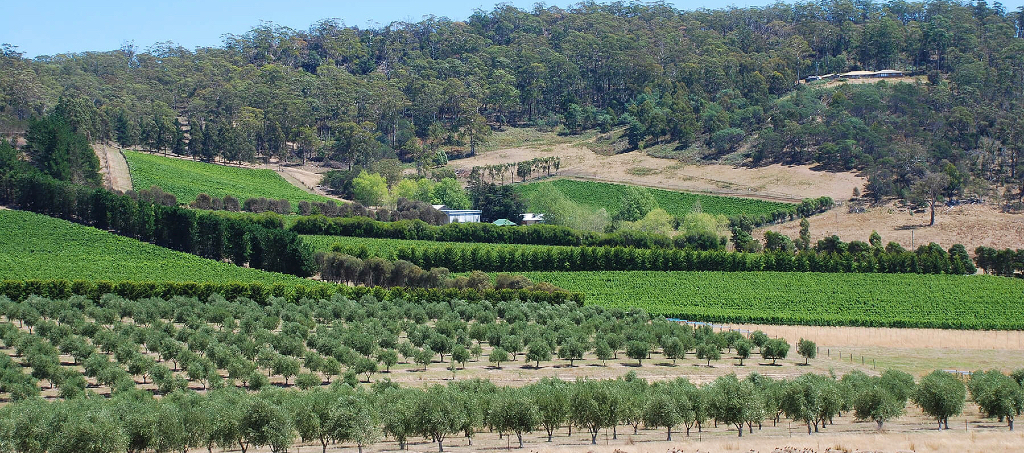
Freycinet Vineyard, an amphitheatre of vines. Image supplied.
Roller coaster spring ahead
You don’t need travel far to see that this a busy time in Tasmania for setting up new vineyards or expanding existing ones. Vine guards will be popping up all over the landscape during coming months. And it’s easy to understand why. Topsoils that have warmed in early spring promote budburst and allow new vine roots to develop successfully.
But viticulture in a cool climate region like Tasmania is an uncertain business at any time in the growing cycle. A project that’s taken months or years to bring to fruition can be undone in a single night. Frost is a wine-grower’s worst nightmare.
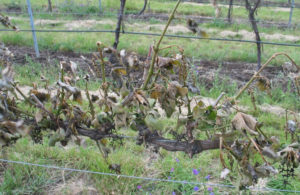
Frost-damaged vine. Image courtesy Australian Wine Research Institute.
Spring frosts in October 2006 devastated vineyards throughout south-eastern Australia. The resulting loss of fruit was estimated to be around $140 million.
A vineyard can suffer major damage after just a few minutes’ exposure to severe ground or air temperatures. Severe cold freezes the liquid inside plant cells. As the frozen liquid expands, rupturing cell walls. That causes significant tissue damage to new shoots, buds, leaves and sometimes even to the critical vascular tissue of the vine that helps transport water and vital plant nutrients.
Loss of a season’s crop can follow. Major plant damage can also have adverse consequences for the following year in the vineyard.
Early-budding varieties like Chardonnay, Pinot Noir, Pinot Meunier and Pinot Gris run the greatest risk of being frost affected as vineyards head into September, and the especially dangerous month of October.
The past week saw buds break and new Chardonnay leaves begin to emerge at the 8ha Brinktop Vineyard of Todd Goebbel and Gill Christian. The warm, well-exposed site is located at Penna between Richmond and Sorell in southern Tasmania. It was only planted in 2018.
Meanwhile, vineyard manager Carlos Souris, at Tolpuddle Vineyard, reports budburst is also underway in Chardonnay on the Coal River Valley site. Owned by South Australia’s Shaw + Smith company since 2011, the vineyard was previously engaged in ground-breaking vineyard research conducted by Dr Jo Jones from the Tasmanian Institute of Agriculture. Her work followed the devastating frost events of October 2006.
It was estimated at the time that the vineyard’s multiple frost events resulted in the loss of around 30 percent of Tolpuddle’s 2017 wine grape harvest.
“We’re in for a roller coaster spring,” Souris says.
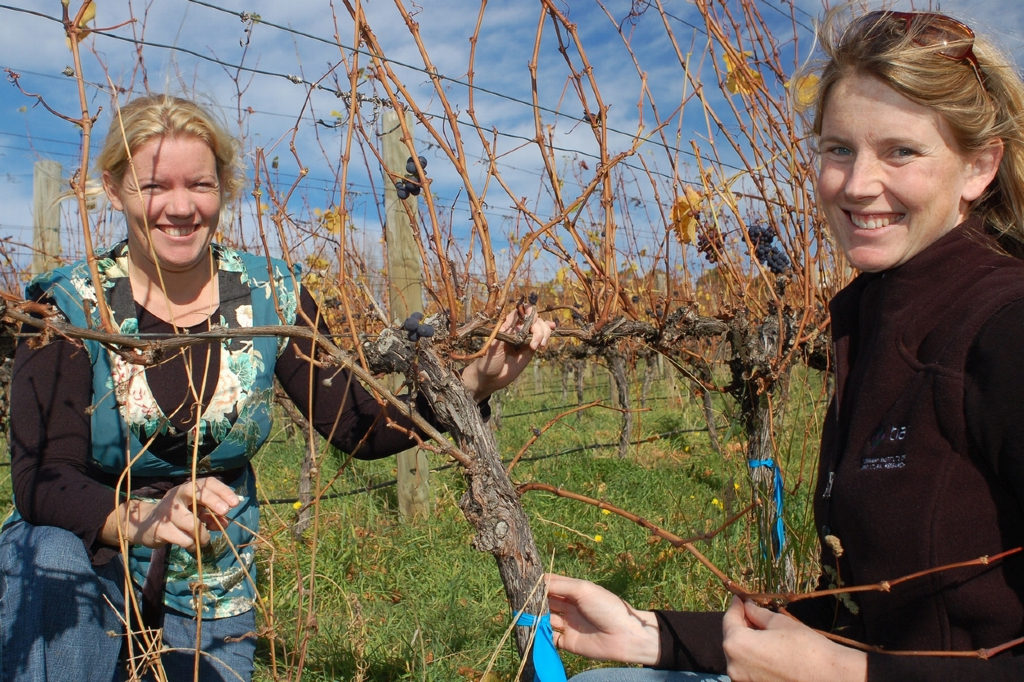
Researcher Dr Jo Jones (right) with former Tolpuddle manager Geraldine Columbo. Image courtesy Mark Smith.
Hobart’s Mark Smith wrote his first weekly wine column back in 1994. Now more than 1700 features and 25 years later, he continues to chart the successes of Tasmania’s small scale, cool climate wine industry with regular contributions to some of Australia’s leading industry publications.
PICK OF THE CROP
 Mark gives you his honest opinions about the best wines available right now from Tasmania’s wine makers.
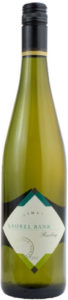
2019 Laurel Bank Riesling $25
Tasmania’s first Riesling vines were planted at Moorilla in 1958. Bright sunshine and reflected light from the river make it a good choice for vineyards in these parts, so it’s no surprise the variety has thrived in the Derwent Valley across the decades. This release from Laurel Bank at Granton showcases the floral/blossomy notes that are typical of the region. Lime/citrus flavours are fresh and engaging while delivered on a palate that has a good balance of fruit, acidity and subtle skin tannin. Serve with line caught blue eye trevalla or cellar 3-5 years. www.laurelbankwines.com.au
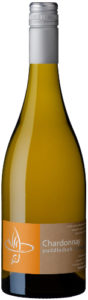
2018 Puddleduck Chardonnay $42
Jackie and Darren Brown have been welcoming guests to their property in the Coal River Valley since 2005. Their Puddleduck Vineyard between Cambridge and Richmond is a dry, sunny site, well-suited to Chardonnay. Equally important, the variety is a family favourite, so the barrel-fermented wines here get the best of French oak and kid-glove treatment from winemaker Darren Brown. White peach and barrel-ferment notes from François Frères barriques drive the wine’s generous aromas but the palate is pure Tasmanian – elegant, smooth and beautifully rounded. Little wonder it’s Puddleduck’s most popular cellar door wine. www.puddleduckvineyard.com.au
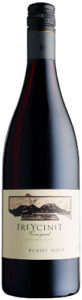
2017 Freycinet Pinot Noir $67
It’s been 40 years since Geoff Bull planted Pinot Noir on the amphitheatre-like slopes of Freycinet Vineyard outside Bicheno. And what a forward-thinking decision it was, when the variety at the time was still thin on the ground across the country. This 2017 wine clearly reinforces Freycinet’s claim to being one of Australia’s best and most consistent producers of the fickle red grape. It’s a lovely wine, combining fruit power and intensity, aided and abetted by superb making from Claudio Radenti. It’s rich and lush in red berry fruits, and oh so very refined. Classic. www.freycinetvineyard.com.au
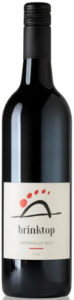
2017 Brinktop Tempranillo $35
‘We need more variety in our varieties’ has been a catchcry of renowned vine doctor, Richard Smart. And while some Tasmanian producers have responded with new plantings of Shiraz, Todd Goebbel and Gill Christian have made significant investments in Tempranillo, the celebrated red grape of Spain’s Rioja province. Time and money have been well spent. This 2017 wine is deep, dark and generous, so forget your Spanish inquisitions. Its bold mix of cherry fruit and firm tannin makes it a candidate for the cellar. Rare beef or venison will make it table ready. Watch this space. www.brinktop.com.au
ADVERTISEMENT – ADVERTISEMENT – ADVERTISEMENT
Special offer, just $240!