The cool, damp conclusion to Tasmania’s 2020 vintage may have diverted our attention recently, but data collected by the Australian Bureau of Meteorology indicate last summer was the country’s second warmest on record.
The mean maximum temperature for the three-month period was 2.11ºC warmer than average.
And that summer rainfall in Tasmania?
Well, it depends on where you were in the state. Most of Tasmania had less than average summer rainfall, with some sites in the south-east having only half of their long-term average.
“There’s enormous variability in rainfall across the Australian continent,” says Hobart climate scientist Dr Tom Remenyi.
“We are farming the most variable area of the entire planet.”
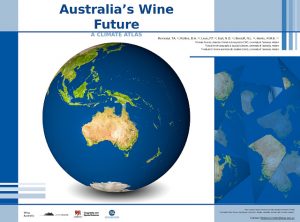 Remenyi speaks with the voice of experience. He is among six Tasmanian researchers that have been working closely with the Australian wine industry to map out its path to the year 2100. The team’s three-year project culminated in last month’s release of Australia’s Wine Future: A Climate Atlas.
“The atlas is based on the most up-to-date climate projections, at the finest resolution available, and across all regions of Australia,” Remenyi explains.
Its 487 pages of research and analysis were funded by Wine Australia and undertaken with the support of the University of Tasmania.
The document took four years to produce and examines two keys aspects of climate change in Australia. The first addresses short-term climate variability. The second looks at the long-term impacts of global warming and climate change.
Weaving all that into a single publication presented Remenyi with more immediate, professional challenges – how to make complex data and principles of climatology both meaningful and useable to stakeholders in the country’s 71 wine regions.
That’s largely been managed via references to commonly used climate measures, including growing season temperature, growing season rainfall, frost risk days, and aridity. Figures for each of those, along with a handful of other climate indices, were obtained for the 20 years spanning 1997 to 2017. Baseline data for the same variables, observed between 1961 and 1990, are then compared to provide evidence for short-term climate change.
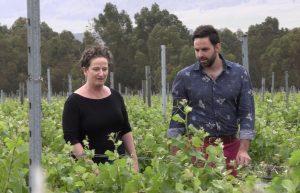
Climate researchers Dr Rebecca Harris and Dr Tom Remenyi.
Image courtesy University of Tasmania.
Data for the same set of variables obtained from six global climate models are used to determine Australia’s projected climate to June 2100.
As lead author and science translator for A Climate Atlas, Remenyi believes warm summers like the one we’ve just had are going to become what he calls “a new normal… not just something extreme that we’re never going to have to deal with again.
“The Australian wine industry is the first wine industry in the world to have this kind of information made available to them, at the resolution that is relevant to growers on the ground. That gives them an enormous chance to choose their future – by adapting their management practices in the vineyard, for example, or by selecting the kinds of grape varieties that are going to be most appropriate for the climate of the future.”
The word ‘adaptation’ features prominently throughout the atlas and its supporting documentation. Like it or not, Remenyi says we are all going to have to learn to live with the impacts of climate change as they become more evident in coming decades.
Australia’s wine industry will have changed significantly by the time 2100 arrives.
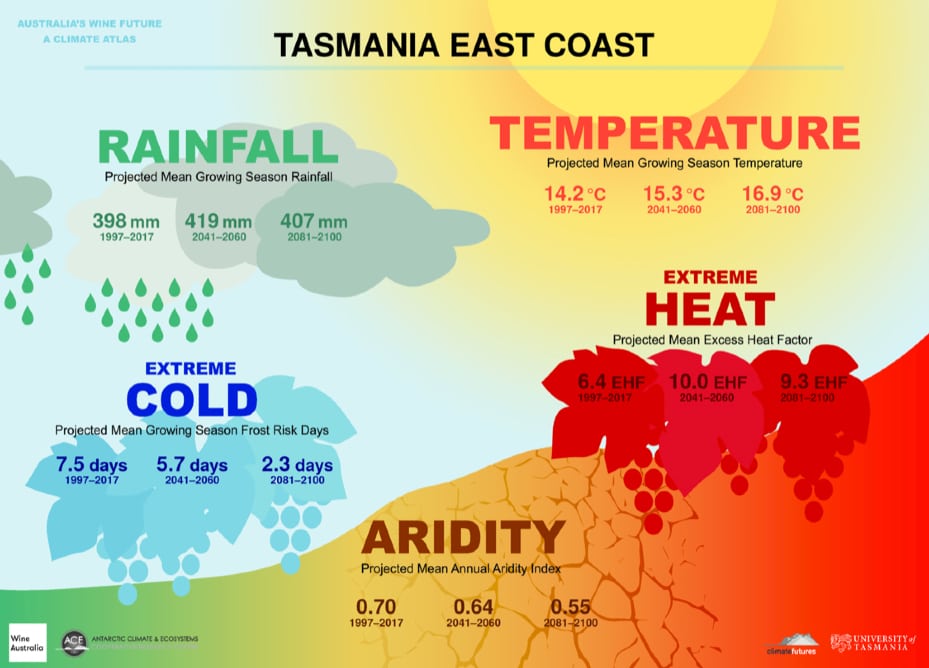
Average temperatures across all regions are expected to increase by around 3.0ºC following a high emissions scenario. Those in Tasmania will be slightly less than average, but still well in excess of 2.0ºC. We have the moderating influences of the nearby Tasman Sea and Indian Ocean to thank for that.
Even so, by 2041, Tasmania’s smallest winegrowing district – the northwest coast – is predicted to be almost a full degree warmer during the growing season than is now being experienced by the east coast. Rainfall then will have declined from its current average of 500mm to 442mm, barely 44mm more than the present figure for the east coast.
Meanwhile, the average growing season temperature on the east coast will rise to 16.9ºC by 2100. That will bring it roughly into line with conditions currently being experienced by Robe (17.0ºC) on South Australia’s Limestone Coast.

Shiraz!
Little wonder trophy-winning producers on the east coast – like Freycinet, Gala Estate, Milton and Spring Vale – are looking to Shiraz for future successes. Each has made significant investments already.
And it’s not just growing season temperatures that will see marked increases over the coming decades. Aridity – a measure of soil dryness that takes into account rainfall and evaporation – is also projected to increase in most Australian wine regions.
“Declining rainfall – especially winter rainfall – is really going to cause water storages to be put under stress in many regions of the country,” Remenyi warns.
“Finding new water is really going to play an important part in this climate scenario moving forwards.”
Free copies of A Climate Atlas can be downloaded from the Climate Futures website. Further information on the project itself can be obtained from Wine Australia or via an excellent Wine Communicators Australia YouTube video featuring Dr Tom Remenyi.
Dell Family Fundraiser
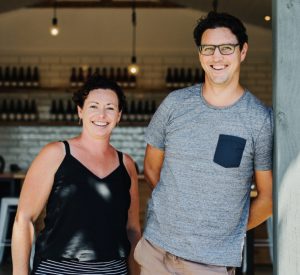
Linda Morice & Vaughn Dell.
Tasmania’s close-knit wine community and its network of supporters were devastated by the tragic loss of Sinapius Vineyard winemaker Vaughn Dell back in May.
The talented vigneron died from a heart attack at his Pipers Book home in the early hours of May 26. The 39-year-old was the doting father of two young girls and husband of vineyard co-owner, Linda Morice.
Dell and Morice began their Tasmanian wine odyssey in 2005 by purchasing the former Golders Vineyard located on property adjoining Delamere Vineyard. The site had been established in the mid-1990s.
The former Smithton District High School sweethearts immediately set about transforming its 2.5 hectares of Pinot Noir and Chardonnay. By 2012, the couple were attracting the attention of internationally renowned Master of Wine Jancis Robinson. The prolific English columnist and critic observed ‘the wines produced by Vaughn Dell and Linda Morice from Sinapius have an intensity that transcends the norm.’
In 2017, Dell was named winner of the Dr Don Martin Sustainable Viticulture Fellowship. The Tasmanian wine industry fellowship funded a busy overseas study trip that brought the former AFL footballer a wealth of new ideas and understandings. Then came an ambitious vineyard expansion program, and the creation of a smart portfolio of avant-garde Tasmanian wines, all made onsite in the family’s purpose-built cellar door/winery.
Now, two months on from Dell’s untimely death, friends and connections of Sinapius Vineyard have combined with Australia’s best-known wine auction house to hold a family fundraiser for Morice and young Esmé and Clementine. A thoughtfully assembled collection of wines from some of the world’s greatest vineyards and producers is currently open to receiving bids from interested parties. The auction closes on Sunday 26 July at 7:00pm.
Langton’s have generously foregone their usual buyer’s premium auction fees in order to help secure the future of Dell’s devoted family.
Many Tasmanian wine producers are wholeheartedly supporting the fundraiser by donating highly-prized back vintages and limited-release wines. Their generosity has helped create an enviable online auction catalogue. Spirited bidding for the 290 auction lots will be greatly appreciated.
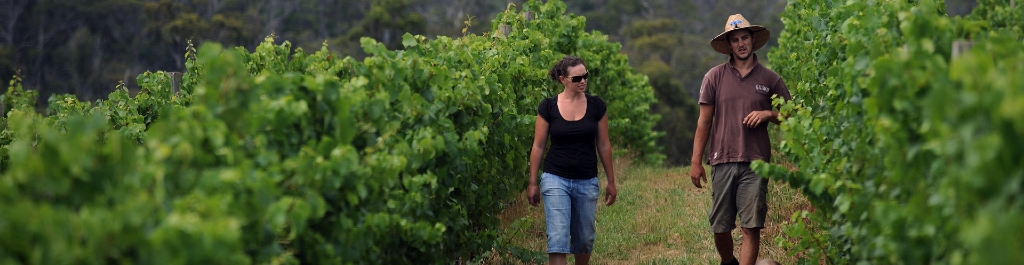
Linda and Vaughn at home among the vines. Image courtesy Chris Crerar.
Hobart’s Mark Smith wrote his first weekly wine column back in 1994. Now more than 1700 features and 25 years later, he continues to chart the successes of Tasmania’s small scale, cool climate wine industry with regular contributions to some of Australia’s leading industry publications.
PICK OF THE CROP
 Mark gives you his honest opinions about the best wines available right now from Tasmania’s wine makers.
2011 Uplands Pinot Noir Chardonnay $55
Michael and Debbie Ryan’s 4ha Uplands Vineyard is located at Cambridge in southern Tasmania’s Coal River Valley. The site was first planted in 1998 and has since become a top-notch contract grower for South Australia’s Penfolds Wines. This skilfully made sparkling is the third disgorgement of the wine and is in first-rate drinking condition, with further short-term improvement possible. Subtle baked apple, quince and citrus flavours are delivered on a long, creamy palate. Pleasingly dry, it’s a lovely aperitif style. www.uplandsvineyard.com.au
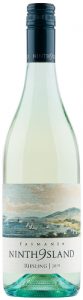
2019 Ninth Island Riesling $25
Kreglinger’s popular Ninth Island label adds an element of affordability to the Belgian-owned brand now synonymous with super-premium Tasmanian sparkling and Pipers Brook varietal wines. This new release won gold and trophy at the 2020 Tasmanian Wine Show and deservedly so. It has wonderfully deep and juicy limey fruit framed by well-balanced natural acidity and a hint of residual sweetness. Absolutely delicious right now, it should age magnificently, despite its buyer-friendly price point. Archetypal Tasmanian Riesling. www.kreglinerwineestates.com
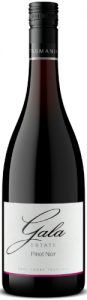
2018 Gala Estate White Label Pinot Noir $38
Gala Estate, at Cranbrook on Tasmania’s east coast, began a decade ago as a way of diversifying land use on a farming property granted to the Amos family two centuries ago. That noted, its wines are as fresh and as modern as any you’d find in the state. White Label releases offer great value. This Pinot from the excellent 2018 vintage is an exercise in poise and grace. Barely medium weight, it has very good length of red berry flavour with fine silky tannins. Put some in the cellar for future rewards or enjoy with Peking duck. www.galaestate.com.au
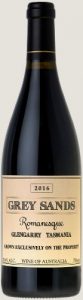
2016 Grey Sands Romanesque $45
Grey Sands, in the Tamar Valley, is one of Tasmania’s most extraordinary vineyard sites, growing no less than 17 different wine grape varieties. That provides the framework for an intriguing range of varietal wines and blends with distinct northern European influences. Tannat dried on racks in the manner of Italian Amarone wines is firmly in the driver’s seat of this red blend. Its rich liquorice and plum pudding flavours are trimmed by firm dry tannins, making it an ideal partner for grass-fed Tasmanian Angus beef. www.greysands.com.au/
ADVERTISEMENT – ADVERTISEMENT – ADVERTISEMENT