The Separate Prison at Port Arthur was built between 1849 and 1850. Its architecture and regime were modelled on those used at Pentonville Prison in England.
Layout
The Separate Prison had four wings radiating off a central area, which allowed for close and constant surveillance. The one-man cells were small. There were special punishment cells for convicts who broke any of the rules.
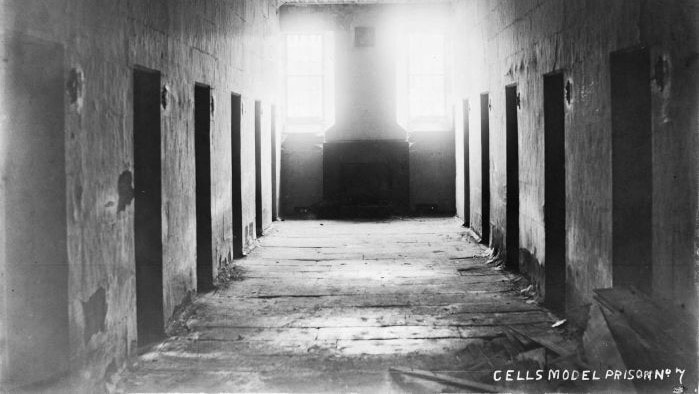
One of the corridors in the Separate Prison.
Regime
When new convicts arrived at Port Arthur, they had to spend 4 to 12 months in the Separate Prison before being assigned elsewhere on the settlement. Upon entering the Prison, the rules were read out to them. To hear a few of these rules, watch the video below.
The convicts were then each allocated a number, and they would be referred to by this number while serving their time inside.
Except for church services and cleaning duties, convicts had to spend 23 hours a day in their cells, in silence (talking wasn’t allowed). They each had a small table, stool, bedding roll, night soil bucket, and shelves for utensils, personal items, a cleaning kit, a Bible, and a prayer book.
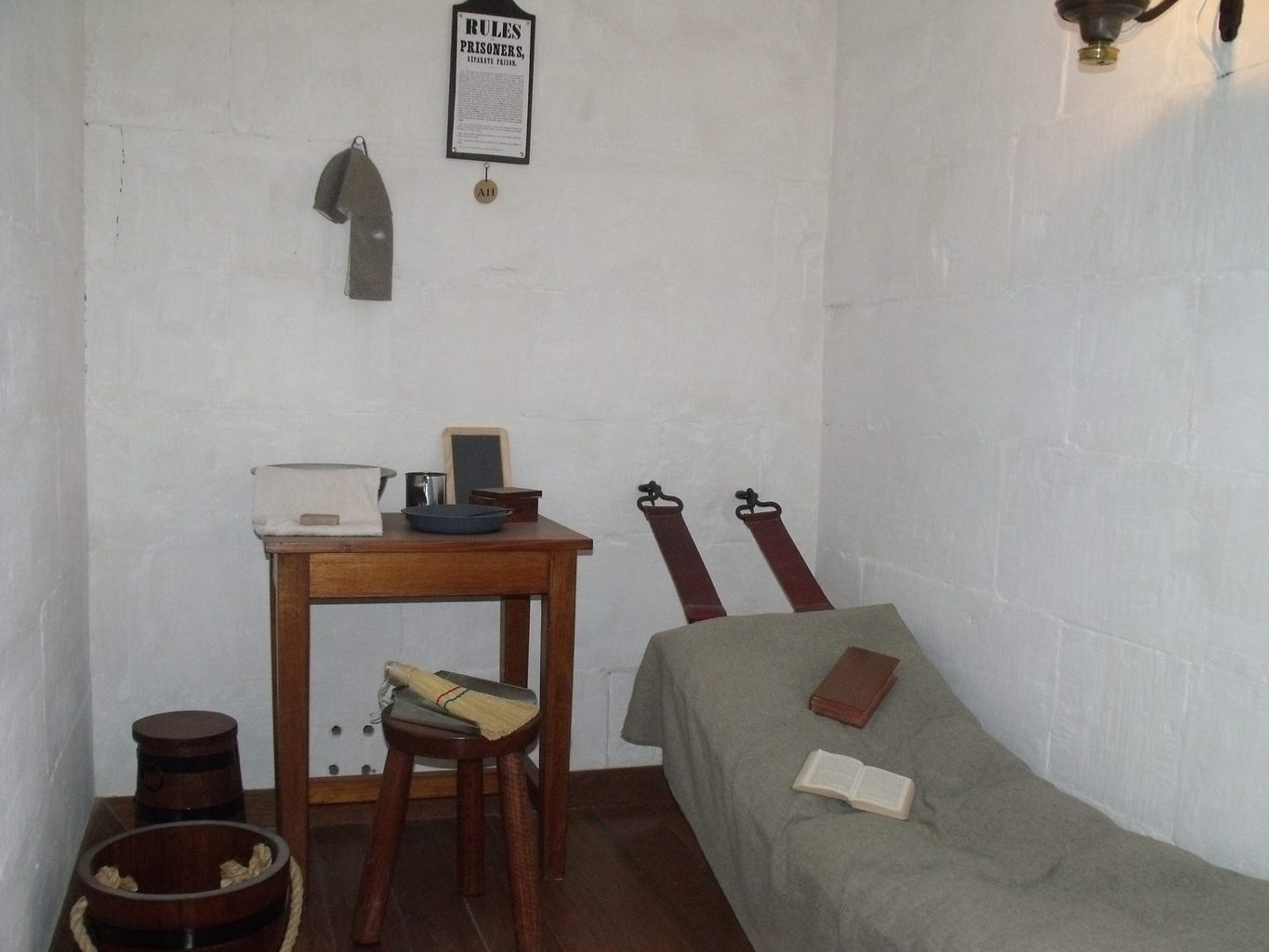
One of the cells in the Separate Prison.
They were allowed to exercise for one hour a day. They had to do so in a solitary exercise yard.
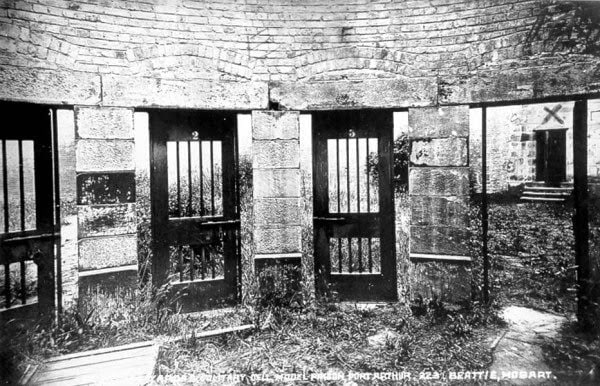
Some of the solitary exercise yards in the Separate Prison.
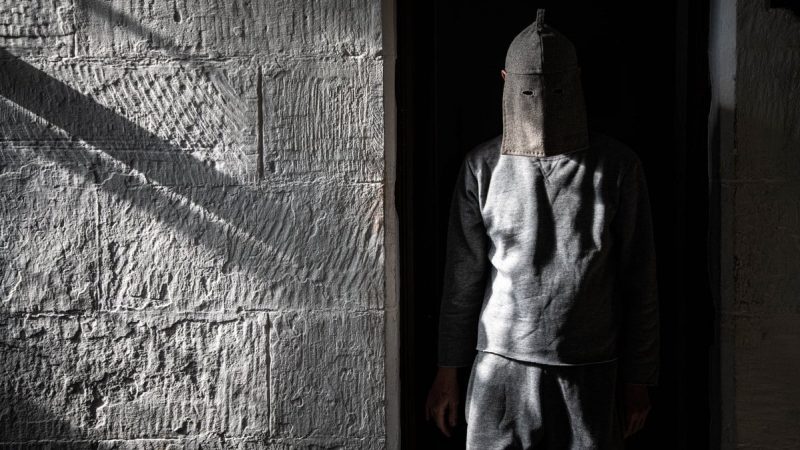
When they had to leave their cells, they had to wear a mask to prevent them from communicating with each other.
They were only allowed to communicate with warders and guards by hand signals and gestures.
There were mats on the floor of each corridor, and the warders and guards wore slippers so they could listen out for convicts’ every sound. They could check on the convicts through a peephole in the cell doors.
During church services, which were held in a chapel inside the Separate Prison, convicts were put into individual booths so that they’d be screened from each other. They were supervised by four armed guards.
If a convict broke any of the Separate Prison’s rules, they were locked inside one of two punishment cells, which took solitary punishment to a new level of cruelty. The cells were designed and built in such a way that no light or sound could come in or out. Convicts could spend anywhere from several hours to 30 days in these cells on a diet of bread and water.
Medical officers monitored the mental and physical health of the convicts inside the Separate Prison. They also regularly checked their hygiene, clothing, bedding, food rations, and exercise regime.
There are no recorded cases of mental collapse under the Prison’s ‘separate system’. Such a diagnosis was almost impossible to establish because all convicts were assumed to be malingerers. But a lunatic asylum was ironically built next-door to the Separate Prison during the 1860s.
After Port Arthur’s closure
After Port Arthur closed in 1877, the site was parcelled up and sold to private settlers at auction. The Separate Prison was bought by a Reverend Woolnough for £630, which was a substantial amount of money in the late-1800s. He started to convert the building into a hotel, but it was destroyed by a bushfire in 1895.
The Prison was eventually restored during The Port Arthur Conservation and Development Project. Further restoration works took place between 2008 and 2011.

An aerial photograph of what the Separate Prison looks like today. The orange building next to it is the lunatic asylum.
* * * *
Tas That Was is a column that includes:
- anecdotes of life in Tasmania in the past;
- historical photographs of locations in Tasmania; and/or
- documentaries about locations in Tasmania.
If you have an anecdote or photograph you’d like to share with us, please send it to [email protected].