Port Arthur began in 1830 as a timber station and soon developed into one of the most significant penal settlements in Van Diemen’s Land.
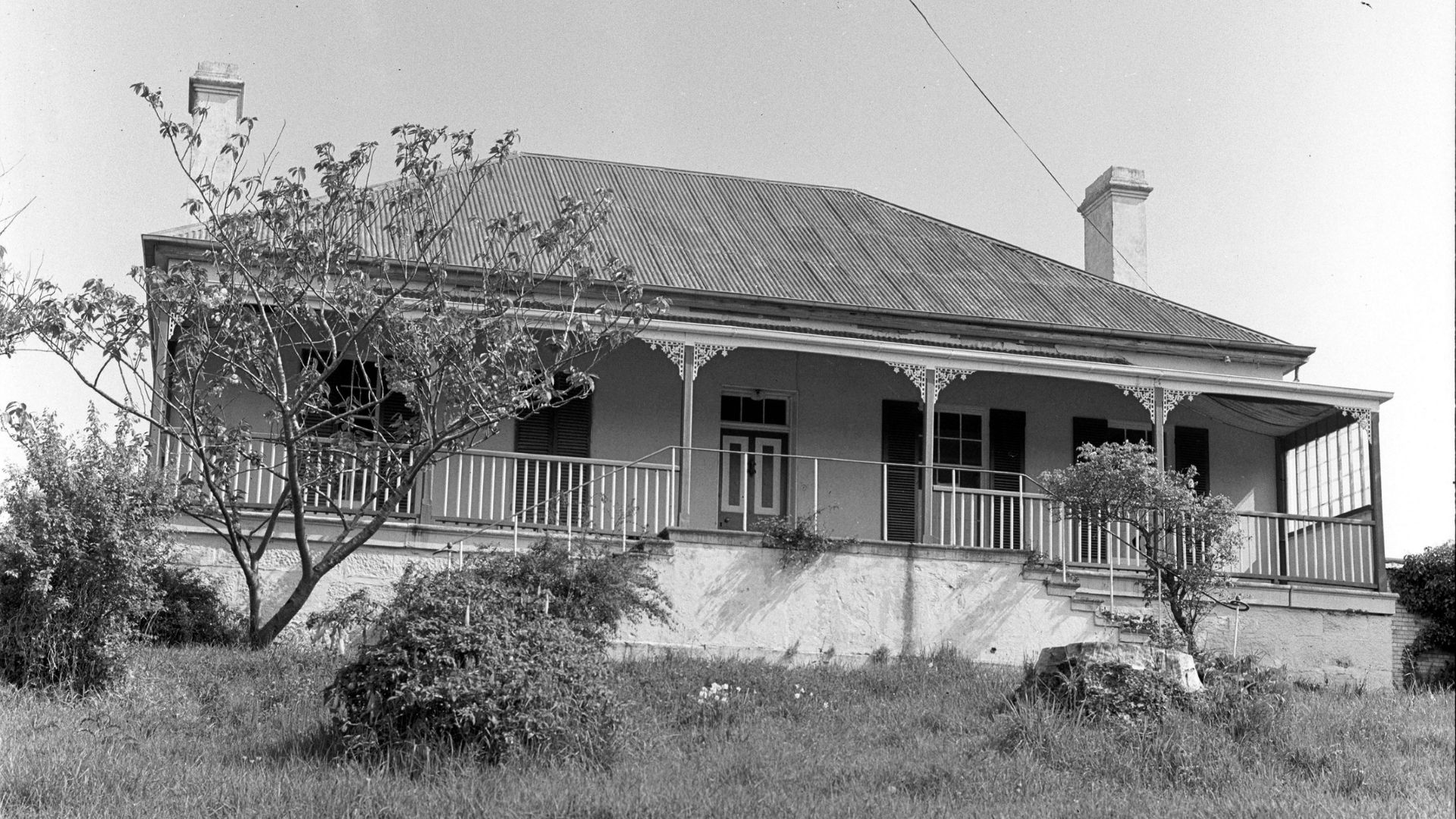
In 1847, the Visiting Magistrate’s House was built as part of Port Arthur’s ‘Civil Officers Row’* for Robert Pringle Stewart, who held the role of visiting magistrate at the time.
Over subsequent years, the house was used flexibly by the settlement’s civil administration. Various officials occupied it at different times, and at one point it accommodated the deputy superintendent. It later became the residence of the senior medical officer, who may have performed autopsies on deceased convicts in the basement.
After Port Arthur was decommissioned as a penal settlement in 1877, the site was subdivided and sold at a series of auctions. A township called Carnarvon soon emerged among the former prison buildings, and the Visiting Magistrate’s House became a privately-owned guest house** for tourists visiting Port Arthur to view the penitentiary and other prison structures. Guests were offered refined cuisine and accommodation, as well as boating and shooting activities.
In 1895 and again in 1897, major bushfires swept through Port Arthur, destroying or severely damaging many of its historic buildings. The Visiting Magistrate’s House narrowly escaped destruction and continued operating as a guest house until the 1940s, when the Tasmanian Government acquired the building. By the early twentieth century, the government had recognised Port Arthur’s historical significance and gradually repurchased the land and buildings from all the private owners. Once back in government hands, the Visiting Magistrate’s House was repurposed for administrative use by those responsible for managing Port Arthur.
During the 1970s and ‘80s, large-scale conservation and restoration work was undertaken across the entire former penal settlement. The Visiting Magistrate’s House was restored to its original 19th century appearance as a senior civil officer’s residence.
Today, the house is used periodically for private dining, high teas, heritage events, meetings, and special events. It is considered one of the most elegant historic homes at Port Arthur.
* Civil Officers Row was Port Arthur’s elite administrative quarter. Symbolising the social hierarchy that separated civil staff from convicts, it overlooked the settlement and the harbour.
** The guest house was called ‘Clougha’.
References & bibliography
- Visiting Magistrates House (Living History)
- Visiting Magistrates House, Port Arthur (On The Convict Trail)
- Magistrate’s House (Tripadvisor)
- Port Arthur Historic Site: A Case Study (The Getty Conservation Institute)
- History Timeline (Port Arthur Historic Site website)
- Port Arthur Historic Sites Heritage Management Plan (2024 draft)
- Port Arthur Historic Site Management Authority Act 1987 (Tasmanian Legislation)
Tas That Was is a column that includes:
- anecdotes of life in Tasmania in the past;
- historical photographs of locations in Tasmania; and/or
- documentaries about locations in Tasmania.
If you have an anecdote or photograph you’d like to share with us, please send it to [email protected].
Callum J. Jones is passionate about telling stories. He studied English, History, and Journalism at the University of Tasmania and lived in Western Sydney from 2022 to 2024 while working as a journalist for Professional Planner, a leading online publication for financial planners. Callum has written for Tasmanian Times since 2018 and has also been published in a range of other outlets, including Quadrant and the BAD Western Sydney anthologies.