Paula Xiberras
Welcome to my Country
By Laklak Burarrwanga and family and Dr Sarah Wright, Dr Kate Lloyd and Dr Sandie Suchet-Pearson’
I recently posed some questions to co-authors Dr Sarah Wright and Dr Kate Lloyd about their new book, ‘Welcome to My Country’, a wonderful book that invites indigenous and non-indigenous people to learn from each other,to share and discover the connection between all things including our reliance on the environment and the belief that if we treat it well and protect it, it too will take care of us.
This book has some important lessons to teach us about sharing or ‘wejt’ of cultures and the acceptance of ‘ŋapaki’ into the indigenous community. Did you write this book to help us understand and respect other cultures?
To encourage readers to understand and respect different cultures was very much a part of our vision for this book. We’d also like to help readers understand their own culture differently. For Laklak and the other Yolŋu women in our team, it is really important to teach other people about Yolŋu culture and the complexity of Yolŋu knowledge. This is part of their mission in life as teachers and of Laklak’s responsibilities as Elder and Eldest sister.
The book is part of the family’s strong desire for non-Indigenous and Indigenous people to learn from each other. As Laklak says in the book:
“I see a boy standing with a spear learning in the bush university, the real life the land and nature. I also see the boy sitting on a rock at Bawaka playing with a computer. This kid can see a wider world, learning through a computer. That is the new generation, mixing the knowledges together. The boys can change over, the boy with the spear can play with the computer and vice versa.”
It is all about two-ways learning, learning from each other. We don’t approach this is a preachy way, it is more of an invitation. The book is an invitation to share and to learn, to come and visit Laklak and her family in Arnhem Land. It is welcoming and open.
The book teaches us about the close relationship between people and nature and how signs like a change of wind, the appearance of a flower or animal, indicates a change in season and is the ‘calendar’ used by the community. Do you think ŋapaki for the most part have lost these abilities and is it important to relearn them?
Yolŋu look at things in a connected way. Everything has a place in the world and everything is connected to other things. Yolŋu do not see the environment as separate from humans but see humans as an integral part of the environment. Indeed, rather than separate ‘things,’ Yolŋu see nature, animals, plants, rocks and other beings as existing in relation to them, quite specifically as kin. They also emphasise the agency of animals which are seen as having their own laws, languages and ways of being. We do think that the depth of this understanding is something that tends to get lost in non-indigenous cultures. By reading this book, and listening to the stories, we hope to readers will be encouraged to think about their own place in the world differently.
Which brings us to the connection and the idea of ‘Yothu Yindi’ the connection between mother and child, which in turn is a metaphor for the connection between the land and it’s people. Have we lost this connection too and do we need to learn more respect for the environment and how its health is directly related to ours?
There is certainly a lot to learn about our health and our connections to the environment. It is a different mindset to see the world as related to us. You say that the mother-child, Yothu-Yindi, relationship is a metaphor for understanding connection between people and the environment, but for Yolŋu, it is more than a metaphor. It is a reality of how they live in the world. This is a really different perspective and one that has a lot of implications because if you understand beings within the environment, and the environment itself, as part of you, as related to you, then things must be approached differently. You have responsibilities and obligations to non-humans just as you do to your human family.
There is a flipside too and that is that Country and non-humans will care for you in return. There is a healing in the world that many non-Indigenous people are cut off from. It means a lot to be open to the way that Country nourishes and cares for us as we should nourish and care for it.
There is mention in the book of the story of the females that roar the Djan Kawu and their sticks and how they are creators and how later when the men take the sticks they lack the ability to create. Would you consider your culture a feminist one?
Yolŋu culture deeply respects the role of women and their knowledge. Bawaka itself is female Country and there is a lot about the role of women in the book. When it’s sunset, women of Bawaka cry for joy and happiness. We belong to the land, our mother earth. Yolŋu have that mother-child relationship to the earth and their Country. Even men, they can be mothers of the land too.
You talk about the symbolism of red ochre in the book. Can you expand on that?
Red ochre is sacred, it connects people with spirits. Yolŋu use ochre for ceremony and ceremony remains such an import thing in our culture. It is still alive today. With the launch of Welcome to my Country up in Yirrkala last month, we treated that as a ceremony and painted ourselves with ochre.
For us the book is deep knowledge and it should be treated like that. At the launch Laklak said that in the past, important information about life and the universe was written on bark, now it’s written in a book.
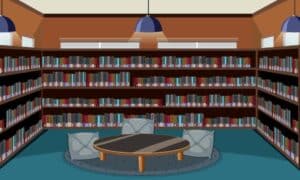
“In the Yolŋu world, we have a library in the land. You can’t destroy it. If you burn it, it grows again. The land is full of more knowledge than you can imagine.”
It is very powerful, this knowledge, and it is wonderful that Laklak and her family are so eager to share it with ŋapaki, with non-Indigenous people.
One of the less pleasant aspects of the book is when you talk about the missionary schools and how they literally ‘washed out the mouths’ of those students who continued to speak their own language. In fact would you say this book is about an impassioned plea for learning to appreciate other cultures, share what we learn and to encourage a vibrant living culture of all peoples?
Not being able to speak their own language at school was truly distressing for Laklak and her family, and for Indigenous people from all over Australia that experienced similar kinds of actions. It is amazing, though, that such experiences have not taken away the desire of Yolŋu to share with and to reach out to ŋapaki. So, yes, the book really is a deep plea to learn from each other and to appreciate and encourage living cultures.
For Yolŋu, there is a really important concept called Gänma which is the mixing of waters.
Gänma is where the salt water and the fresh water meet and mingle. Gänma means new life, new ideas, knowledge coming together. That’s the power and that’s the knowledge, with the different water mixing. That’s a concept that underpins the book.
Do you visit Tasmania often, and if you have visited before what are some of the things you enjoy most about Tasmania?
Some of us have visited Tasmania and we love it! Tasmanians seem to have a deep appreciation of the environment and a connection with place that’s one of the things we enjoy most about our time spent there. We love good, locally grown food and Tasmania has so much to offer in that regard. In fact, we were struck by the ways that growing food in place and gathering food locally resonates with some of the themes of the book. In the book there is a story of gathering oysters. One of our in-laws make a regular pilgrimage to Kettering to gather oysters from the beach there. They meet up with Tassie friends and have a little celebration. It’s about knowing place and making those deep connections with it.
Welcome to My Country is published by Allen & Unwin and is now available at all good bookshops and online.