“When you serve wine, the winemaker has done virtually the whole task for you. For the consumer, it’s a relatively simple process of opening, perhaps decanting and then serving,” he said.
“When you serve coffee, you have to take a raw material — the roasted beans — and turn them into a, hopefully, high-quality beverage. I know from many years of experience that the same beans can produce quite different results when handled differently.”
WHEN Tom Greenwell talks about coffee, especially coffee from Hawaii’s Kona Coast, he does so with passion — and with an authority that comes from being a fourth-generation grower of one of the world’s most valuable agricultural commodities.
Tom’s great-grandfather, Henry Nicholas Greenwell, was a British adventurer who was stuck in Honolulu in 1850, after a boating accident on his way to the Californian gold rushes — and, incidentally after unsuccessfully trying to purchase a sheep station in Australia.
He made the best of his bad luck, set up a general store at South Kona, purchased significant tracts of land to plant citrus and coffee, and in the 1870s also established vast cattle and sheep ranches.
In 1873, the President of the Kaiser’s Exposition awarded the Greenwells a “Recognition Diploma” for their Kona coffee at the World’s Fair in Vienna and commented that the family could be trusted as exporting a genuine, high-quality Kona product.
The family has since donated the general store to the South Kona Historical Society for use as a museum, the ranches have been sold, but the coffee business remains the heart of what is now known as Greenwell Farms and Tom Greenwell regards it as his duty and privilege to maintain the standards set by Henry Nicholas.
“Kona coffee is very special,” said Tom.
“It’s a very gentle coffee, with fullness of body, just the right level of acidity, and with a balance that excludes bitterness.”
He could have been talking about wine, and the comparison drew closer as we tasted — “cupped” is the term used — a range of coffees to see differences made by bean varieties, growing conditions, age and roasting techniques.
Greenwell Farms is a substantial business. The night before our visit, they’d processed more than 2500 tonnes of beans.
That’s a helluva lot of coffee, and much of it is sold directly through mail order and to the many visitors who take tours of Greenwell Farms plantations and production facilities.
They’re located near a town many Australians will have a deal of association with — Captain Cook, named, obviously, after the navigator who had so much to do with exploring our East Coast.
Captain Cook and the Kona Coast are on what Hawaiians call simply “The Big Island”, about a 30-minute flight from Honolulu. With its still-active volcanoes, immense mountains, excellent snorkelling, amazing scenery — and absolutely world-class coffee — it really is worth exploring.
For Tom Greenwell, one of the great differences between wine and coffee is that the consumer is a much more significant cog in the latter’s production.
“When you serve wine, the winemaker has done virtually the whole task for you. For the consumer, it’s a relatively simple process of opening, perhaps decanting and then serving,” he said.
“When you serve coffee, you have to take a raw material — the roasted beans — and turn them into a, hopefully, high-quality beverage. I know from many years of experience that the same beans can produce quite different results when handled differently.”
To that end, Tom has the following suggestions for getting the best out of your coffee:
The best device for brewing good coffee at home is the simple plunger. In other words, a few dollars will produce a better result than hundreds, perhaps thousands, spent on a “sophisticated” espresso machine.
Buy beans that really have been freshly roasted, and only buy as much as you will consume in a couple of weeks. After that, there is significant deterioration in quality. Certainly don’t buy good-quality beans and keep them in the fridge for months to use on “a special occasion”.
Like good red wine, freshly ground coffee needs a little time to breathe. If you want to serve coffee after dinner, grind the beans before dinner and let them rest.
Don’t use boiling water. Boil the jug then wait for a few minutes to let the temperature come down to about 95_C.

Coffee drying

coffee rooasting, Jenny Kay

Greenwell sales

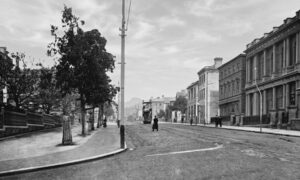
Hennry Nicholas Greenwell

Museum

Tom Greenwell

Tom Greenwell
Contacts:
Greenwell Farms: www.greenwellfarms.com
Big Island: www.bigisland.org
Hawaii: www.gohawaii.com