A quietly-released Mineral Resources Tasmania report declaring south-east Tasmania’s supply of concrete-quality sand “effectively exhausted” has sparked urgent concerns regarding the feasibility and cost of the proposed Macquarie Point AFL stadium.
Independent MLC for Nelson Meg Webb warns that the necessity to transport materials from over 300km away will inevitably drive up construction costs, questioning why the government withheld this critical data during recent budget estimates.
While the Tasmanian Government faces scrutiny over the potential logistical nightmare of trucking sand from the north-east to build the $1.2 billion project, major local contractors appear to have already mobilised to fill the void. Hazell Bros has been aggressively upscaling its operations at their nearby Leslie Vale quarry, hoping to “future-proof” against the shortage.
Development applications and EPA documents confirm that Hazell Bros is seeking to more than double the quarry’s production capacity. The company aims to increase extraction from approximately 583,000m³ to 1.25 million cubic metres per annum (approx. 2 million tonnes).
Crucially, the Leslie Vale site now hosts a dedicated recycling facility capable of producing “manufactured sand” from crushed glass and construction waste. This represents a direct, commercial response to the exhaustion of natural river sand. This private sector mobilisation suggests that while the government withheld the MRT report during Budget Estimates, the industry was already moving to secure the only viable local alternative to the exorbitant costs of long-distance transport.
Webb highlighted the suspicious timing of the report’s release, noting that the document properties indicate it was created on November 20—the final day of Budget Estimates scrutiny and the same day the Minister for Resources faced the committee. She described the lack of disclosure as “shocking” and accuses the Rockliff government of “gaslighting” the parliament.
“This sand inventory report, undertaken by a State Government department, basically tells us that we have run out of concrete suitable coarse grain sand in south-east Tasmania,” Webb said.
“This lack of suitable coarse sand has critical consequences for the AFL-demanded stadium. It has now become even more expensive, as that sand will now need to be brought in from somewhere else.”
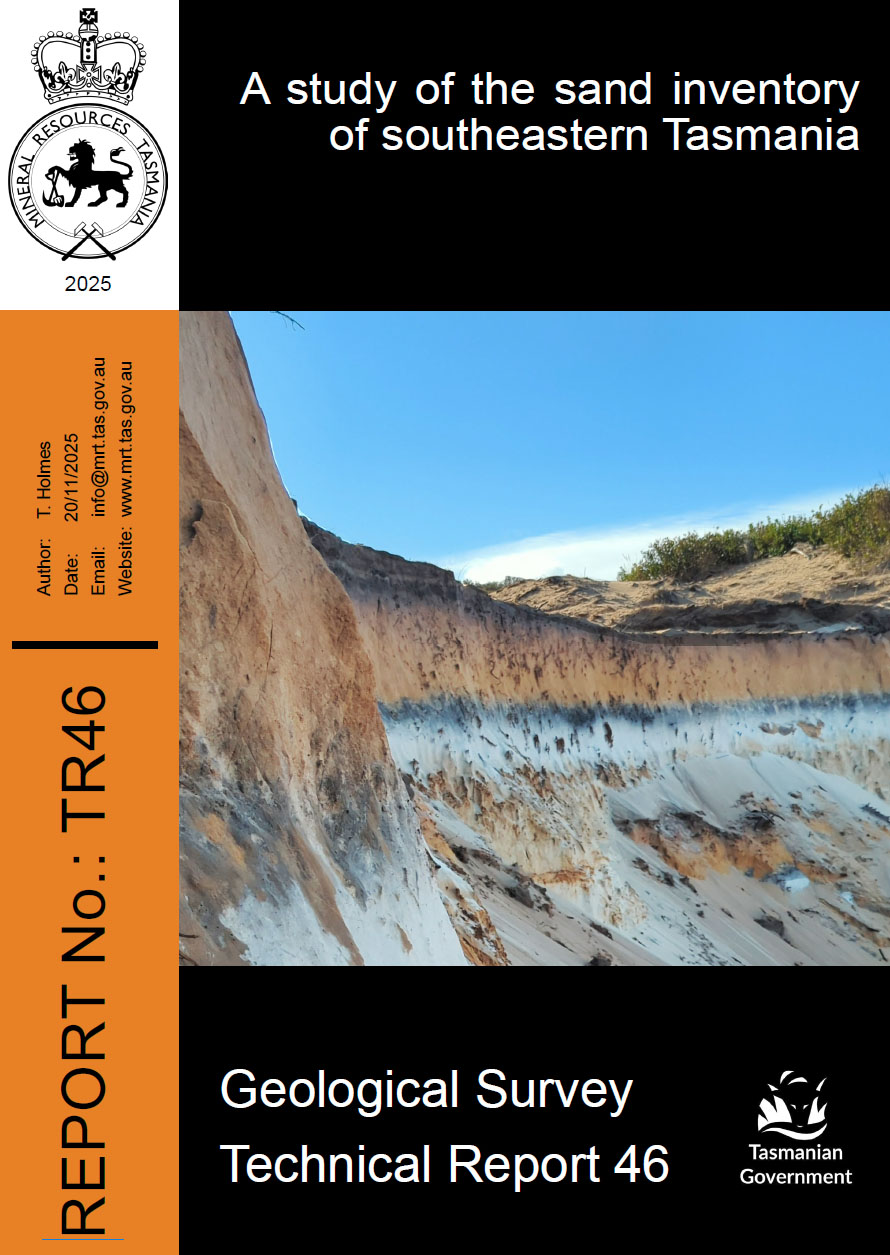
The MRT report, titled A Study of the Sand Inventory of Southeastern Tasmania, explicitly states that transport distances for sand will increase from 35km to over 300km. It estimates that transport costs are currently $0.20-$0.25 per tonne per km.
Webb questioned whether these inflated infrastructure costs have been factored into the revised stadium price tag. “How will the diversion of appropriate building quality sand from elsewhere in the state affect other construction projects?” she asked.
Cement Concrete & Aggregates Australia (CCAA) has welcomed the report as a validation of the “critical and immediate challenge” facing the state.
CCAA CEO Michael Kilgariff confirmed that without reform or alternative supplies, the shift to transporting sand from the north would “inevitably drive up construction costs, stretch supply chains and jeopardise the affordability of major housing, transport and community infrastructure projects.”
Editor’s note: Estimates based on comparable stadium builds suggest the Macquarie Point project—which requires extensive deep piling into soft reclaimed land—could demand upwards of 30,000 tonnes of coarse sand. With the exhaustion of local supplies forcing a 300km supply chain from the northeast, the resulting freight premium of roughly $50 per tonne threatens to add millions to the bottom line while adding approximately 1,000 heavy truck return trips to the Midland Highway, not forgetting the wear and tear on the highway.

Media release – Meg Webb MLC, Independent Member for Nelson, 28 November 2025
Mineral Resources Tasmania Report Undermines Stadium
Independent Member for Nelson Meg Webb said today a recent Mineral Resources Tasmania study raises serious questions over the logistical capacity for the AFL stadium to be constructed due to critical shortages of concrete-quality sand in southeastern Tasmania.
“The quiet release on the Mineral Resources Tasmania website of this critical report raises serious questions about the state’s capacity to build the stadium, as well as whether the timing of the report’s release after Budget Estimates scrutiny hearings was deliberate,” Webb said.
“This sand inventory report, undertaken by a State Government department, basically tells us that we have run out of concrete suitable coarse grain sand in South-East Tasmania.
“This lack of suitable coarse sand has critical consequences for the AFL demanded stadium. It has now become even more expensive, as that sand will now need to be brought in from somewhere else.”
Webb said the report states the inventory project was undertaken due to concerns regarding the “dwindling supply of sand for the manufacturing of concrete in the Hobart area”.
“Which begs the questions – when the Government knew of these concerns, when did they commission this report and when did they receive it?
“Further, has the additional cost of transporting sand and the expected “higher costs for infrastructure projects in the south of the state” been factored into the latest revised $1.2 billion costs of the new stadium?
“How will the diversion of appropriate building quality sand from elsewhere in the state affect other construction projects?”
Webb also queried the timing of the recent release of this report on the Mineral Resources Tasmania website.
“The Government clearly knew the inventory was underway yet kept concerns over building quality sand supply and implications for the AFL stadium secret.
“The document properties of the report indicate it was created on 20 November, the last day of Budget Estimates scrutiny, and the day the Minister for Resources was being scrutinized in the Lower House estimates committee.
“Critically, this report also escaped scrutiny by the Tasmanian Planning Commission earlier this year, and nor was it available for the Lower House debate on the Stadium Order.
“It is shocking the degree of secrecy and gaslighting of the parliament and the community that the Rockliff government is prepared to stoop to, all for their AFL mates.”
Webb highlighted key statements in the Study of the Sand Inventory of Southeastern Tasmania Mineral Resources Tasmania report, which pose clear and serious ramifications for the proposed AFL stadium at Macquarie Point.
· “As of 2025, Southeast (SE) Tasmania has effectively exhausted its available supply of natural coarse sharp sand suitable for concrete manufacture. This will likely result in price increases for sand use for concrete manufacture.” (Executive Summary & pg 8)
· “The transportation of sand is currently costing approximately $0.20-$0.25 per tonne per km. The distance to transport sand to the Hobart CBD will increase from 35 km to over 300 km as coarse sand supplies transition from South Arm to Northeast Tasmania.” (pg 4)
· “The price of fine aggregate for concrete mixes will likely increase in the future due to the costs associated with increased transportation distances.” (pg 4)
· “This project was initiated due to concerns regarding the dwindling supply of sand for the manufacture of concrete in the Hobart area.” (pg 23)
· “There does not appear to be an easy, short- term replacement for the loss of local coarse sand supply for the construction industry in SE Tasmania.” (pg 32)
· “The increased distances involved in transporting sand from quarries in the north of the state, to infrastructure projects in the south, will result in higher costs for infrastructure projects in the south of the state.” (pg 32)
The A Study of the Sand Inventory of Southeastern Tasmania report can be found online here:

Media release – Peter George MHA, independent MP for Franklin, 28 November 2025
Government report – SAND SHORTAGE WILL IMPACT MAC POINT STADIUM COSTS
“Higher costs for infrastructure projects in the south of the state”
Independent MP for Franklin, Peter George, has called on the government to explain how the Macquarie Point stadium can be built without substantially increased costs following revelations that a crucial building material has run out in the south of the state.
George is also seeking an explanation about why the information was not available for scrutiny by MPs during the recent Budget Estimates hearings.
It’s deeply disturbing to learn that southeast Tasmania has run out of sand for concrete threatening substantially increased costs of building the Macquarie Point stadium.
In yet another example of how this government tries to bury bad news, a government geological report warning of the shortage and resulting price increases appears to have been withheld to avoid proper scrutiny during Budget Estimates when its impact on the stadium would have been highlighted.
The report of the Geological Survey (here) warns of price increases as contractors turn to the north east of the state increasing transport distances almost tenfold from 35k to 300k. The report also warns of increasing prices for fine aggregate for concrete uses.
The survey warns: “The increased distances involved in transporting sand from quarries in the north of the state, to infrastructure projects in the south, will result in higher costs for infrastructure projects in the south of the state.”
Treasurer Eric Abetz needs to come clean on the potential building costs of the stadium before MLCs make their final decision on the stadium next week.
He must explain how this affects the stadium’s financing, what addition costs of borrowing this may add and the impact of hundreds of trucks shipping sand from the state’s northeast along the state’s major highway.
The sand shortage will also clearly have an impact on all building costs including residential as well as major infrastructure projects run by government and private investment.

Media release – Cement Concrete & Aggregates Australia, 27 Nov 2025
CCAA Welcomes MRT Sand Inventory Report and Calls for Priority Government Action – Cement Concrete & Aggregates Australia
Cement Concrete & Aggregates Australia (CCAA) welcomes the release of Mineral Resources Tasmania’s new technical report, A Study of the Sand Inventory of Southeastern Tasmania, which confirms the critical and immediate challenge facing the State: the effective exhaustion of locally available coarse concrete sand in Southeast Tasmania.
The MRT report finds that as of 2025, the region has “effectively exhausted its available supply of natural coarse sharp sand suitable for concrete manufacture”, forcing concrete producers to rely more heavily on transported sand from the north and northeast of the State at distances increasing from 35 km to more than 300 km.
This shift will inevitably drive up construction costs, stretch supply chains, and jeopardise the affordability of major housing, transport and community infrastructure projects.
The report provides a valuable evidence base that validates the need for urgent, coordinated action by Government, action already outlined by CCAA in its Tasmanian Policy Priorities document, aimed at ensuring local materials can be delivered affordably to support Tasmania’s growth.
“Concrete sand is essential to every home, road and piece of public infrastructure in the State. MRT’s report highlights both the significance of this resource and the growing pressures on supply,” said CCAA CEO Michael Kilgariff.
“We now need Government to move quickly to implement the necessary policy and approvals reforms that will unlock new supply and protect the State’s future access to key resources.”
CCAA has recommended a series of high-impact actions to Government, including:
Streamlined approvals processes for quarry operations to enable industry to respond flexibly to market demand
Faster assessment and granting of exploration licences and mining leases to bring new resources online sooner
Protection of significant sand resources through improved land-use planning, similar to successful interstate models
Better monitoring, reporting, and whole-of-market demand analysis to inform future policy and investment decisions
“Without reform, Tasmania risks increased construction costs, uncertainty for industry investment, and a growing reliance on transporting sand from the north, adding price pressures, emissions and road impacts,” Kilgariff said.
Key Facts:
Southeast Tasmania faces exhaustion of locally available coarse sharp sand supplies, according to new Mineral Resources Tasmania report
Concrete producers will need to source sand from north and north-east Tasmania, with transport distances increasing from 35km to over 300km
The situation will lead to increased construction costs, strained supply chains, and impact affordability of major infrastructure projects
CCAA recommends streamlined approvals, faster licensing, better resource protection, and improved monitoring systems
Without reform, Tasmania faces higher construction costs, investment uncertainty, and increased environmental impact from long-distance sand transportation
“CCAA looks forward to working closely with Government to progress these recommended measures as a matter of priority, ensuring the sector can continue to support Tasmania’s housing needs, infrastructure pipeline and regional economic development.
About CCAA
CCAA is the voice of Australia’s heavy construction materials industry, an industry that generates over $15 billion annually and directly employs 30,000 Australians, with a further 80,000 employed indirectly. CCAA members produce most of Australia’s cement, concrete, and aggregates, which are essential to the nation’s building and construction sectors.
Tasmanian Times (TT) is a community-based news and current affairs service covering the island state of Tasmania. It exists to provide a diverse presentation of Tasmanian issues. TT creates and supports independent media content utilising the best of modern technologies and tried-and-true practices of public-interest journalism.
Support us in expanding our coverage and developing new content by and for Tasmanians.
New initiatives on the way include … what our contributors and readers suggest! Please get in touch with your suggestions.