The Takeover of Tasmania – How a Quiet Island Became a Playground for Plutocrats
There is a quiet war being waged for the soul of Tasmania. On one side stands a coalition of multinational corporations, powerful sporting leagues and gambling interests. On the other, the Tasmanian people, grappling with a state that feels increasingly out of their control. The battlefield is our environment, our public finances and our social fabric. And at the centre of it all is a political class that, time and again, seems to be working for the other side.
This isn’t a story of simple political disagreement.
It is a case study in how a democracy can slowly transform into a plutocracy, a system where the wealthy and powerful dictate policy and the government becomes a vehicle for their interests.
While Tasmanians endure a tripling crisis in housing, health and education, their leaders are preoccupied with a different set of priorities – appeasing corporate masters and funding vanity projects that benefit the few at the expense of the many.
The Corporate Playbook – A Tale of Three Sectors
To understand how deep this runs, you need only look at three of Tasmania’s most contentious issues – salmon farming, poker machines and the proposed AFL stadium. Independently, they are controversial. Together, they reveal a devastatingly consistent pattern.
1. The Salmon Farms – Profits Flow Out, Pollution Stays
Tasmania’s salmon industry is often touted as an economic success story, with a annual value of around $1 billion. But dig beneath the surface and a different picture emerges. The industry is dominated by foreign-owned corporations like Norway’s Mowi and Brazil’s JBS. Through complex accounting and offshore structures, these multinational giants pay little to no corporate tax in Australia.
The cost, however, is borne locally.
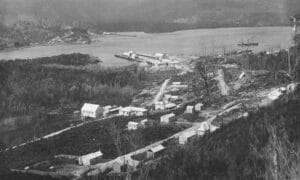
In Macquarie Harbour, a UNESCO World Heritage adjacent waterway, salmon pens have contributed to a dead zone. Excess fish waste and feed have spiked nitrogen levels, depleting oxygen and pushing the ancient Maugean skate to the brink of extinction. The government’s response? Not to rein in the industry, but to shield it. It passed controversial legislation to protect salmon farms from environmental legal challenges, effectively gutting the federal Environment Protection and Biodiversity Conservation Act for their benefit. The message is clear – corporate profit is more sacred than environmental integrity.
2. The Poker Machines: A Regressive Tax on the Poor
In Tasmania’s pubs and clubs, poker machines or “pokies” extract a heavy toll. Since the 2018 election, these machines have siphoned over $1.14 billion from Tasmanians, with losses disproportionately concentrated in low-income communities. The social cost is immeasurable, fuelling addiction, family breakdown and personal ruin.
In 2025, the government had a chance to act.
A proposed mandatory pre-commitment card system, a simple technology to allow players to set and stick to loss limits was on the table. It was a nation-leading reform. But then, both the Liberal government under Jeremy Rockliff and the Labor opposition under Dean Winter, capitulated. They shelved the scheme, offering vague promises of “national coordination.” The reason was as transparent as it was cynical – intense lobbying from the powerful gambling industry. The state collects its tax revenue, the industry counts its profits and vulnerable Tasmanians pay the price.
3. The Stadium – A Monument to Plutocracy
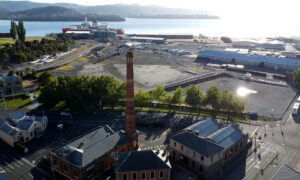
The most glaring symbol of this captured state is the proposed $1 billion-plus stadium at Macquarie Point. The project, a condition imposed by the Australian Football League (AFL) for a Tasmanian team, is a masterclass in corporate leverage.
The AFL, despite operating as a multi-billion dollar commercial enterprise, enjoys not-for-profit tax status. It generated a surplus of over $45 million in 2024, pays its executives millions and has a $4.5 billion media rights deal. Yet, it demanded that one of Australia’s smallest and poorest states build it a lavish, roofed stadium.
The economic case is shambolic. Initial cost estimates have blown out by hundreds of millions, and when debt servicing is included, the total burden on taxpayers could exceed $1.8 billion. Renowned economist Saul Eslake and others have labelled the project’s business case as flawed, with overestimated benefits and underestimated costs. Meanwhile, the state government is cutting 2,500 public service jobs and freezing hiring in health and education. The choice being made is stark – a stadium for the AFL over nurses and teachers for the people.
The Common Thread – Neoliberalism and the Shrinking Public Good
What connects the salmon farms, the pokies and the stadium? It’s a political ideology known as neoliberalism. In simple terms, it’s the belief that the private sector and market forces should govern every aspect of our lives and that the role of government is to get out of the way.
In practice, this means deregulating industries, privatising public assets and cutting taxes for corporations.
In Tasmania this has created a culture of crony capitalism.
Governments, both Liberal and Labor, bend rules, ignore independent advice and use public money to subsidise private profit. They justify it with the mantra of “jobs and growth,” but the fine print reveals that the growth is for shareholders and the jobs often come at an unacceptable social and environmental cost. The public good—clean water, safe communities, functioning hospitals—is treated as a secondary concern.
A Fork in the Road – Which Tasmania Will We Choose?
Tasmania now faces a fundamental choice about its future.
One path leads toward a society like the United States, where extreme inequality is accepted, billionaires are celebrated as idols and corporate power dominates public life. This is the path we are currently on.
The other path looks to the example of nations like Denmark, where strong social safety nets, economic equality and a commitment to the common good are central to national identity.
Choosing this second path requires more than just voting for a different party. It demands a radical reinvigoration of democracy itself. Tasmanians must ask – are we prepared to stand up to the overlords?
The answer may lie in models of participatory democracy, such as Scotland’s Community Empowerment Act.
This legislation gives communities a legal right to shape the decisions that affect their towns and cities, from land development to public services. It moves power from the cabinet room to the community hall.
Imagine if Tasmanians had a legally enshrined say in the Macquarie Point development, or the future of their coastal waters, or the regulation of poker machines. The conversation would be transformed from “What can we get away with?” to “What do we, the people, actually want?”
The takeover of Tasmania is not yet complete.
But the warning signs are everywhere in the polluted harbours, the emptying wallets of pokie players and the ballooning debt for a stadium few want. The fight for Tasmania is a fight for the very idea that government should be of the people, for the people and by the people, not a service desk for corporate titans.
The time to choose a different future is now.
Steve Loring was a recent Legislative Council election candidate for the Shooters, Fishers and Farmers Party and is a keen observer of the Tasmanian political scene.
Tasmanian Times (TT) is a community-based news and current affairs service covering the island state of Tasmania. It exists to provide a diverse presentation of Tasmanian issues. TT creates and supports independent media content utilising the best of modern technologies and tried-and-true practices of public-interest journalism.
Support us in expanding our coverage and developing new content by and for Tasmanians.
New initiatives on the way include … what our contributors and readers suggest! Please get in touch with your suggestions.