Henry and Jane Beauchamp
Henry Beauchamp always kept his brown hair short and his moustache pointed.
His face was long and angular, pockmarked as a result of smallpox. He often wore expensive clothes so people would know he was wealthy.
Born in 1804 on his parents’ farm in Norfolk, England, Henry was home-schooled by his mother until the age of sixteen, when he started working on the farm full-time. When his father died of tuberculosis in 1823, Henry inherited the family estate, which was quite substantial.
Shortly after his twenty-first birthday, Henry met Jane Sinclair at a farmers’ market and was immediately smitten with her. Elegantly thin, she had rosy cheeks, crimson lips, and sparkling green eyes. She kept her soft dark hair long and flowing.
The pair fell in love and married a year later. They lived a quiet, comfortable life on the Beauchamp farm, but Henry soon became restless. He was eager to start something new.
In 1853, he decided they should immigrate to New South Wales and set up a general goods store on the outskirts of Sydney.
After selling the farm to one of his cousins, Henry and Jane left England and arrived in Australia in the early months of 1854.
Henry purchased a derelict two-storey building in Parramatta and transformed the ground floor into a general store. He made the second storey into his and Jane’s home.
A few years later, Henry read in a newspaper that gold had been found at Nine Mile Springs in northern Tasmania. He had always wanted to make more money and become a member of the upper class, so he obviously wanted to try his luck at finding gold. After selling the general store, husband and wife moved to Nine Mile Springs and lived in a crude timber hut that leaked when it rained.
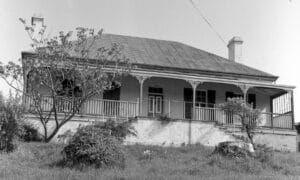
Henry found a lot of gold at Nine Mile Springs and became a very wealthy man, just as he wished. After buying a piece of land at nearby George Town, he built an elegant Georgian cottage for Jane and himself.
Their daughter, Charlotte, was born in 1860, inheriting her mother’s dark hair and her father’s long, angular face. She was a bright and lively child, always wanting to play outside. Jane taught her how to read, write, and do basic sums.
Shortly after her fifth birthday, however, Charlotte contracted typhoid fever and passed away a few weeks later.
Henry and Jane’s marriage became strained after their daughter’s death. Jane wanted to re-live every moment she spent with Charlotte, so she poured over her diary entries and re-played memories in her mind. Henry, on the other hand, threw himself into writing a book about the Beauchamp family history. They were constantly at each other’s throats, believing that the other’s way of grieving wasn’t the right way.
Jane assumed Henry wanted to re-live every moment he spent with Charlotte as well, but she didn’t know this for certain; he hardly spoke to her anymore. But one day she found a letter he’d written to a friend. It was sitting on his desk, not yet sealed in an envelope.
Dear Benjamin,
I find myself having a very difficult time at the moment. My daughter is gone. I miss her so much.
Life seems meaningless.
When I head into town and see young girls with their fathers, I feel envious. They get to spend every day with each other. I wish I could spend time with children. They would help me re-live the moments I spent with Charlotte.
The grief is too much to bear. Not only have I been feeling immense sadness, I have also been getting headaches and stomach pain, which has caused a loss of appetite.
Jane and I should try for another child. Maybe that will help cure our grief. But we are not in a good place right now. Once we overcome our grief, perhaps we will try again.
Jane was going to talk to Henry about the letter, but she never got the chance. The day after she found it, he suffered a massive heart attack and died.
His death made Jane realise just how much she loved him.
I should have tried harder to keep our marriage working, she thought in the lead-up to his funeral. That way, he wouldn’t have died, and I would have continued seeing him every day.
Shortly after the funeral, a medium told Jane that he was channelling her husband, who wanted her to build a house for herself, her family, and her ancestors.
Jane had always believed in the paranormal, although she’d never experienced anything in the paranormal before. Deciding not to waste any time, she demolished the cottage Henry had built for them and built a mansion called Beauchamp House in its place.
Sally Rodgers
Beauchamp House was like nothing Sally had ever seen before. It was a huge, sprawling place.
She hadn’t wanted to visit the mansion, instead wanting to play with her friend Tori. But her mum insisted she come.
“We’re going on an outing together,” she said.
Sally was grumpy for the entire car trip, but her mood changed as soon as they arrived at the mansion. A mixture of Queen Anne and Late Victorian architecture, it shone brightly in the late-morning sun. The garden – full of colourful flower beds – glowed radiantly as well. The buzzing of cicadas filled the air, which was heavy with fragrance from the various plants and flowers in the garden.
Sally’s mum noticed her staring in awe.
“Beautiful, isn’t it?” she said.
“Sure is.”
They entered the mansion and walked into the visitor information room, which also doubled as a gift shop. After paying for a tour, mother and daughter browsed the shelves of books, postcards, jewellery, and artwork.
The tour guide soon strode into the room. She was a middle-aged woman with curly brown hair and tortoise-shell glasses. The badge pinned to her white woollen sweater bore the name Rachel.
“Hello, everyone!” she said. “My name is Rachel; I’m going to be your guide for the next hour or so. We’ll get started right away, so if you’d like to follow me.”
Sally quickly lost track of where they were. Beauchamp House was such a maze! It was full of passages, stairways, and doors that opened into walls. There was a strong ‘old house’ smell throughout. The floors and stairs creaked, and rustling sounds came from inside the walls and ceilings.
“Beauchamp House covers an area of 24,000 square feet,” Rachel explained as she led everyone through the mansion. “It has 160 rooms, 10,000 windows, 2,000 doors, fifty-two skylights, forty-seven stairways and fireplaces, seventeen chimneys, thirteen bathrooms, and six kitchens.” She took in a big gulp of air and added, “Blimey, that’s a mouthful!”
“The first part of the house was built in 1867,” she continued. “It was then added to over the years.”
“How come?” Sally enquired.
“I was just about to come to that. The lady who built it – her name was Jane. Her husband died a year after their five-year-old daughter passed away.”
“Oh, the poor woman,” Sally’s mum said, her face sad.
“A medium told her that he was channelling her husband. He apparently wanted her to continuously build a house for herself and the spirits of her family and ancestors.”
“Is the house haunted?” Sally asked.
“Oh, there’s certainly been ghost sightings. A lot of them go back years. Jane’s ghost has been seen a lot since she died.”
I hope I see her today, Sally thinks.
She’s believed in ghosts ever since she saw a photo of the apparition of her grandfather standing at his own graveside, a sombre expression on his face.
As Rachel led the tour group down a hallway, Sally saw a sign that had an arrow pointing down an adjoining corridor. Underneath the arrow were the words To the Music Room.
Music! She loved it. Wanting to see what the Music Room looked like, she left the group when her mum wasn’t looking and walked down to it.
The room was finished in white enamelled pine. Old posters advertising concerts and music hall performances hung on the walls. An alcove had a sheet music stand with a couple of chairs positioned in front of it.
At the room’s centre was a piano, complete with a Do not touch sign. Sally approached it and admired the dark type of wood it was made out of (probably mahogany). The varnish was glossy, and the keys were still in mint condition. There was no sign of deterioration!
“Hello there, little one,” a voice behind her said suddenly.
She spun round to see a man wearing an old-fashioned three-piece suit, under which he had a white collared shirt and a purple paisley cravat. He had short brown hair and a pointed moustache.
“I’m sorry, miss,” he said calmly. “Did I frighten you?”
“Yes. I didn’t hear you come in.”
“I generally have that effect. Come to see the house, have you?”
“Yes.”
“What do you think of it?”
“It’s big, but very grand.”
“Isn’t it just? Quite magnificent!” He paused for a moment and added, “What’s your name, little one?”
“Sally. Sally Rodgers.”
“It’s a pleasure to meet you, Miss Rodgers.” He lifted up her hand and kissed it softly. “I’m Henry Beauchamp.”
“That’s the name of the house.”
“Indeed it is.”
“Well, it was good to meet you, Mister Beauchamp. I better get back to my mum.”
“I won’t keep you. Goodbye, Miss Rodgers.”
“Goodbye!”
As Sally left the room, she looked over her shoulder at Henry, who had a sad expression on his face. He forced a smile and waved goodbye. She smiled and waved back before making her way back to the tour group, which was now in a big sitting room that had dark wood panelling and mahogany furniture upholstered in red leather.
“Where have you been?” her mother whispered to her.
“I was in the Music Room,” Sally said. “I wanted to look at it.”
“Please don’t wander off, honey. This is a big place; you’ll get lost.”
“Okay.” She then added, “I spoke to a nice man while I was in there.”
“Don’t talk to people you don’t know, Sally.”
“But he was really nice! He was wearing old-fashioned clothes.”
Rachel looked at Sally, her eyebrows knitted together. “What was his name?” she asked.
“Henry Beauchamp.”
Rachel’s eyes widened. “Sounds like you encountered the ghost of Jane Beauchamp’s husband.”
“He couldn’t have been a ghost!” Sally said. “He looked so real.”
“Do you have actors here?” her mum asked politely.
“No, we don’t employ actors,” Rachel explained. “The ghosts here can look incredibly life-like.”
Sally was amazed by this. She had no idea ghosts could appear life-like!
*
Sally’s encounter with Henry Beauchamp’s ghost sparked in her an obsession with the paranormal.
She spent countless hours outside of school researching it, eventually discovering a digitised copy of the letter Jane found on Henry’s desk. After reading it, she came to the conclusion that Henry haunts Beauchamp House because he wants to spend time with the children who visit the mansion.
Author’s Note
‘Beauchamp House’ is a work of fiction. Its characters do not exist, nor does Beauchamp House. Having said this, the story draws heavily on historical fact.
Beauchamp House is based on the Winchester Mystery House in California, USA.
Bibliography
For those interested, I found the following sources helpful during the writing of this story.
- Cale, Jessica (2018), ‘Drop Dead Gorgeous: 19th Century Beauty Tips for the Aspiring Consumptive’, Dirty, Sexy History, viewed 17 May 2021.
- Frucht, Richard C (2004), Eastern Europe: An Introduction to the People, Lands, and Culture – Volume 2, ABC-CLIO, California.
- House of Names (year unknown), ‘Beauchamp History, Family Crest & Coats of Arms’, HouseofNames.com, viewed 30 April 2021.
- Huch, Judy (2016), ‘This Old House: Noises You Need to Hear’, HearingHealthMatters.org, viewed 30 April 2021.
- Logan, Lilith (2021), ‘19th Century Kids Activities’, Telfair Museums, viewed 17 May 2021.
- Matthews, Mimi (2016), ‘A Century of Sartorial Style: A Visual Guide to 19th Century Menswear’, Mimi Matthews: USA Today Bestselling Author, viewed 30 April 2021.
- Organic Lesson (2021), ‘How to Quickly Get Rid of Old House Smell on a Budget’, OrganicLesson.com, viewed 30 April 2021.
- TasProspector (2015), ‘The Lefroy and Back Creek goldfields’, Apple Isle Prospector, viewed 30 April 2021.
- Winchester Mystery House, LLC (2013-2018), ‘History’, Winchester Mystery House, viewed 30 April 2021.