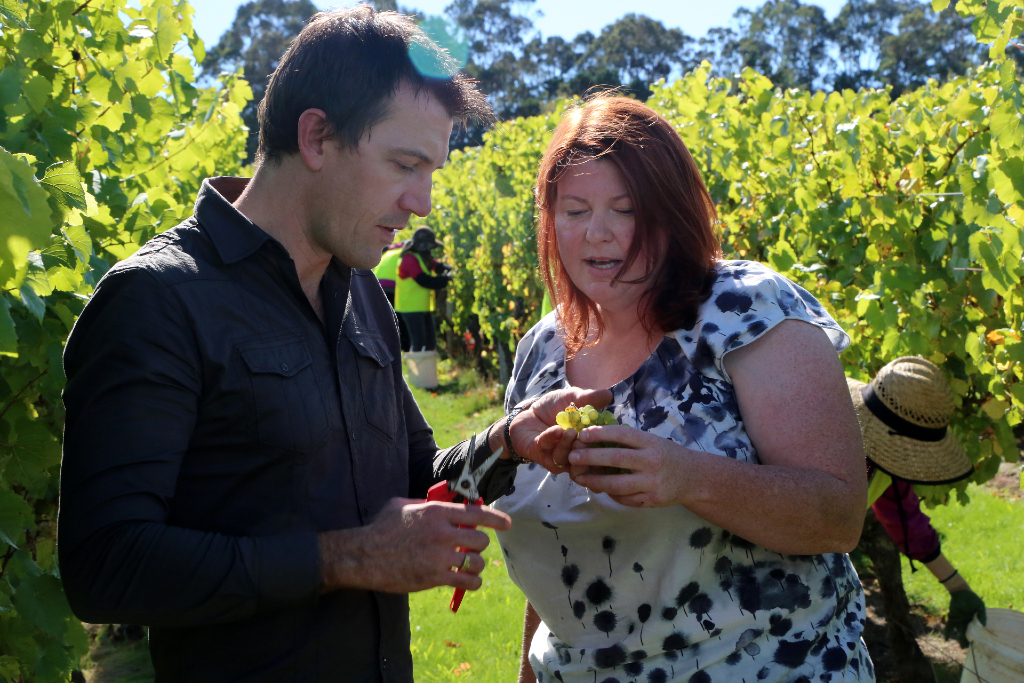
Feature image: Tyson Stelzer examines vintage Chardonnay with Natalie Fryar. Image courtesy Tyson Stelzer.
Few places flatter to deceive like modern wineries. With their workspaces defined by concrete, stainless steel and glass, the added presence of hi-tech equipment soon promotes the idea that winemaking is essentially a manufacturing process.
Nothing could be further from the truth, says celebrated sparkling winemaker Natalie Fryar.
It’s the location of a vineyard site and the quality of its viticulture that determine the ultimate drinking pleasure of a bottle of wine. That’s because soil type, vineyard aspect and a complex array of climatic factors all affect the ways in which wine grapes respond to their growing conditions.
“The perfect match between a wine grape and its vineyard site is the winemaker’s equivalent of a marriage made in heaven,” explains the founder and proprietor of Tasmania’s Bellebonne wines.
Fryar speaks with the voice of experience. The former South Australian has been criss-crossing our vineyards for the past two decades. Indeed, it’s exactly 20 years ago that Fryar first set foot on sites in the state’s north-east. She was then the newly appointed winemaker for the Jansz Tasmania Wine Company.
Owned by the Hill-Smith family since 1998, Jansz Tasmania became an industry flagship during Fryar’s 13 years as its senior sparkling winemaker and brand ambassador. When the University of Adelaide graduate left the company in September 2014 to become a full-time Tasmanian resident, it was to begin the monumental task of establishing her own artisan sparkling wine brand.
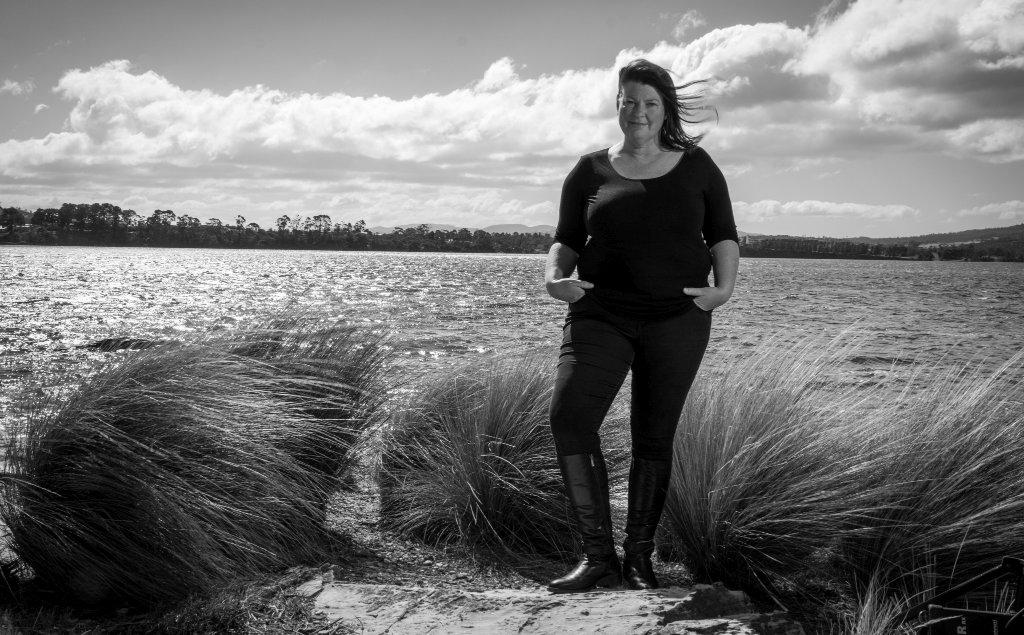
Bellebonne sparkling winemaker Natalie Fryar. Image courtesy Chris Crerar.
According to Champagne and sparkling wine authority Tyson Stelzer, Fryar’s successes to date have exceeded all expectation. Speaking as the host of a degustation sparkling wine dinner held at Josef Chromy Wines in early February, the Brisbane-based author and wine communicator waxed lyrical about the brand that Fryar brought to life in 2015.
“There is no sparkling wine brand that’s been introduced on the Australian landscape in recent years that has been as exemplary as Bellebonne,” Stelzer told guests at the Relbia event.
Referring to Fryar as the country’s sparkling rosé queen, the author of the annual Australian Sparkling Wine Report says that in his opinion Bellebonne wines share top billing with those of the House of Arras as the industry’s ‘best of the best.’
Speaking in reply, Fryar attributes much of her success to the quality of the wine grapes she has been privileged to work with as a cool climate, sparkling winemaker.
“I love this place with the passion of a newcomer,” Fryar admitted to dinner guests.
“When I landed in Launnie on January 2, 2001 – and then drove to the Jansz Vineyard at Pipers Brook – my heart just broke. I thought, how can this place exist?
“It is just so stunning. And the amazing thing for me as a winemaker some 20 years later is that I still drive those same roads and I still experience those same feelings. This place is astounding.
“All I want to do professionally is to capture some of that beauty and put it in a glass, so that when people are drinking this wine in London or in Shanghai or in Uzbekistan, they see the same beauty that I see.
“The tagline of Bellebonne is that it’s made by Tasmania. Not just made in Tasmania. Tasmania is more than just a little island off Melbourne. It is something unique and it informs me as much as it informs the terroir – the soil, the grapes and the air. It informs me and I try to capture it here in every glass. That’s the whole point of this project.”
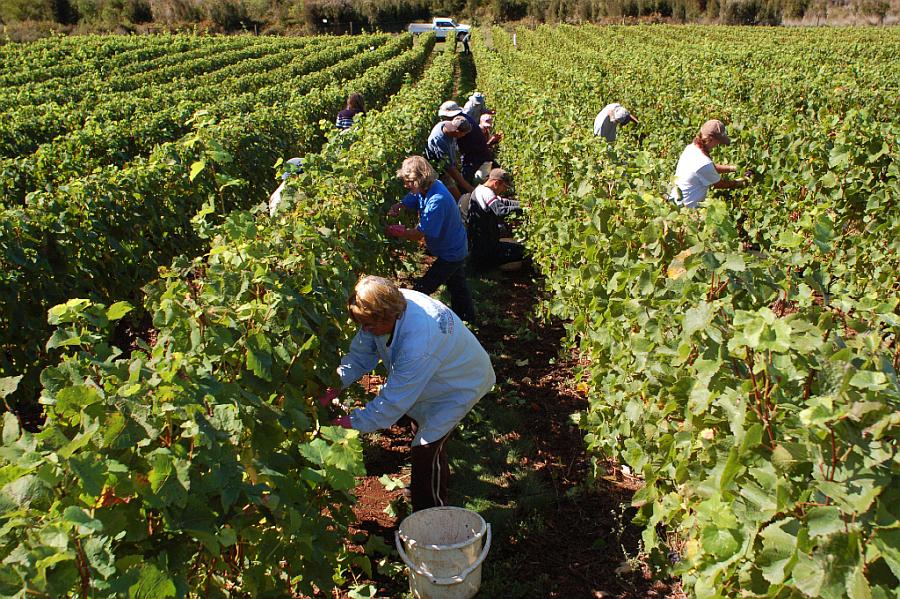
Sparkling wine harvest, north-east Tasmania. Image credit: Mark Smith.
Now four weeks closer to harvest than she was back on February 5, Fryar is looking forward to her 21st Tasmanian vintage with her usual heightened sense of anticipation.
“Despite the difficulties imposed by La Niña weather patterns, it is nowhere as confronting as 2011, our previous La Niña vintage,” she explains.
“It’s similar at the moment to 2016, which was a cracker of a vintage for sparkling wine in Tasmania. I’m not worried by the seasons we’ve had to date. In fact, I’m really feeling confident about this year. I’ve been around quite a number of vineyards recently, and leaf canopies are looking really healthy.
“With good vineyard practices, sites should remain disease-free and allow us to enjoy a very good year for wine quality.”
Fryar says Pinot Noir and Chardonnay from the Pipers River/Pipers Brook district of north-east Tasmania will continue to provide her with the essential elements for her vintage sparkling wine program.
“All our vintage wines are single vineyard wines from the region,” she notes.
“This year, we’ve also got some fruit coming in from the Tamar Valley and from the east coast, to allow us to increase the production of our non-vintage wine.
“A big growth for us would be taking in another five tonnes. For the first time, there’ll be a little bit of Pinot Meunier from the east coast, so that’s very exciting, too.”
Recently married to Wellington & Wolfe winemaker Hugh McCullough, Fryar adds that the couple are also looking forward to continuing the development of their cutting-edge Riesling and playful Wolfe at the Door labels.
ADVERTISEMENT – ADVERTISEMENT – ADVERTISEMENT
Cautionary trails
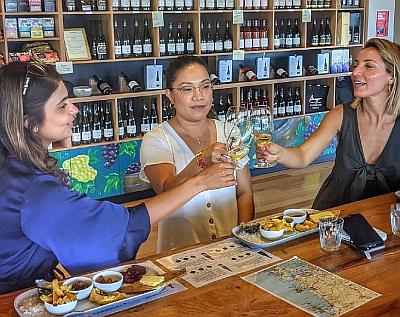
Visitors cheer re-opening of cellar doors.
Image courtesy Bangor Vineyard Shed.
If you felt like staying between the sheets for a few minutes longer this morning, spare a thought for the small army of pickers just beginning to work their way across our vineyard slopes, bringing in Tasmania’s 2021 wine grape harvest.
The chances are that by the time your feet hit the floor, contract labourers and vineyard staff may have already completed several hours’ work in the early morning chill.
According to Wine Tasmania CEO Sheralee Davies, this is a great time of year for people to get out onto our wine trails to visit vineyard cellar doors. There’ll be plenty of vintage activity going on during the coming months.
With the reopening of cellar doors late last year, Wine Tasmania has worked quickly to develop the 2021 Tasmanian Wine Guide.

“This year’s guide focuses on why Tasmania’s wine is so great, profiling some of the terrific and talented individuals growing grapes and making wine, as well as encouraging people to visit cellar doors across regional areas,” Davies said in launching the guide last month.
“Visitors to cellar doors can expect to see new signage, reminding people to keep out of vineyards and to check with cellar door staff whether access is permitted. Microscopic pests or diseases can unknowingly be transported and could cause great damage to our precious grape vines.
“Most cellar doors have now reopened, following COVID-19 restrictions, but opening hours and offerings may have changed and capacity at some may be limited, so we’re recommending visitors touch base in advance.”
Hobart’s Mark Smith wrote his first weekly wine column back in 1994. Now more than 1700 features and 25 years later, he continues to chart the successes of Tasmania’s small scale, cool climate wine industry with regular contributions to some of Australia’s leading industry publications.
PICK OF THE CROP
 Mark gives you his honest opinions about the best wines available right now from Tasmania’s wine makers.
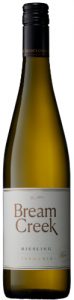
2019 Bream Creek Riesling $31
Bream Creek Vineyard in Tasmania’s south-east boasts some of the oldest Riesling vines in the state. That’s very evident in this fresh, fruit-driven style that’s already playing at the top of its game. It has tremendous concentration and fruit intensity. Sure, there’s a capacity to cellar if a more complex expression is preferred, but you have to wonder whether the end result will be any more delicious than this two-year-old? Winner of a gold medal in Berlin in 2020, it’s a winner at the dinner table. Juicy/limey with a hint of sweetness, it could partner a mild fish curry. www.breamcreekvineyard.com.au
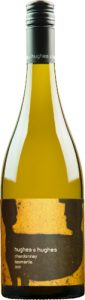
2020 Hughes & Hughes Chardonnay $30
Mewstone Wines in the cool D’Entrecasteaux Channel was a hive of activity on the Southern Open Vineyards Weekend. Like the vineyard’s location, the company’s Hughes & Hughes products are very cool and refreshing. This ripe and generous Chardonnay displays a hint of matchstick, before lively apple and citrus aromas emerge after a bit of time in the glass. Those same notes are joined on the palate by some melon and minerally elements that finish with a satisfying creamy texture and neat acidity. Already quite accessible for a 2020, pour it with a sumptuous veggie burger. www.mewstonewines.com.au
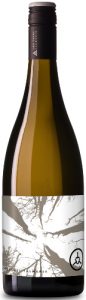
2019 Dog & Wolf Chardonnay $50
This is a very neat and elegant Tamar Valley Chardonnay, crafted by Two Tonne Tasmania’s Ricky Evans. Sourced from vineyards near Hillwood and at Waverley, east of Launceston, it works on the principle that this blend is more satisfying than any single vineyard wine could be on its own. It makes sense on paper and on the palate, too. Careful oak maturation in a variety of formats has shaped the wine beautifully. Extended time on yeast lees has added weight and mouthfeel to the wine’s nicely modulated flavours of citrus, white nectarine and oatmeal. Very attractive indeed. www.tttwine.com.au
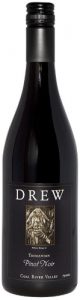
2020 Drew Pinot Noir $30
Merriworth is the road address of Coal River Valley wine producer, Robert Drew. Money’s worth just as easily describes the swag of wines that can be tasted and bought there during the year. This new release from the cool 2020 vintage in the valley is a delightful young red, pale in colour, but already brimming with red cherry and red curranty fruits that have an intriguing savoury dimension. Very subtle vanillin oak and a silky-smooth finish give it elegance and immediate drinkability. Yes, this is lovely young Coal River Valley Pinot with real finesse. Good value.
ADVERTISEMENT – ADVERTISEMENT – ADVERTISEMENT