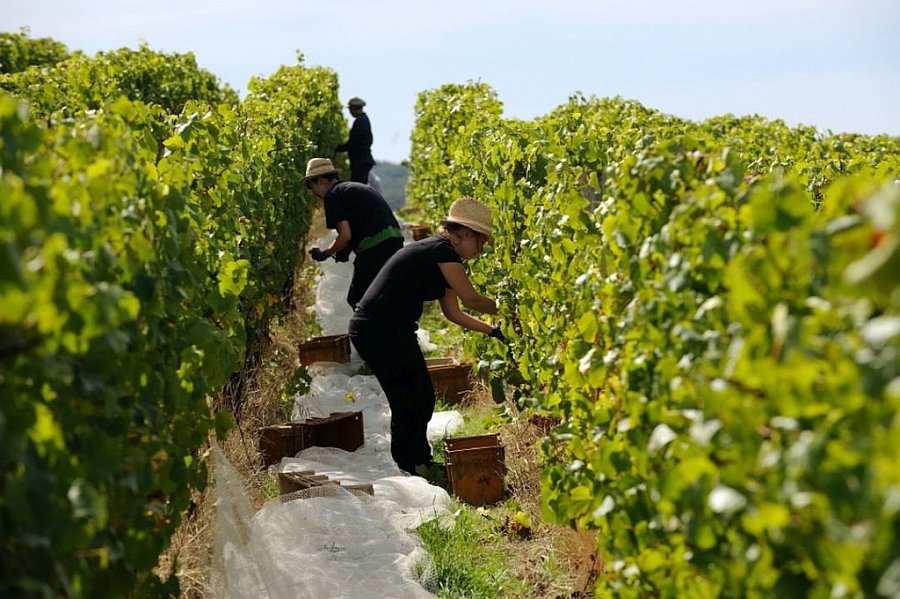
Few winemakers can resist an opportunity to talk over plans for their next Chardonnay and Pinot Noir. But draw the conversation out a little and you soon find the factor that plays the greatest part in determining vintage wine quality is one where they have no say at all.
It’s the weather.
And while the prospects for vintage 2021 are still too early to call, the persistent sunshine, relative lack of rain and gentle breezes of the past fortnight have many Tasmanian wine producers feeling optimistic about their impending harvests.
“Touch wood,” adds Meadowbank co-owner Gerald Ellis as he reflects on the seasons to date at his 48ha vineyard at Glenora in the upper Derwent Valley.
An industry veteran with almost 40 Tasmanian vintages to his credit, Ellis is quietly confident about the quality of his wine grapes now basking in the summer sunshine.
There’s a lot at stake. Apart from having to provide the best of care for more than 200,000 vines on his family’s 2500ha farming property, Ellis is a contract grower for some of the biggest names in the State’s cool climate wine industry – House of Arras, Bay of Fires Wines, Glaetzer-Dixon Family Winemakers and Dr Edge Tasmania to name the headline acts.
Almost half Meadowbank’s crop has been dedicated to premium and prestige sparkling wine production.
“It’s been a really, really good season to date,” Ellis says.
“We had a wet spring and it’s basically stopped raining since the end of October. The cooler conditions mean we’re perhaps running a little bit later than normal. We’re hoping the warm weather forecast for the next week or so will really put a sting in the tail of veraison (berry colour change).
“It’s come at just the right time for us. To some extent, it will offset a bit of the cooler weather we had during December and January.”
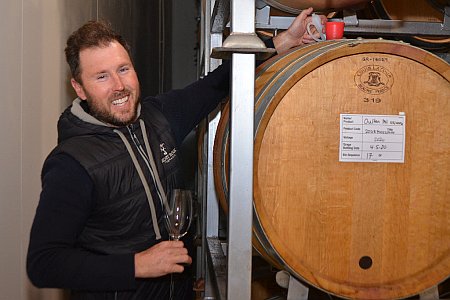
Justin Arnold has his vintage right on schedule. Image courtesy Mark Smith.
Ghost Rock vigneron Justin Arnold reckons his journey to vintage 2021 is taking a similar path to that experienced by Ellis. Arnold’s home base at Northdown – not far from Devonport Airport – might be 240km north of Meadowbank as the crow flies, but the coastal weather patterns there have had similar effects on vine growth.
“The thing about Tassie viticulture that’s so important is that your vines really have to get off to a good start during spring,” Arnold observes.
“Winter was drier than usual for us. The average daily temperatures we had in September and October were followed by an unusually warm November. That really set things up nicely. The big rain event we had several weeks ago added to soil moisture but we’d had little rainfall since the end of October.
“Within the context of the whole season, that’s ticked a lot of boxes. We’re right on schedule with our 2017, 2018 and 2019 vintage data. That’s a pretty good indicator of where we are right now.”
For producers due east and further south of Meadowbank, the events of recent months have put them in ‘steady-as-she-goes’ mode. They’re on the lookout for potential problems in the vineyard, yet inwardly buoyant that the seasons will progress calmly and smoothly towards a high-quality harvest.
Early picking looks unlikely, almost regardless of variety, wine style and vineyard location. Crop loads appear to be moderate in volume and almost perfectly balanced with leaf canopy area and overall vine health.
Kate Hill in the Huon Valley says her thoughts on 2021 reflect the quiet optimism of her neighbours and those located nearby in the D’Entrecasteaux Channel.
“Veraison is just beginning and berries are starting to colour up nicely with the sunny weather,” she says.
“The 3-4mm of rain we had a couple of weeks ago has given our leaf canopies a real burst of energy. Right now, we may be a week to 10 days behind an average season, but these are still early days for us in this cooler part of the State. We don’t have huge crops, and the big powerful leaf canopies we have may see our fruit ripen fairly quickly as we get closer to harvest in mid-to-late March.”
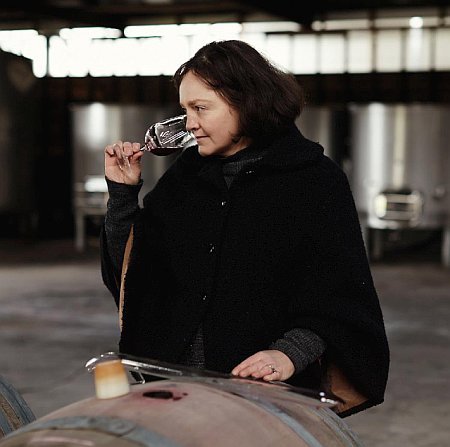
Kate-Hill – more sparkling wine on the way. Image supplied.
Like many sparkling wine producers around Tasmania, the Huonville winemaker says Kate Hill Wines has experienced a very significant increase in sales over the past year. She attributes much of that to COVID-19. In times of increased personal and community stress – including periods of war and social unrest – history shows rates of sparkling wine consumption increase markedly.
“We’d already planned to make more sparkling wine and the seasons have worked out pretty well for us so far,” Hill notes.
“The last time we had a vintage play out under the influence of La Niña weather patterns was 2011. That was a very good sparkling wine year for us.”
Fred Peacock admits the signs look good for an excellent sparkling wine vintage when key industry players begin their harvests in early March or thereabouts. As the winner of the 2021 Tasmanian Wine Show Trophy for Best Sparkling Rosé, the busy Bream Creek viticulturist reckons wine quality across the board is likely to be very pleasing.
Peacock manages around 30ha of vines in the Coal River Valley, the Derwent Valley and on the East Coast.
“We were expecting additional disease pressure this year because of the effects of La Niña, but in actual fact things have panned out pretty well in south-eastern Tasmania.
“Our fruit is moving through veraison more quickly than anticipated. Vine leaves are really healthy, and the powerful leaf canopies we’re seeing are feeding that energy back into the grapes. We may not have as late a season as we originally thought.”
Producers at Relbia and further north in the Tamar Valley and Pipers River districts hope that Peacock’s optimism is well-placed. They’ve had some challenging times during spring and summer. Frequent showers on some sites in October, December and January filled rain gauges with twice the volume of water received in more typical months.
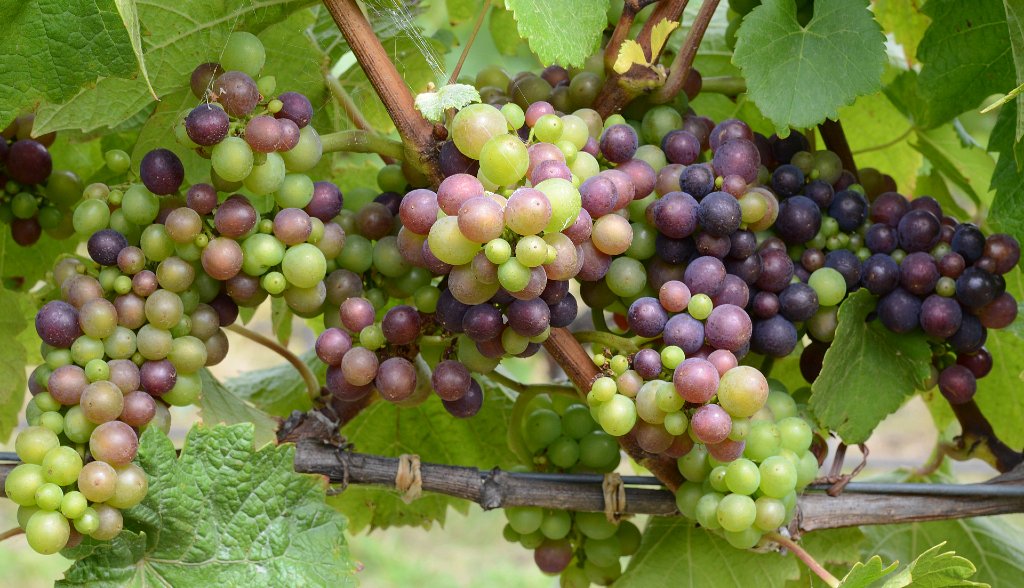
Veraison (berry colour change) underway in Pinot Noir. Image courtesy Mark Smith.
“Our leaf canopies are absolutely fabulous,” says Delamere co-owner Fran Austin.
“That’s a big advantage over where we were this time last year when we had a wet vintage in the north of the State. From a disease-pressure point of view, it’s not been an ideal start to the season. But as long as you’re on top of your spray programs and disease management, it’s still set us up beautifully for harvest in a few weeks’ time.
“It’s meant having to do a huge amount of work in the vineyard to stay on top of the weed and vine growth, but so long as you remain on top of that it’s fine.
“The weather we’re having at the moment means things are racing along really well towards harvest. Last year, it was so cold and so wet. We also had much less efficient leaf canopies. It seemed like we were waiting forever before we could pick our fruit for table wine.
“Around 70 percent of our harvests at Delamere go to sparkling wine production, and it looks like being a fantastic year for that. With disease kept under control and a bit of warm weather, it may prove to be a really good vintage for still table wine as well.”
Touch wood.
ADVERTISEMENT – ADVERTISEMENT – ADVERTISEMENT
Hobart’s Mark Smith wrote his first weekly wine column back in 1994. Now more than 1700 features and 25 years later, he continues to chart the successes of Tasmania’s small scale, cool climate wine industry with regular contributions to some of Australia’s leading industry publications.
PICK OF THE CROP
 Mark gives you his honest opinions about the best wines available right now from Tasmania’s wine makers.
2020 Wellington & Wolfe Riesling $36
Tasmania’s Riesling producers are relatively few in number but following vintage last year they spoke with one voice – the noble white grape would be one of the stars of 2020. Recent tastings indicate that is true. There are some wonderfully aromatic, intensely flavoured wines now in the market. This is one of them. Born in the Tamar Valley, it has the look and feel of Germany. It opens with beguiling fragrance – mostly citrus and white flowers – before the palate follows with juicy lime and white nectarine elements. A mere hint of sweetness whispers Mosel or Rheingau. Beautiful. www.wellingtonwolfe.com
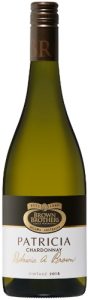
2018 Brown Brothers Patricia Chardonnay $45
Named in honour of a dearly loved family matriarch, this is a superb Chardonnay, worthy of its exulted status in the BB portfolio. The late Pat and John Brown both loved Tasmania. Indeed they spent their honeymoon here in 1939. They would have loved this wine, too, for its poise and elegance and the complex array of aromas and flavours that reflect its cool climate origins. Honeydew, lime, white nectarine and oatmeal… the flavours flow with such ease. Then there’s the freshness and vibrancy framed by quality French oak. Three trophies, 2021 Tasmanian Wine Show. Richly deserved; a terrific wine. www.brownbrothers.com.au
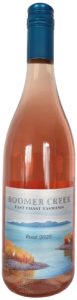
2020 Boomer Creek Rosé $28
What’s a bit of fun in the sun worth on Tasmania’s east coast if it’s not followed thereafter by one of the district’s fresh and lively Rosés? The Walters family have nailed their colours to the mast by ensuring this wine displays a little more than the expected pale blush in the glass. The flavours on offer have similar directness. Sour cherry, pink watermelon and red apple elements refresh the palate and lift the spirits at the end of a long day. Toss it in your Esky or take it to your favourite Indian restaurant, it’s a Boomer by design. www.boomercreekvineyard.com.au
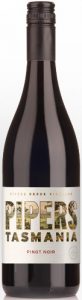
2019 Pipers Tasmania Pinot Noir $30
The Pipers Tasmania label sits in the Kreglinger wine hierarchy above the company’s trusty Ninth Island brand. But hey, don’t you get a whole lot more wine quality for your money by shelling out those few extra dollars? This is a very pretty wine indeed. Barely light-medium bodied, it offers an engaging mix of aromas and flavours, from raspberry and spicy black cherry to those more redolent of the smallgoods section of your local deli. It’s not a wine to tax the brain cells but my goodness it delivers its pristine varietal characters with such clarity and authenticity. Bravo. www.kreglingerwineestates.com
ADVERTISEMENT – ADVERTISEMENT – ADVERTISEMENT