Cadbury was founded in Birmingham, England, in 1824 by John Cadbury, an English Quaker and businessman who began selling handmade cocoa and drinking chocolate from a small grocery shop before eventually expanding into large-scale chocolate manufacturing.
In 1919, the Cadbury company began planning an overseas expansion. It settled on Australia because it was already one of Cadbury’s largest export markets.
Cadbury executives visited Tasmania in January 1920 and were impressed by the state’s cheap hydroelectricity, cool climate, and reliable dairy supply. They ended up choosing Claremont as the location for Cadbury’s first overseas chocolate factory.
Construction began later that year, with forty Cadbury employees relocating from England to Tasmania to help establish the factory and train local staff.
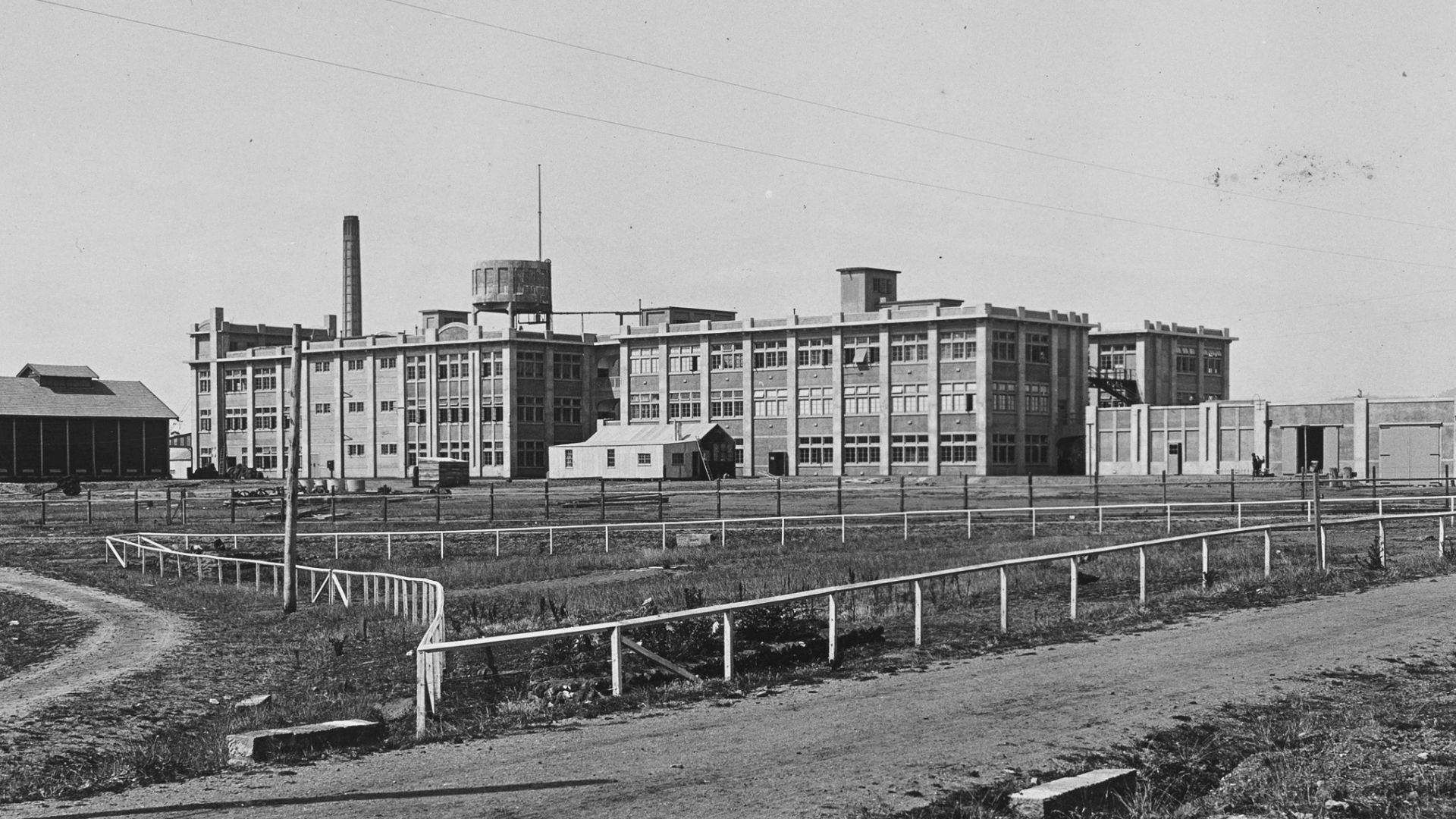
The Claremont factory officially opened on 21 October 1921.
In 1922, Cadbury established a workers’ settlement nearby. Based on the company’s Bournville village in England, the settlement included housing, a school, and community spaces for employees and their families.
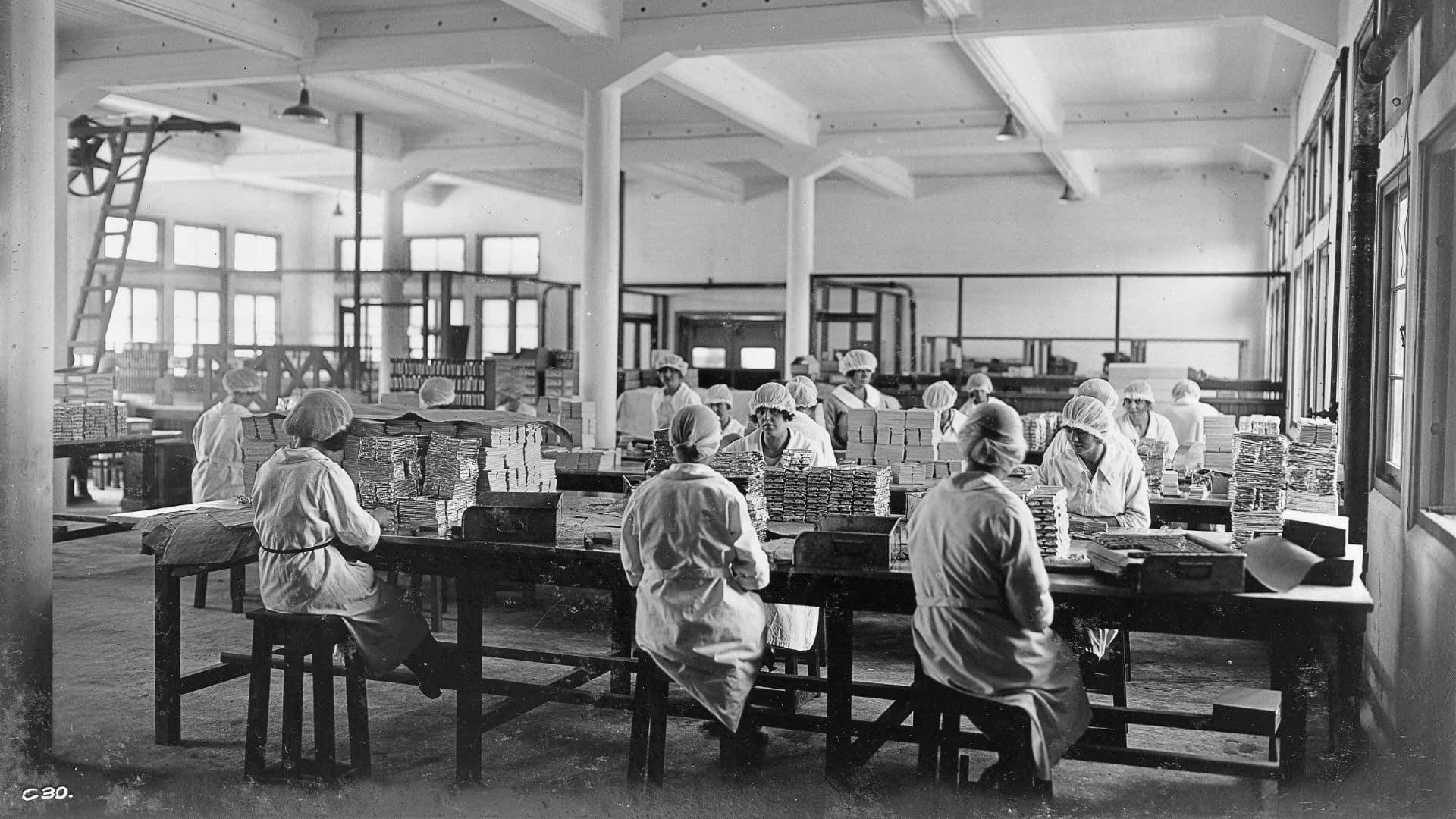
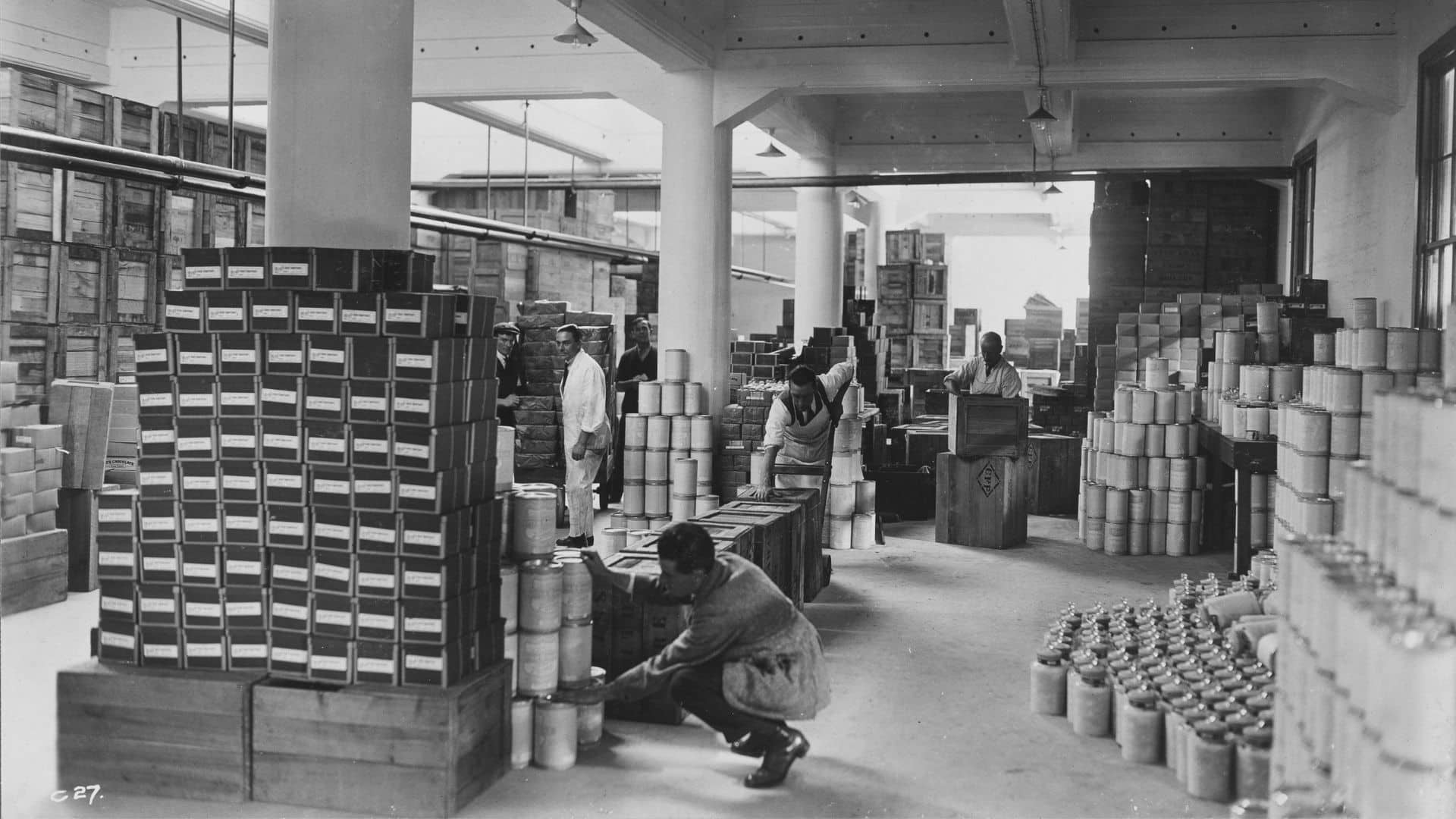
During the 1920s and ‘30s, the chocolate factory became one of Tasmania’s major employers. In 1948, Cadbury opened the site to public tours, allowing people to see the chocolate-making process first-hand.
The factory reached its peak during the post-WWII manufacturing boom of the 1950s and ‘60s. By 1960, it employed around 1,100 workers and was producing chocolate at a massive scale. Seven years later, it absorbed MacRobertson’s, the confectionary company behind products like Freddo Frog.
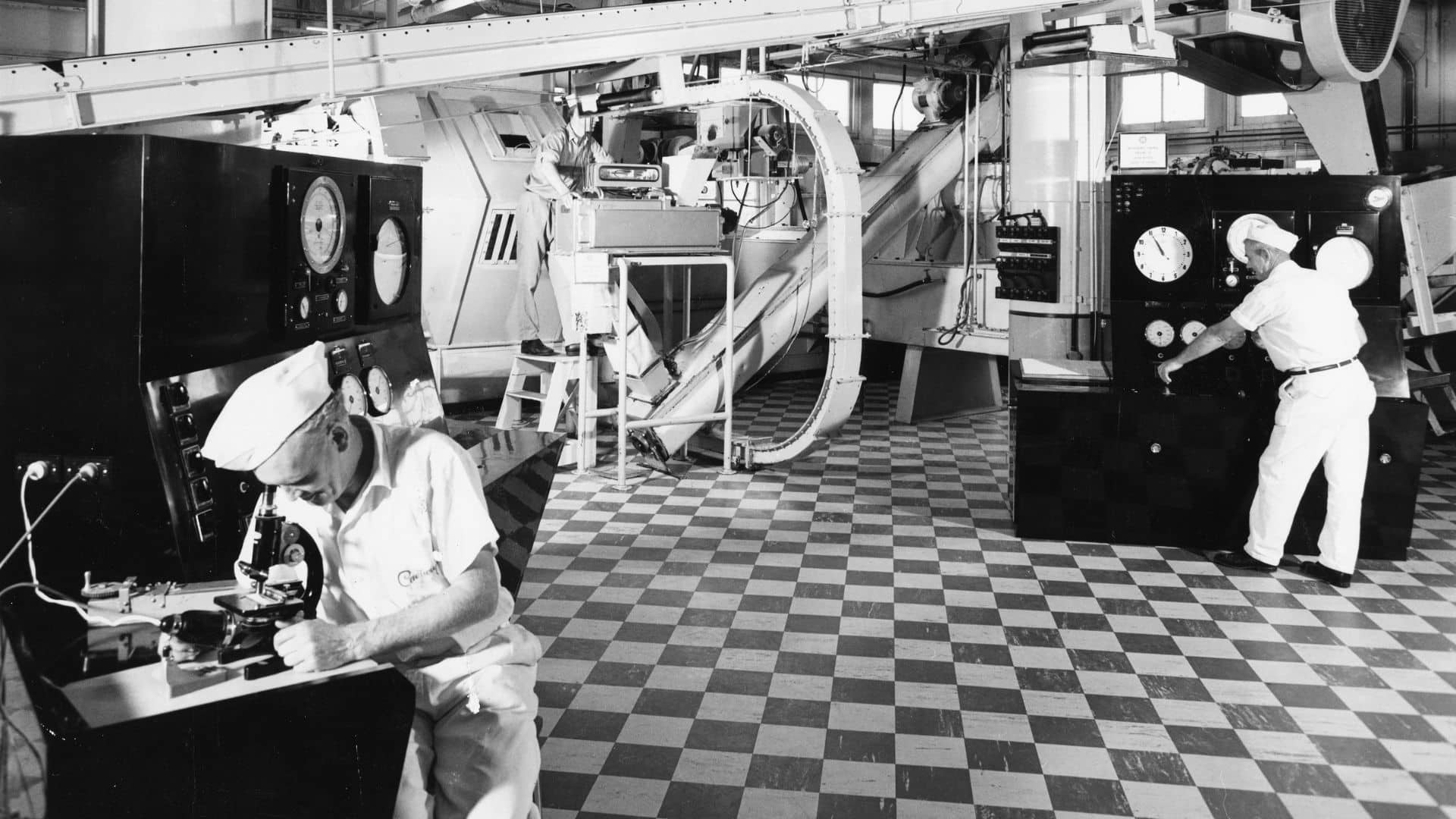
Employment at the chocolate factory began to decline during the 1990s and 2000s, when modernisation and automation work was done to make production processes more efficient.
The public tours, which had become a popular attraction over the years, were stopped in 2008 due to changing global health, safety, and liability standards. They were replaced by a visitor centre that opened in 2010, focusing on exhibitions and retail. The centre didn’t last long, however, closing in 2015.
Also in 2010, American multinational snacking company Mondelēz became the factory’s parent company after acquiring Cadbury’s global business.
From 2015 to 2018, factory machinery was upgraded to improve efficiency, resulting in further reductions to staff numbers. Despite this, the Claremont factory produced more than 60,000 tonnes of chocolate in 2021 – a company record.
Today, the Cadbury chocolate factory at Claremont continues to make products for Australian consumers and export markets across Oceania and Asia. It is also one of Tasmania’s most recognisable industrial landmarks.
Photo Gallery
Media Release 5/05/2026 – Sweet Success as Council Greenlights $150 Million Chocolate Experience at Cadbury
Glenorchy City Council has approved the $150 million Chocolate Experience at Cadbury, clearing the way for a project that will put Tasmania on the map and attract thousands of additional visitors per year to the State.
The Experience, at the historic Cadbury factory site in Claremont, is forecast to welcome 431,000 visitors a year, inject over $120 million into the Tasmanian economy annually, and support more than 300 construction jobs and over 200 ongoing roles.
“This is a huge win for Tasmania and for Claremont. It represents a generational boost for the local economy, creating jobs, attracting investment, and helping move Tasmania’s visitor economy to the next level. Securing Development Approval has taken years of working closely with the local community, Council and Cadbury, and it’s fantastic to see all that hard work starting to pay off,”
“From the moment visitors arrive, this will be unlike any chocolate attraction in the world. It will be an innovative, immersive and deeply emotive experience that uses storytelling and technology to bring the magic of chocolate-making to life. It will be full of surprise, nostalgia, creativity and joy and, of course, there will be plenty of chocolate along the way. It is one Tasmanians will be proud of and one I’m privileged to help deliver,” Mr Currant said.
Tourism Industry Council Tasmania CEO Amy Hills said that in order for Tasmania to remain competitive as a visitor destination, it needed to support the type of experience, innovation and creativity that the Experience offers.
“For our industry to go from strength to strength we need to keep innovating and keep investing in attractions. This is a next-level concept that is going to make Tasmania the must-do destination that it deserves to be.
“This is a once-in-a-generation opportunity to tell the Cadbury story properly and authentically, and it will lift the whole industry with it. Importantly, it will cater to a variety of visitors and deliver on the Tassie brand promise ten-fold,” Ms Hills said.
Toby Smith, President of Mondelēz International for Japan, Australia, and New Zealand said Cadbury was proud to support the Experience as brand partner.
“Cadbury’s story and Tasmania’s story have been intertwined for more than a century and this project will bring that story to life for hundreds of thousands of visitors every year, and help write the next chapter for Claremont, for Cadbury and for Tasmanian tourism.”
Melbourne-based investment bank Kidder Williams is the sole financial advisor raising capital for the Experience. Kidder Williams is in the market and engaging with interested parties, with receipt of Development Approval an important step towards securing capital.
Ninety five per cent of the project cost will be privately funded, with existing government support providing the confidence for its future success.
The project is due to be complete by September 2028.
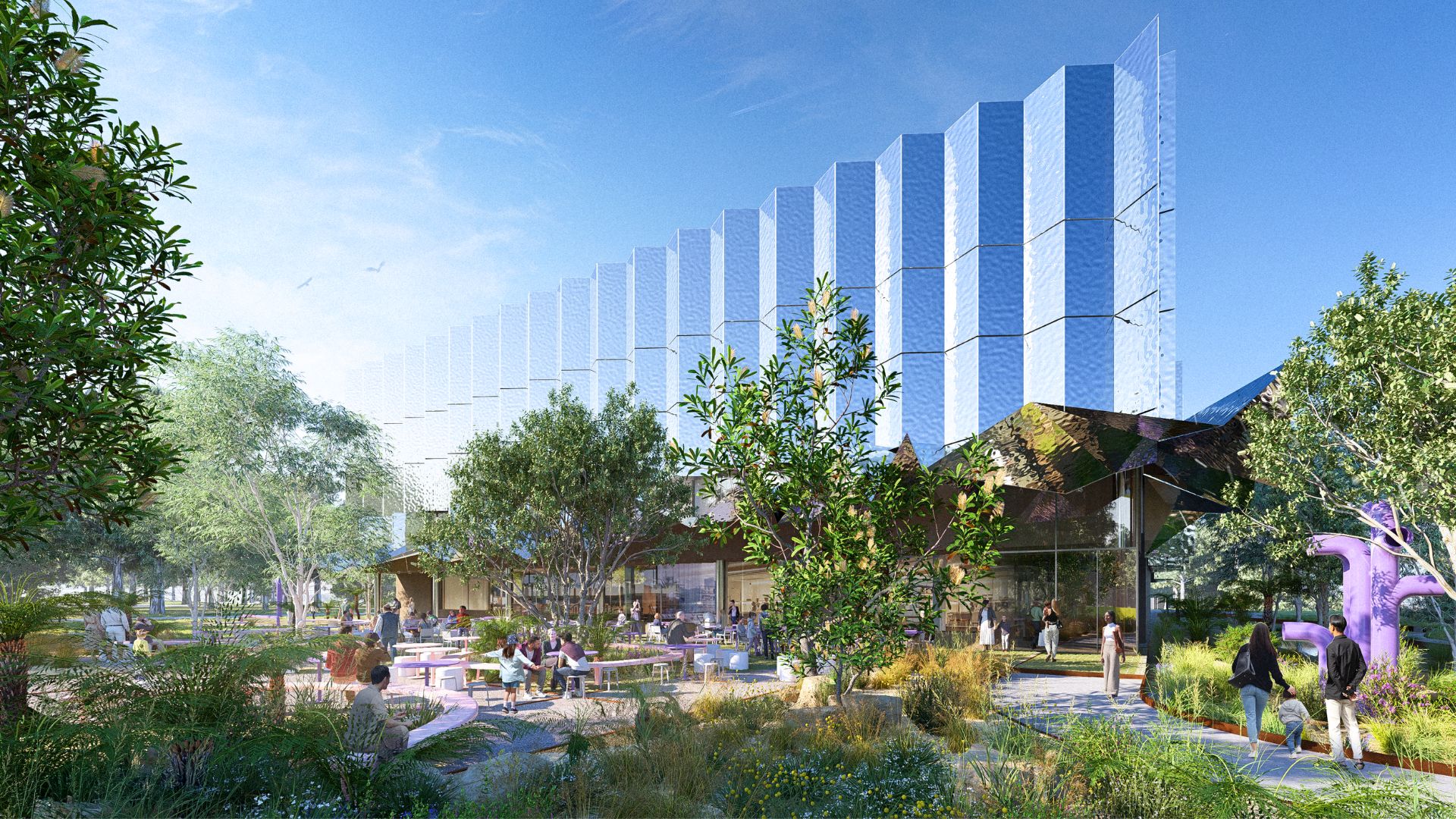
A render of the exterior of the Cadbury Chocolate Experience.
References & Bibliography
- Cadbury
- Cadbury welcomes generations of farmers inside its Tasmanian chocolate factory (Herald Sun, 2 March 2026)
- ‘By Mountain and Sea’: the Model Factory at Cadbury’s Claremont (State Library and Tasmanian Archives Blog)
- New $150m Cadbury Chocolate Experience in Tasmania moves one step closer (Herald Sun, 29 April 2026)
- Pure imagination: Tasmanian premier vows to build world’s largest chocolate fountain if re-elected (The Guardian, 10 March 2024)
- ‘It’s reigniting an absolute icon’: Chocolate Experience at Cadbury’s to bring back spirit of beloved tours (Herald Sun, 10 March 2024)
- Cadbury Chocolate Factory (Engineering Heritage Australia)
- The History of the Cadbury Factory in Hobart: A Tasmanian Icon (The Chocolate Experience at Cadbury Tasmania)
- Cadbury in Claremont – 100 years in the sweet spot (Glenorchy City Council)
- Why did Cadbury chose Tasmania as the site for its first chocolate factory outside the UK? (ABC News)
- Cadbury chocolate factory tours stopped (ABC News)
- Claremont, Tasmania (Our Tasmania)
Tas That Was is a column that includes:
- anecdotes of life in Tasmania in the past;
- historical photographs of locations in Tasmania; and/or
- documentaries about locations in Tasmania.
If you have an anecdote or photograph you’d like to share with us, please send it to [email protected].
Callum J. Jones is passionate about telling stories. He studied English, History, and Journalism at the University of Tasmania and lived in Western Sydney from 2022 to 2024 while working as a journalist for Professional Planner, a leading online publication for financial planners. Callum has written for Tasmanian Times since 2018 and has also been published in a range of other outlets, including Quadrant and the BAD Western Sydney anthologies.