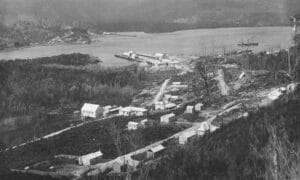
Pontville began in 1821, when the fifth Governor of New South Wales, Lachlan Macquarie, selected the area as a garrison town.* Convicts were subsequently brought in to build the necessary infrastructure.
The town developed rapidly during the 1830s and 1840s, even taking over from nearby Brighton as a major staging point on the road between Hobart and Launceston. The local police station, courthouse, and the Jordan River Bridge were built during this time, as was St Mark’s Church, which was designed by convict architect James Blackburn.
Pontville continued to grow. A small Congregational chapel was built next to the town’s original cemetery in 1857, and St Matthew’s Roman Catholic Church opened 10 years later. The church was destroyed by fire in 1927, but it was promptly rebuilt and reopened.
A railway line connected Pontville with Hobart from 1891 until its closure in 1947.
During both World Wars, the area hosted a major army camp.
The town was gazetted as a locality in 1970; however, its post office closed just three years later.
In 2011, the Commonwealth Pontville Immigration Detention Centre was established on a former army site to accommodate asylum seekers. It closed in 2013-14, and the site was returned to Defence hands.
* The Governor of New South Wales originally had jurisdiction over Van Diemen’s Land because the island was legally part of the colony of New South Wales. This arrangement lasted from the settlement of Van Diemen’s Land in 1803 until 1825, when it became a separate colony.
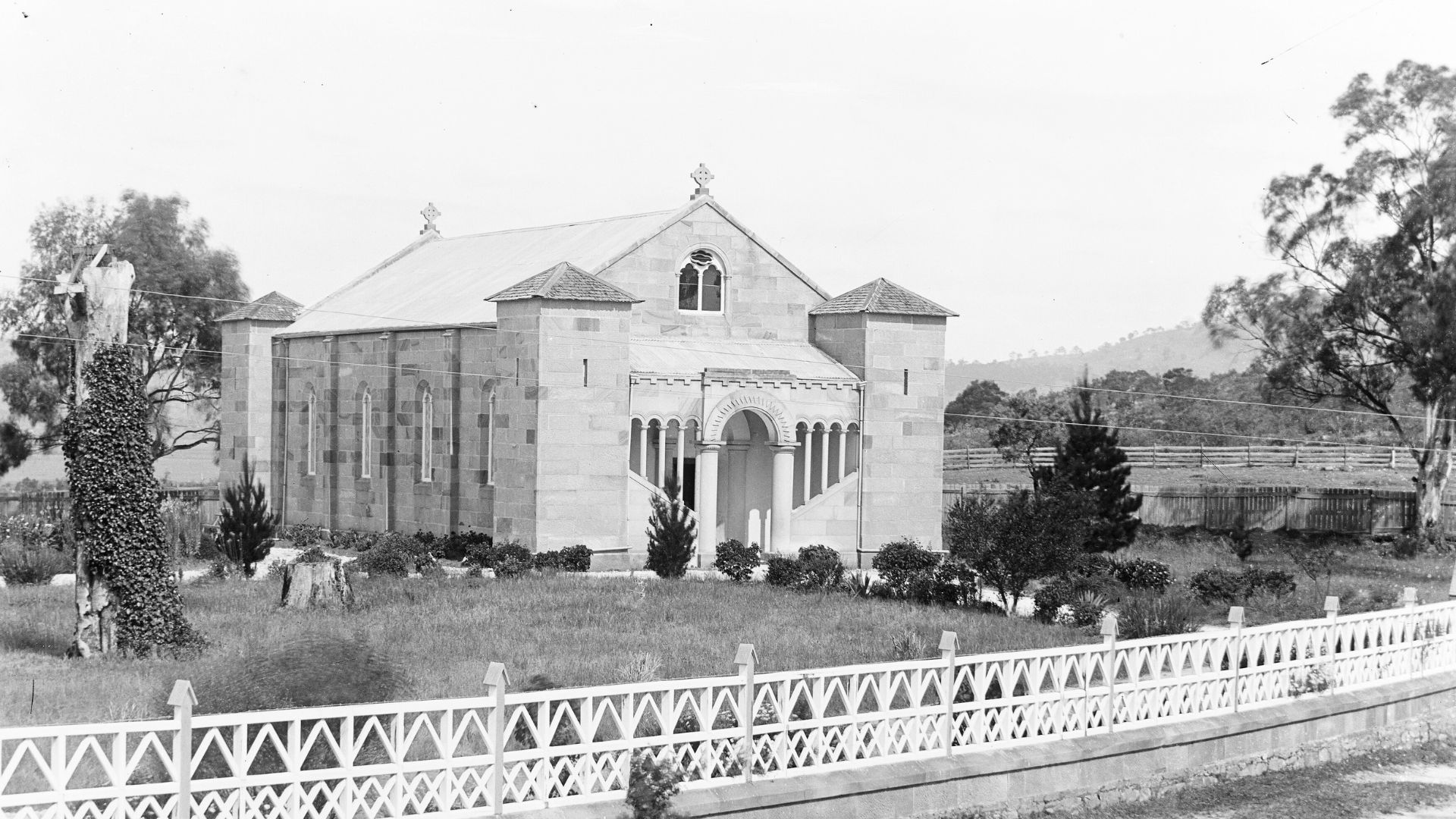
St Mark’s Anglican Church (1900).
References & Bibliography
- St Mark’s Church, Pontville (Corporate Keys)
- Jordan River Bridge, Pontville (Heritage Tasmania)
- Pontville, Tasmania (Our Tasmania)
- No. 1138 – Pontville – Congregational Chapel (1857-1874) (Churches of Tasmania)
- St Matthews Church, Pontville (Archdiocese of Hobart)
- The Crown is the survivor of Pontville’s two pubs (Time Gents)
- Former detention centre at Pontville being readied for return to Defence hands (ABC News)
- Pontville (Discover Tasmania)
- Brighton-Pontville (Companion to Tasmanian History)
Tas That Was is a column that includes:
- anecdotes of life in Tasmania in the past;
- historical photographs of locations in Tasmania; and/or
- documentaries about locations in Tasmania.
If you have an anecdote or photograph you’d like to share with us, please send it to [email protected].
Callum J. Jones studied English, History and Journalism at the University of Tasmania and lived in Western Sydney from 2022 to 2024 while working as a journalist for Professional Planner, a leading online publication for financial planners. He has written for Tasmanian Times since 2018 and has also been published in a range of other outlets, including Quadrant and the BAD Western Sydney anthologies.