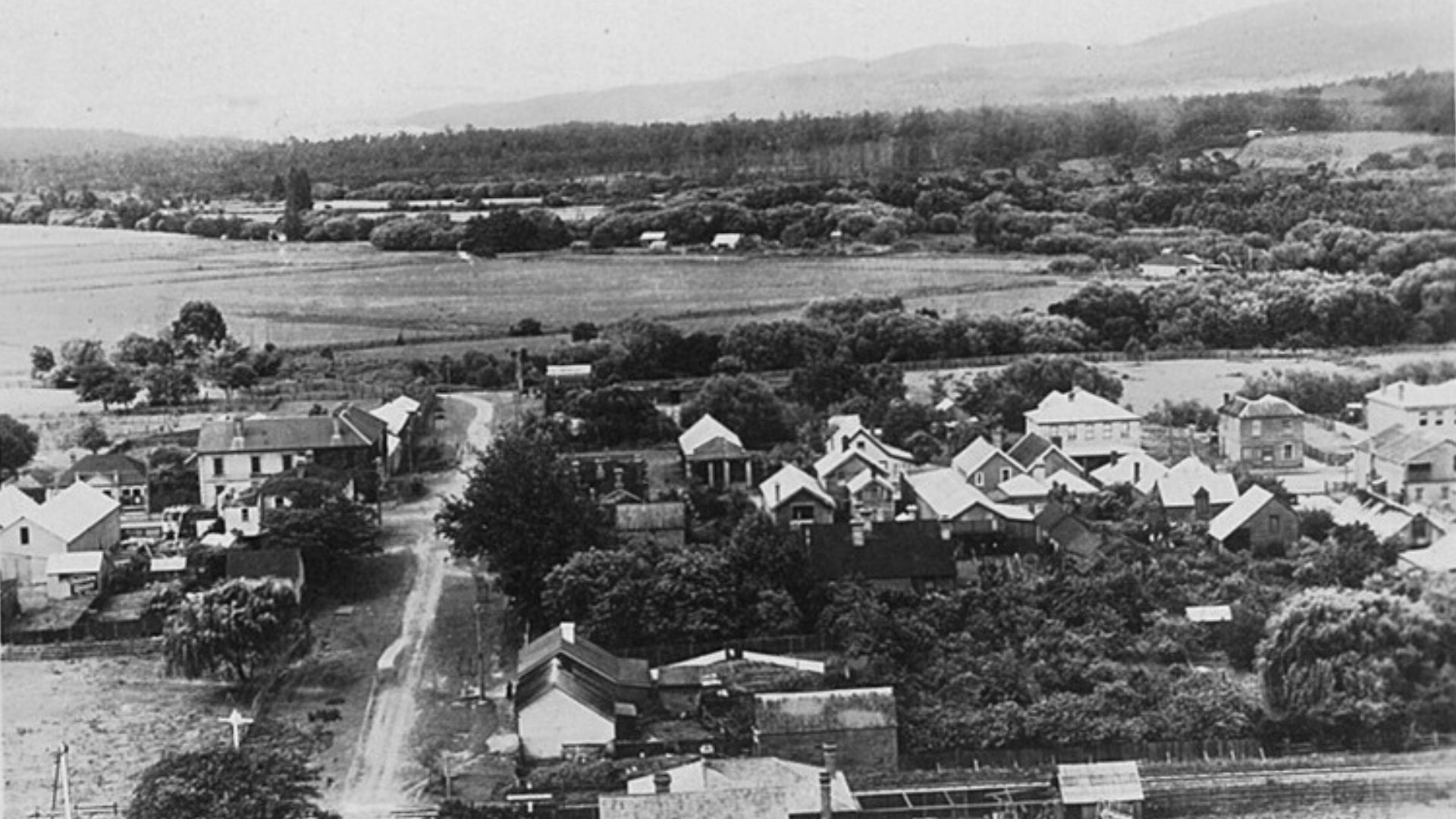
The above photograph of Latrobe was taken in 1920.
The northern coast of Tasmania, where Latrobe is located, was originally occupied by the Punnilerpanner tribe of Tasmanian Aborigines. Little remains of their presence today.
Present-day Latrobe started life in the 1820s and was named after Charles Joseph La Trobe, the first lieutenant-governor of Victoria. It soon became the north coast’s major trading centre and was Tasmania’s third-largest town from 1870 to 1895, boasting a hospital, several pubs and hotels, and three newspapers. The world’s first woodchopping championship was also held there in 1891.
Today, Latrobe is a quiet rural town that has a number of shops and cafés, as well as over 70 heritage-listed buildings and a chocolate factory. Its population was recorded as 12,420 in the 2021 census.
North Down
In 1826, then-manager of the Van Diemen’s Land Company Edward Curr became the first European to settle in the Latrobe area when he built a large house called ‘North Down’ between the towns of Latrobe and Port Sorell.
Curr didn’t live in the house for long, as former British soldier Bartholomew Boyle Thomas had moved in by 1828.
Thomas developed good relationships with the local Aboriginal people while living at North Down, but in 1831, a hostile group of Aborigines ventured into the area from the south and speared him to death.
Ownership of North Down subsequently passed to his brother, Jocelyn.
Sherwood Hall
An ex-convict named Thomas Johnson moved to the Latrobe portion of the Mersey Valley with his wife, Dolly Dalrymple*, in 1845.
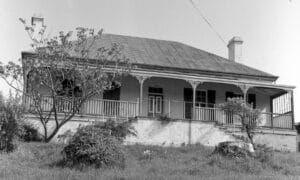
They built a house called ‘Sherwood Hall’, which was lived in until a flood from the Mersey River damaged it in 1970. It was repaired and relocated to its present location on Bells Parade for preservation.
* Dolly Dalrymple (c.1808–1864) was a Tasmanian Aboriginal woman who became a respected figure in colonial society, despite facing racial and social challenges.
Tas That Was is a column that includes:
- anecdotes of life in Tasmania in the past;
- historical photographs of locations in Tasmania; and/or
- documentaries about locations in Tasmania.
If you have an anecdote or photograph you’d like to share with us, please send it to [email protected].
Callum J. Jones studied English, History and Journalism at the University of Tasmania and lived in Western Sydney from 2022 to 2024 while working as a journalist for Professional Planner, a leading online publication for financial planners. He has written for Tasmanian Times since 2018 and has also been published in a range of other outlets, including Quadrant and the BAD Western Sydney anthologies.