In 1960, Bellerive was a quiet village rather than the busy suburban hub it is today. The Tasman Bridge existed only on blueprints, meaning the Eastern Shore felt distinct and separate from Hobart. Crossing the Derwent River required a trip across the old floating bridge or a ferry ride, making a visit to the city a significant journey rather than a quick daily commute.
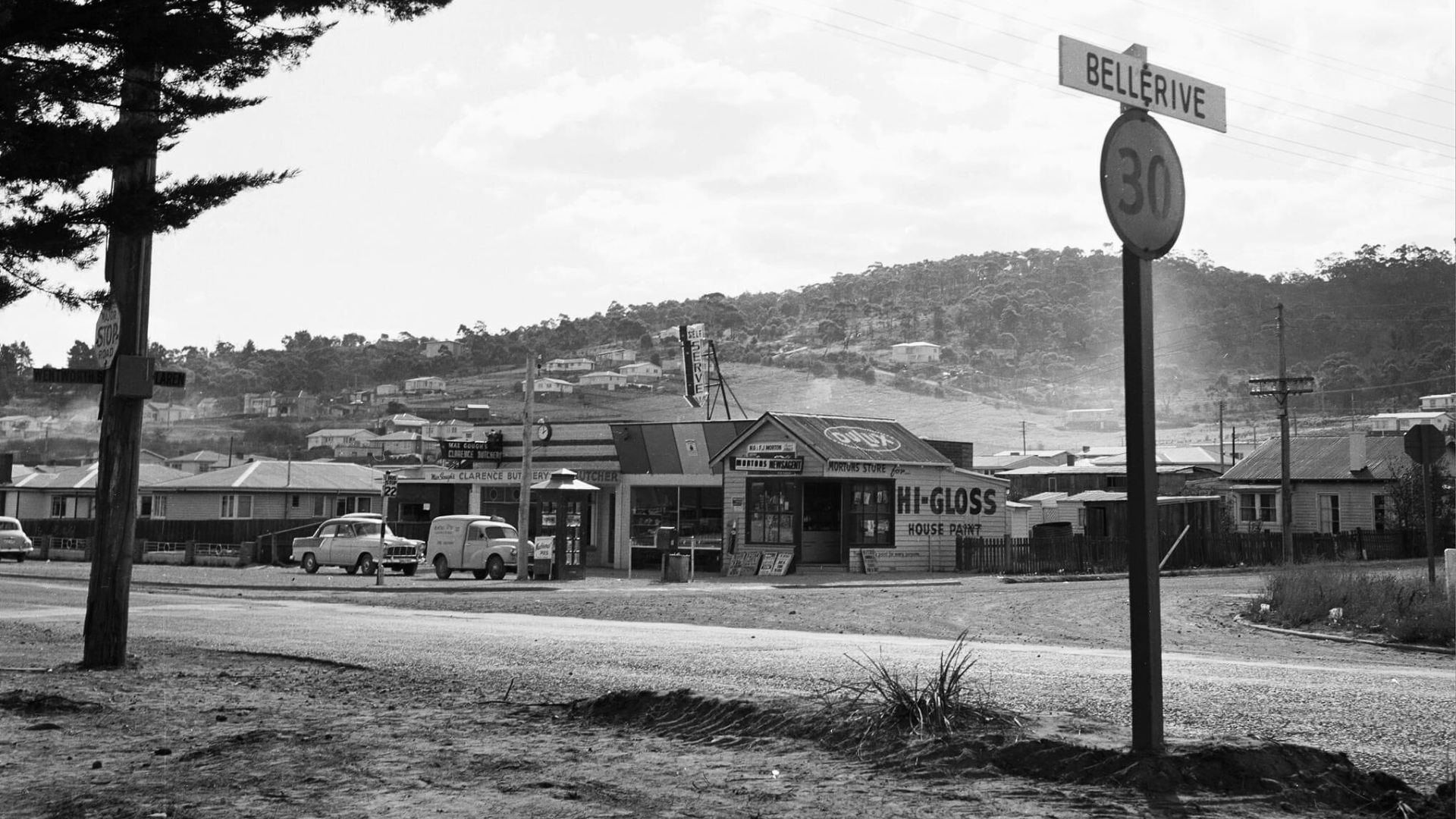
This sense of isolation is visible in the infrastructure of the era. A photograph from the time captures a road sign marking the speed limit at 30 miles per hour, fourteen years before Australia switched to the metric system. The road itself appears narrow, edged with rough gravel shoulders instead of concrete curbs, revealing a town that had not yet fully modernised.
Central to this community was the corner store, the hub of local trade. A prominent sign advertising “Hi-Gloss House Paint” hints at the post-war housing boom that was just beginning, as families bought affordable land to build new homes. A panel van parked outside suggests a typical Saturday morning run for supplies. Nearby, a red telephone box stands on the corner. In an era before mobile phones and widespread landlines, this public phone was a vital link to the outside world, used for everything from calling a taxi to contacting family members.
The opening of the Tasman Bridge in 1964 acted as a catalyst for explosive growth. Just ten years after the bridge opened, the population of Clarence had skyrocketed to 40,000.
Today, those once-empty slopes are fully developed residential zones, part of a municipality with a population of approximately 61,500. The demographic has shifted as well. In the 1960s and 70s, the Eastern Shore was the “nursery” of Hobart, filled with young families. In 1971, the median age in Tasmania was just 26. Today, Bellerive has matured into an established suburb with a median age of 44, shifting from first-home builders to professionals and retirees.
The bottleneck of the old floating bridge has long been replaced by the high-level span of the Tasman Bridge, which now carries over 70,000 vehicles per day, completely integrating Bellerive into the Greater Hobart metropolitan area.
This snapshot from 1960 remains a valuable record of the final moments before Bellerive transformed from a semi-rural outpost into a gateway for a city-within-a-city.
Tasmanian Times (TT) is a community-based news and current affairs service covering the island state of Tasmania. It exists to provide a diverse presentation of Tasmanian issues. TT creates and supports independent media content utilising the best of modern technologies and tried-and-true practices of public-interest journalism.
Support us in expanding our coverage and developing new content by and for Tasmanians.
New initiatives on the way include … what our contributors and readers suggest! Please get in touch with your suggestions.