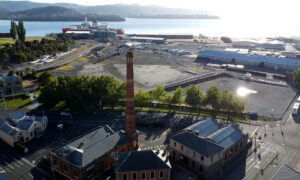
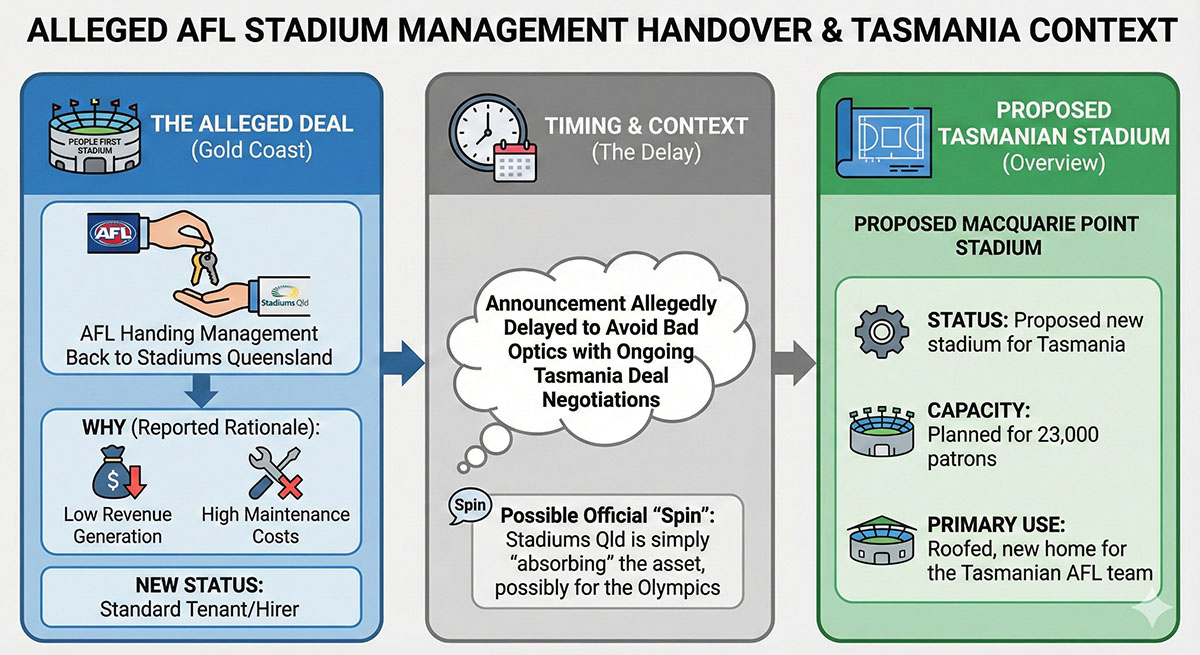
In a development that could severely impact the Legislative Council’s upcoming vote on the Macquarie Point Stadium Tasmanian Times has received credible whistleblower information alleging the AFL is secretly finalising a deal to walk away from its management rights at People First Stadium on the Gold Coast.
The information, provided by a source close to the negotiations, suggests the AFL is effectively “handing the keys back” to Stadiums Queensland after failing to generate anticipated revenue from the venue.
If accurate, this revelation undermines the AFL’s financial advice just hours before Tasmanian Upper House members are due to debate the final approvals for the proposed Macquarie Point stadium on 3 and 4 December.
The Numbers Game – Why the AFL Is Walking Away
The alleged collapse of the Gold Coast management deal offers a stark statistical warning for Tasmanian decision-makers.
Despite the Gold Coast Suns enjoying their highest-ever average attendance in 2024, the business case for the AFL managing the venue has reportedly failed.
Gold Coast (People First Stadium) Vital Statistics:
- Capacity: ~27,500 (22,500 seated)
- 2024 Average Attendance: 15,063
- Market Size: Gold Coast Population ~730,000 (rapidly growing)
- Location: Carrara (Suburban, approx. 15 mins from Surfers Paradise)
UPDATE 2300 2 December 2025
Thanks to a contributor. Gold Coast Suns only averaged 15,679 attendance in 2025.
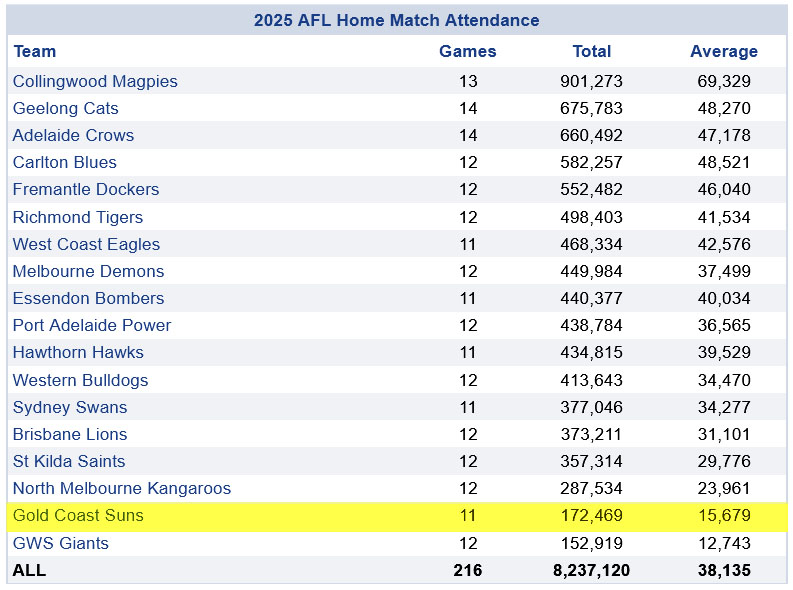
Even with a healthy 2024 average crowd of roughly 76% of capacity, the venue allegedly struggles to deliver the commercial yield the AFL requires. This raises a critical question – if the AFL cannot make a profit from a 27,500-seat stadium in a market of 700,000 people, is this why they are choosing to not manage the Hobart stadium?
The similarities—and differences—between the Gold Coast situation and the Macquarie Point proposal are telling. While the physical structures share similarities, the financial risk models are vastly different.
The key difference is in who holds the risk.
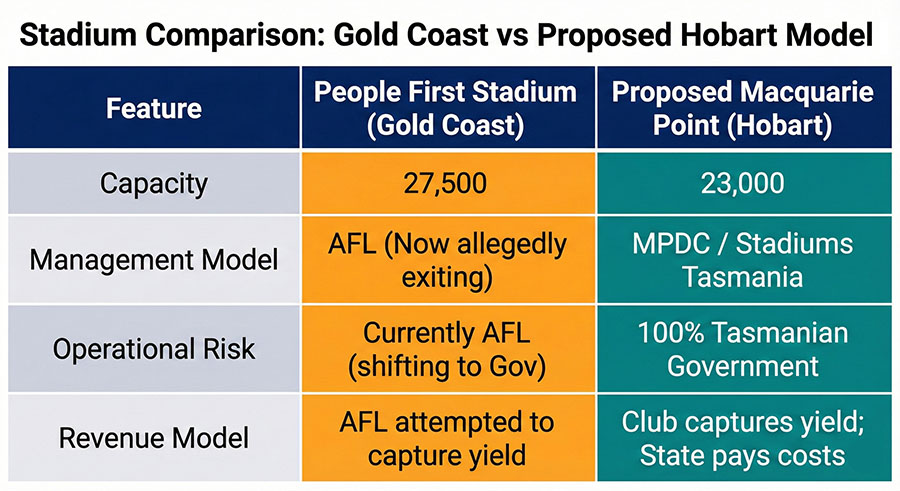
At the Gold Coast, the AFL took on the management rights—and the associated financial risk—betting they could turn a profit. Now that the model has reportedly failed, they are retreating to a standard tenant arrangement, forcing the Queensland taxpayer (via Stadiums Queensland) to absorb the asset’s operational deficits.
In Tasmania, the AFL has clearly learned from this failure.
By not taking on the management of Macquarie Point, they have structured the deal so that the Tasmanian Government (via the Macquarie Point Development Corporation and Stadiums Tasmania) bears the burden of construction, maintenance and operational shortfalls. The AFL knows the business case for stadiums of this size is fragile, and they are ensuring the Tasmanian taxpayer is the one left holding the bag.
Strategic Silence?
Most concerning for our parliamentary decision-makers is the allegation that the announcement of this handover is being intentionally delayed.
The source explicitly suggests the AFL is withholding this news to manage political optics, fearing that “abandoning a stadium management deal in Queensland for failing to meet obligations” would act as a grenade to their ambitions in Tasmania.
The AFL allegedly plans to frame the exit as Stadiums Queensland simply “absorbing” the asset back into their portfolio—potentially for Olympic preparations—rather than an admission of the AFL’s failure to make the business case stack up.
Tasmanian Times has made attempts to contact both the AFL and Stadiums Queensland via email and phone to confirm the status of the management agreement and the alleged severance payment.
At the time of publication, neither body has responded to requests for comment or offered a denial of the allegations.
The timing of this alleged withdrawal is critical. The Legislative Council is set to cast a defining vote on the Macquarie Point Stadium project in the next two days.
If the AFL deems the management of an established Gold Coast stadium financially unviable, questions must be asked about why they are forcing Tasmania to build a similar asset.
The Parliament is being asked to trust the AFL’s requirement for a stadium at the precise moment the league is allegedly extracting itself from the financial reality of running one in Queensland.
In a statement the lobby group Our Place, who have an alternative vision for urban redevelopment at Macquarie Point, said:
“The revelation reported on Tas Times today (https://tasmaniantimes.com/2025/12/afl-secretly-exits-gold-coast-deal-before-vote/) that the AFL is getting out of management of the Gold Coast stadium is unsurprising.
“As the Planning Commission and briefings to Upper House members have made very clear, stadia are expensive to run, create little return, and give little back to those managing them.
“It’s a very significant warning to Tasmania, because Queensland has two AFL clubs. If Gold Coast stadium is uneconomic for AFL/W teams in a state with 2 clubs, a stadium will be far worse financially for a state with just the one club.
“This is another reason the MAC Point stadium must be abandoned.
“If the AFL has kept this information secret from the public and from Tasmania’s Upper House members until after the vote, as appears to be the case, they are not worthy of any role in stadium development in Tasmania.
Tasmanian Times (TT) is a community-based news and current affairs service covering the island state of Tasmania. It exists to provide a diverse presentation of Tasmanian issues. TT creates and supports independent media content utilising the best of modern technologies and tried-and-true practices of public-interest journalism.
Support us in expanding our coverage and developing new content by and for Tasmanians.
New initiatives on the way include … what our contributors and readers suggest! Please get in touch with your suggestions.