The Tasmanian fruit industry is navigating significant challenges due to global trade volatility and domestic pressures, despite its reputation for high-quality, premium produce. The issues impacting the market are multifaceted, ranging from geopolitical tensions to local production costs.
“The changing landscape of international trade continues to pose challenges for our industry,” stated Peter Cornish CEO of Fruit Growers Tasmania.
“Never in recent history has there been this level of turbulence, complexity and geopolitical tension.”
Global disruptions, including the COVID-19 pandemic, the wars in Ukraine and Gaza and rising tariffs, have created issues in international trade. This uncertainty is compounded by the high cost of production in Tasmania, particularly for freight and labour.
As an island, Tasmania faces significantly higher freight costs to mainland Australia and other markets, which are not covered by the freight equalisation scheme for exports.
Biosecurity is a major concern, as the state’s pest-free status is a core part of its brand and a competitive advantage.
An outbreak of pests like the Queensland fruit fly would have substantial repercussions for the industry. Additionally, climate events such as floods are impacting trade supply channels.
The industry also grapples with labour shortages, relying on temporary migrant workers for harvest. Furthermore, consumer preferences for “perfect” looking fruit can lead to produce affected by climate events being rejected unless discounted, creating a challenge for growers.
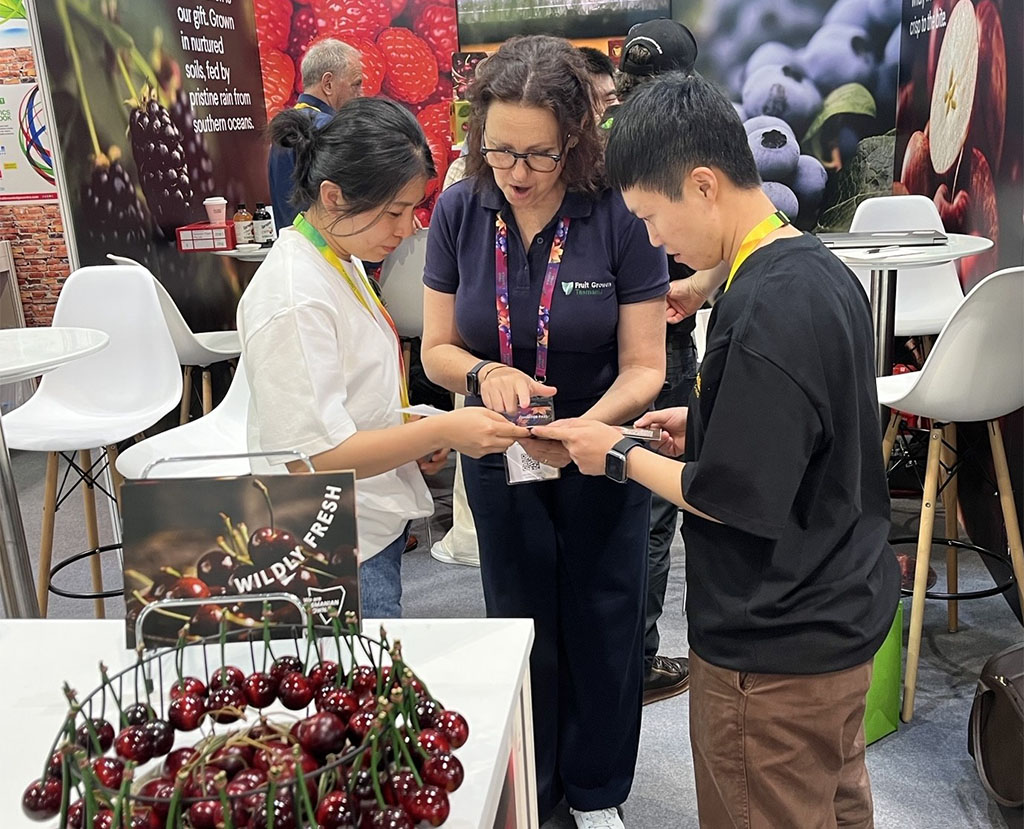
Despite these issues, Fruit Growers Tasmania is actively working to address the challenges by attending events like Asia Fruit Logistica earlier this month to secure new buyers and promote the premium quality of their fruit.
“Fortunately, as a small island we have a great deal going for us. A stable and supportive government, a pristine environment with low pest pressure, mild growing conditions, long summer days and plenty of clean water and rich fertile soils.
The result is fruit with greater flavour, size and colour,” said Cornish.
“We offer international buyers a great range of fresh temperate fruit which is of premium quality and arrives in Asian markets within 72 hours of packing. A claim that not many other regions can make, due in part to the need for phytosanitary treatment.”
A key role of Fruit Growers Tasmania is to raise awareness in key markets and build the demand for Tasmanian grown fruit.
Asia Fruit Logistica is the largest fresh fruit and vegetable trade event in Asia, so it was a ‘must attend’ event.
Fruit Growers Tasmania promoted the premium nature of Tasmanian fresh fruit by sharing two unique Tasmanian apple varieties Tiger Fuji and Rubigold, fresh for buyers to sample.
This year there were four Tasmanian fruit businesses sharing the Fruit Growers Tasmania stand: Aunita Cherries, Somercotes, Spreyton Fresh and Tamar Valley Fruits.
Aunita Cherries is a cherry orchard based near Launceston which attended for the first time. Somercotes Cherries is an expanding, diversified operation based in the midlands that produces cherries and other products. Spreyton Fresh produces fresh apples and cherries and brews an award-winning range of ciders in the Devonport region while Tamar Valley Fruits operate apple and cherry orchards in the state’s north as well as a vineyard in the south. Reid Fruits had their own booth, and Hansen Orchards were also present.
The value of Tasmania’s international cherry exports is worth more than $45 million and is generated in a six to eight week period each summer.
“The situation for global trade is not lost on our competitors,” said Cornish.
“With representation from 42 countries, competition is high. China once again holds the largest country representation at the tradeshow, with the USA second and Australia the third largest.
The Tasmanian government is also supporting these efforts through a three-year marketing and promotion investment.
Tasmanian Times (TT) is a community-based news and current affairs service covering the island state of Tasmania. It exists to provide a diverse presentation of Tasmanian issues. TT creates and supports independent media content utilising the best of modern technologies and tried-and-true practices of public-interest journalism.
Support us in expanding our coverage and developing new content by and for Tasmanians.
New initiatives on the way include … what our contributors and readers suggest! Please get in touch with your suggestions.