Tasmanian Times has been seeking for expert commentary on last week’s State Budget, given its significance.
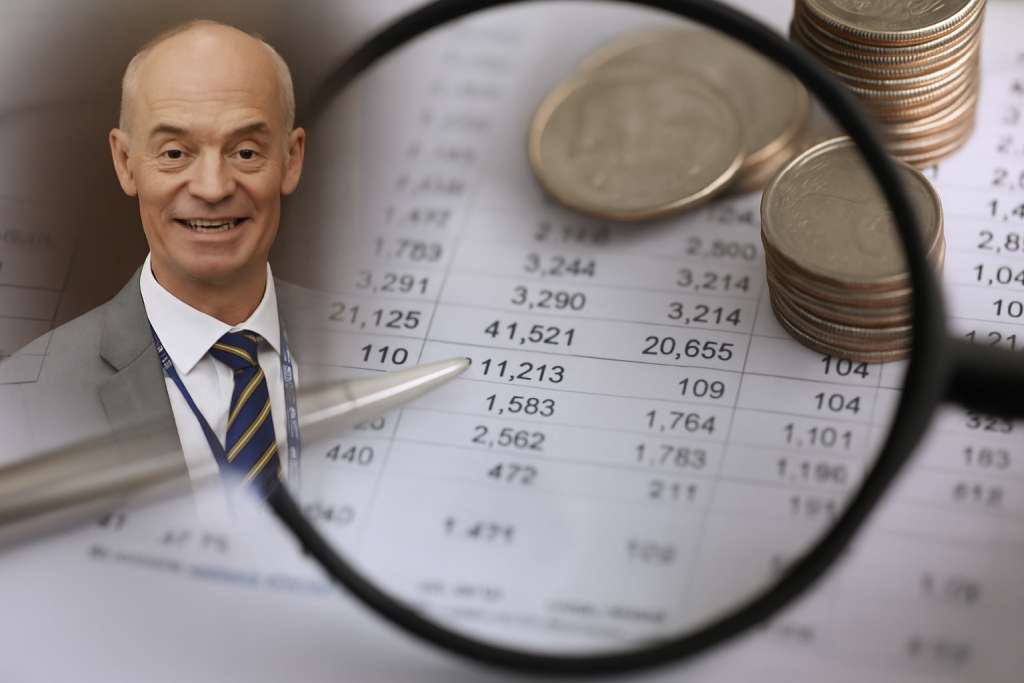
Today we present the first in a series of budget analysis discussions with an exclusive interview featuring economist Dr Graeme Wells.
He notes significant unfunded superannuation liabilities and flags the possibility of a credit downgrade as debt balloons. Wells also criticsises the shirking of serious fiscal decisions and lack of reform on revenue sources. And he points out that the government can’t have it both ways and claim to be good economic managers while spending money we don’t have on a stadium.
Read the transcript below or listen in!
Tom Allen
Welcome to the Tasmanian Times budget podcast with me, Tom Allen.
Tasmania’s Government handed down its state budget last Thursday. It was the first for Guy Barnett as the Treasurer. Spending is up 7% compared to last year. Revenues are up 5% compared to up to $10 billion, but debt is also up a billion dollars in the next financial year, into the red, 10 billion in the next four years, but it could be as much as double that, 20 billion, according to independent economist Saul Eslake, if you take all government liabilities into account.
On top of that, there’s the billions spent on the ferry disaster, and there could be millions more being spent on the proposed stadium. So what’s really going on with Tasmania’s state budget? We’ve had the weekend to digest it; to aid our digestion further, we’re very lucky to have highly respected expert, former UTAS Economics professor Graeme Wells with us. Welcome, Graeme.
Graeme Wells
Thanks Tom.
Tom Allen
So first question, really, I think, is sort of budget basics. What is the state budget? How much money comes in? How much money goes out? Where does it go?
Graeme Wells
Well, it’s just like a household budget, really, we have income and expenditures. Tasmania’s budget is on the revenue side dominated by Commonwealth grants, so that provides about two thirds of Tasmania’s income. That’s partly GST revenue, and partly it’s grants from the Commonwealth under tied grants or particular agreements and so on. But two thirds is coming from the Commonwealth, one third coming from own state revenues.
Tom Allen
And there’s been a lot of commentary about, obviously debt with this budget, but also debt payments as much as 2 billion could be on servicing the increasing debt for Tasmania. How does that work? Where are those debt payments going to?
Graeme Wells
We’ve got a couple of forms, the three categories that you might put our obligations into. One is, as I think Saul was referring to, is the debt of the Government-owned Business Enterprises. So Hydro and all these people have debt. And the way that works is that they approach the central debt issuing agency in the state, and it issues debt on their behalf. So people like super funds and so on, buy that debt, and they receive the interest payments on the debt. So that’s one lot. The other obligation is the unfunded superannuation liability, which doesn’t appear as debt on the books, but it is a liability.
Tom Allen
Can you explain more that unfunded super for anyone who isn’t sure?
Graeme Wells
Well, there used to be a defined benefit superannuation scheme in the public service. That meant that it was a benefit that was related to your salary while you were in service and the length of service that you had. So if you had joined as some people probably did in their early 20s, and they’ve been there their whole working life, they will end up getting a salary for the rest of their life on retirement of maybe two thirds of their salary when they’re working. Now, that liability isn’t actually funded. That doesn’t count as debt, but it is major.
Tom Allen
How much is it roughly?
Graeme Wells
It depends on when you count it. So it’s going to peak, I gather, in the early 2030s and then people are going to fall off the perch, and that liability is extinguished when they die. So it will gradually get less, but there will be a period where it is quite a large amount and those benefits have to be paid. So that’s one tranche.
And the third tranche is the amount that is the government bonds that are issued just to pay to cover the deficits that the government runs every year. At the end of the four year period that the forecast goes for, that’s going to be about 10 and a half billion.
Tom Allen
Okay, thank you. I’ve heard budgets described as all about decisions: what governments pay for, what they decide not to fund. Broadly, what would you say in this budget the government is getting right? What are they getting wrong?
Graeme Wells
Basically, just carrying on as before. There have been very few serious decisions made in terms of choosing priorities. They are trying to slow the rate of growth of government spending by means of various efficiency dividends and so on. The new productivity unit is going to replace the efficiency dividends, but that’s pretty small beer, really hoping to save maybe 150 million a year, which is is great, but it’s not going to solve the problem.
Now, the thing that hasn’t been highlighted is that a lot of government spending is increasing in nominal terms, but in real terms, it’s falling.
For instance, they highlight the fact that expenditure on health is going to increase by 10% okay, and that’s in money terms. After you allow for the fact that the cost, the price of health, is rising fairly quickly, in real terms, spending on health is falling. And that’s not allowing for the fact that the demand for health with an ageing population is going to grow.
Tom Allen
Just so I understand that point. So in aggregate, you’re saying that we could be going backwards in our in our health spending, even though the budget allocated may have been an increase and everything else is sort of overtaking that?
Graeme Wells
Yes. The budget is presented in just nominal terms, right? So it’s just dollars here, dollars there, but it doesn’t account for the spending power of those dollars. And just as a household budget, we just say, ‘Here’s my income, here’s my spending, and what’s the difference?’ And that’s the correct way to do the budget. But if you want to interpret it, you need to think about, well, how much is that dollar going to buy me?
Tom Allen
You mentioned the the new efficiency and productivity unit. That kind of made me think about in the US a far more sort of high profile and controversial DOGE (Department of Government Efficiency). We don’t have a Elon Musk type figure in Tassie yet. Is there a similarity there? Or is that jumping at shadows?
Graeme Wells
I actually think it’s an improvement on the old efficiency dividend. Because in the efficiency dividend, departments were just told to cut a certain percentage of their budget. And the easy way to do that is just to postpone things. And so the productivity unit, I think, is tasked for saving roughly the same amount of money, but it’s Treasury that’s going to do it, which is at arm’s length from the various departments. I think the Treasury are going to have a little bit more rational approach to this than Elon Musk. So I think that is an improvement.
Tom Allen
And do you think that efficiency could be used to soften up some state government assets for privatisation?
Graeme Wells
No, I think that’s a separate issue. I think privatisation will be a decision probably made in Premier and Cabinet actually. Mind you, if I were in charge of the efficiency unit Premier and Cabinet would be the first place I’d look actually.
Tom Allen
Controversial to some maybe. Now you talked about how budgets are presented. So I have a question about about that, and about, I guess you call it kind of almost budgetary democracy. Most people aren’t economics experts. The budget is sold with lots of big numbers, doing some good things, but it also feels like we don’t really scratch the surface.
Tom Allen
For example, you had Saul Eslake on ABC saying ‘actually real debt is double what the government says it is.’ Do you have views about that, how budgets are sold, the popular understanding of them, and then how we sort of go on our on our merry way? Are the public kind of being fleeced and spun?
Graeme Wells
Well, the budget is a document that has to be passed by Parliament, and so it has to have quite a lot of … all the expenditure and any changes, taxes have to be legislated. So that has to be set out in quite a lot of detail. And you can’t avoid that.
I think I’m not sure that the spin on the budget is any worse than spin on a whole lot of things. I think it is to some extent up to commentators to point these things out, which people like Saul do very well, and the rating agencies certainly don’t: they look through this stuff.
And so, I mean, a lot of this economic stuff is hard to get your head around, and I think it could be made more clear.
The problem is it’s not a Treasury document, it’s the Treasurer’s document.
And so if you look at the Treasury’s Pre-Budget Economic Outlook, that is possibly a lot clearer than the budget itself. So politicians, I know they work hard and all that, and they have an incentive to present it in the best possible light. So that’s always going to be the case. It’s easier for them if they’ve got good news and not bad news, obviously.
Tom Allen
You talked about rating agencies there. The debt scenario for Tasmania, by consensus, isn’t great. As much as 16 billion in the red by 2035 according to Saul Eslake e just one take. Do you think there’s a risk of credit rating going down according to any of the rating agencies?
Graeme Wells
Certainly. The state is in a position where the federal government is never going to allow the state to default. That’s just not going to happen, but the rating agencies are concerned that the state will be able to meet its interest liabilities as and when they are due. So they are concerned about that.
Graeme Wells
I don’t think the rating agencies are ever taking into account the possibility that state will default on its debt. I mean, if there was that possibility, the Australian Federal Government ratings would be affected as well. But I think we’re on negative watch now, and I wouldn’t be at all surprised if we don’t go down another notch.
Tom Allen
Okay, and what impact could that have?
Graeme Wells
The interest that we have to pay on a debt will go up,
Tom Allen
And any knock on effects from that?
Graeme Wells
Oh, well, it’s just more expensive. Things become more expensive. It’s like a household where the interest on the mortgage goes up.
Tom Allen
And would that have noticeable effect to Joe Blow, you know, day to day business in Tasmania, or is it more … ?
Graeme Wells
It might have, I mean, there aren’t that many … a lot of business in Tasmania doesn’t issue long term debt. But if a company that was based in Tasmania had to issue long term debt, then its rating probably would be affected by a change in the government’s rating. And that’s more particularly true Australia wide really.
Tom Allen
Okay. Last two questions, Graeme. If this is, if this budget was a school report and you were the principal, what would you say about it? What marks out of 10 would you give this budget?
Graeme Wells
Four.
Tom Allen
And any comments for student Barnett to go home and consider?
Graeme Wells
Think a bit harder about the revenue side of the budget.
Tom Allen
I lied when I said two more questions, one more, I forgot to ask you about revenue. So going back to Saul Eslake, he rattled off when he was interviewed by the ABC last week a whole range of revenue measures that he said the government could consider, but apparently they are not.
He suggested things like mining royalties, aquaculture royalties such as those paid in Norway, things like increasing the rego for more expensive vehicles. Are these things the government should be considering? Do you agree with Saul Eslake there needs to be a more serious take on revenue raising? Sounds like you do?
Graeme Wells
Yes. I’d add a few others to that list. I mean, I agree with all those.
Tom Allen
What would you add?
Graeme Wells
A lot of concessions should be means-tested. So I think about $500 million worth of concessions, and I’m the beneficiary of some of them. So, for example, we have household battery, and basically we don’t pay anything for electricity, but we get the electricity concession. And what happens is, it just goes to Aurora because we’re in. All it is is a transfer from the government to Aurora, it doesn’t affect me at all. Now that money could be better directed. Old age pension recipients get the concession regardless of how dependent they are on the old age pension. At one point, I did work out that you could be about better off than about a third of Tasmanian in families and still get pensioner concessions. And that’s crazy.
Graeme Wells
And the other thing I’d consider is an inheritance cut tax, partly because the generational distribution of income is, on average, not for everyone, but on average is widening Tasmanian doesn’t tax old age assets at all, while a lot of younger people are really struggling. This is a problem, not just in Tasmanian, but I think in Australia generally.
Graeme Wells
The states do have the power to levy an inheritance tax; it doesn’t have to be a big tax.
The Federal Government made a tiny little step in terms of its tax on superannuation balances, which probably might be better designed, but the intention, I think, is correct. So there are a range of things that could be done and collectively they would probably help.
Tom Allen
Last question. If you were the Treasurer, but unlike Guy Barnett you had a magic wand, what would you do with it? A magic economic wand.
Graeme Wells
I’d implement those things that I suggested, and some of them would take a couple of years, or maybe a whole budget cycle to sell. You can’t –
Tom Allen
But you’ve got a magic wand, you don’t have to worry about selling it! Anything more dramatic?,
Graeme Wells
One thing I would think about is whether the north of the state should have three hospitals. I mean the hospital at Latrobe is really a legacy of a short run political decision made by Tony Abbott a long time ago. And I don’t think any of the hospitals provide a really good service for the people in northern Tasmanian. And part of the reason for that is, I think, the money is spread too thinly. And I wouldn’t anticipate closing the one at Latrobe is necessarily saving a lot of money, but would improve services a lot I think.
Tom Allen
Some interesting choices there: inheritance tax to, fewer hospitals. Does, does this sort of go to the issue of political courage. Do you think these will ever become realistic things that governments would do? Well,
Graeme Wells
Well you did say I had a magic wand! Oh well, needs must. At some point there are going to have to be some difficult decisions. I think that’s pretty obvious, and the sooner we start thinking rationally about what things one might do, the better.
Graeme Wells
As I think I said before I started, I think partly the Government has wedged itself in terms of simultaneously trying to get the stadium up and acknowledging that the long run fiscal problem exists. On one hand, it’s saying that ‘this is fine, we can afford it’, but on the other hand, it needs to recognise that there are long run problems. That’s I guess a problem they made for themselves.
And that’s not a comment from me on whether the stadium is a good idea or not.
That’s just the reality that they’re making a very large decision to spend some money when they really don’t have any.
Tom Allen
Well, thank you, Graeme, that’s a wrap for our budget podcast. Thank you. We’ll be doing interviews throughout the week. Thanks for tuning in.
Graeme Wells
Thank you.
Tasmanian Times (TT) is a community-based news and current affairs service covering the island state of Tasmania. It exists to provide a diverse view of Tasmanian issues. TT creates and supports independent media content utilising the best of modern technologies and tried-and-true practices of public-interest journalism.
Support us in expanding our coverage and developing new content by and for Tasmanians.
New initiatives on the way include:
- a weekly podcast covering current affairs
- a revamped website
- a monthly cartoon competition
- a user-friendly app for both Android and Apple devices
- a weekly roundup of key stories