zzSPECIALPOSTzz
Sustainable Property Design Tips For Regional Tasmanian Homeowners

Advertisement / Sponsored Content
This content is paid advertising and has been prepared in collaboration with the advertiser.
This post remains active as a legacy issue and is being phased out from January 2026.
Tasmanian Times no longer accepts requests for paid content or advertorials.
With the cost of land continuing to increase across Tasmania, more house hunters are setting their sights on regional markets rather than making do for smaller plots and properties across Hobart. Thankfully, our regional property market here in Tassie offers a unique opportunity for first home buyers: the option to buy land and build a property that’s tailored to their lifestyle.
If you’re thinking about buying yourself a block of land out in Huon Valley or even in Launceston, Newstead or Ulverstone to take advantage of their current market boom, then you could save yourself big bucks without having to sacrifice on your square footage. And for more added value, building a sustainable, climate-conscious property can help you and your household keep both your expenses and emissions low over decades to come.
So what do you need to consider when designing a sustainable abode in regional Tasmania? Start with these foundational tips.

Natural bushfire protection
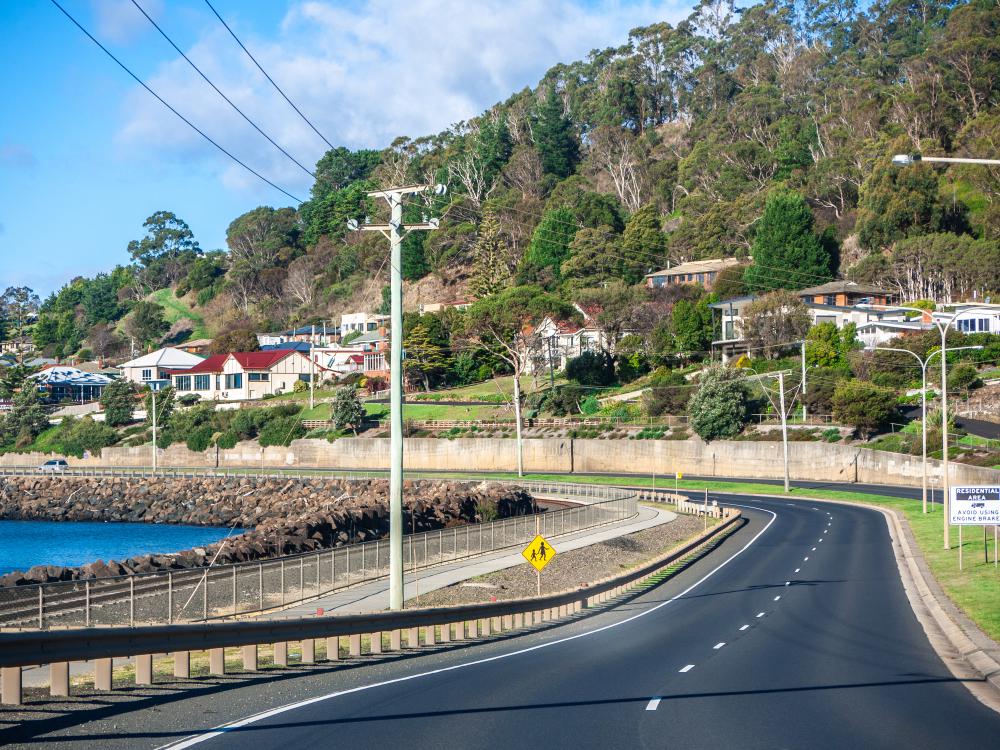
Thanks to our high volume of dense forested regions, Tasmania’s peak bushfire season actually spans across both summer and autumn. This makes bushfire protection a vital investment for any sustainable Tassie property. Thankfully, there are a range of natural and aesthetic fire protection options available for Aussie home builders today. One notable example is Colorbond fence panels, which boast an ignitability index of 0 and superior UV protection when compared to traditional timber fences. Paired with non-combustible low-cut lawns or gravel fill for boundary protection, Colorbond steel fences can help prevent flames and embers from breaching your property in the event of a bushfire.
Alongside a fire resistant boundary for your property, it’s also advisable to invest in fireproof cladding for your home. With a double brick construction and concrete or fibre cement cladding, properties can enjoy superior protection against ember attacks, which occur when embers from surrounding bushfires are carried through the wind and can ignite materials like timber.
There are other lesser known considerations that need to be made when it comes to bushfire protection for your home, including designing sloped rooftops to reduce ignitable debris (i.e. twigs, branches, dried leaves) from accumulating in your gutters, and investing in fire resistant insulation for your property.
Passive design principles
Speaking of insulation, there are a dynamic range of passive design principles that are practised by Aussie home builders to help ensure that future property developments are designed for the climate, rather than against the climate. This means utilising passive heating and cooling designs that take solar exposure and natural light availability into consideration when positioning windows and even determining the ideal placement and orientation of bedrooms vs. living rooms.
In Australia, our position in the southern hemisphere means the sun will always hang to the north, towards the equator. This means that north-facing windows can expect to receive greater exposure to sunlight from dawn to dusk when compared to:
- East-facing windows which only receive morning light
- West-facing south-facing windows, which only receive evening light, and
- South-facing windows, which never receive direct sunlight.
With Tasmania’s cool temperate climate, the aim for any property that incorporates passive design principles is to reduce the need for heating appliances in winter, whilst still maintaining thermal comfort in summer. This makes north-facing windows an ideal design element for Tassie homes, with double glazed windows for trapping interior heat, and thermal mass in the form of concrete cladding, bricks, and floor tiles to trap and release heat organically throughout the day in summer.
Sustainable landscaping with native plants
One of the major advantages to regional living is the opportunity to bring the outdoors in with biophilic interior design considerations. You can do this by adding a sunroom to your home for easy pot plant cultivation and sun soaking. Another great way to embrace all the natural elements that surround your home is to invest in outdoor living amenities, like paved outdoor entertainment areas, and manicured garden spaces for your family to enjoy.
But an often overlooked element of sustainability includes ensuring your garden isn’t overly thirsty. Even if you do happen to have a rain water tank on your property to capture all our superb rainfall, planting non-native plants like English rose bushes and other notoriously water-hungry flora can make your property substantially less drought-tolerant.
Thankfully, our cooler temperate climate provides the perfect growing conditions for many native Australian plants, including traditionally alpine shrubs and trees like Acacias and tree ferns. And if you’re planning to build your own property out in Deloraine, Sheffield, Queenstown, or other locales bordering the Cradle Mountain National Park, you absolutely have to see if you can plant some deciduous beech trees on your property for that extra special autumnal touch provided by Australia’s only winter deciduous tree.
Paved driveways
Our final tip for aspiring Tasmanian home builders is a simple one, but a very practical one that you’ll definitely want to account for: pave your driveway. Not only will you be preserving your tyre treads and thus, saving yourself from having to visit a (potentially far away) mechanic more regularly, but keeping the roadways leading up to your regional property tarmacked can also help drastically reduce noise pollution caused by street traffic.
Yes, you may not consider pouring hot tarmac or asphalt to be a home improvement project with a low environmental impact. If you’d prefer it, you can easily swap out these tarmacking options with traditional brick pavers instead. That way, your property can still enjoy all the safety, security, and noise control benefits of a clearly defined driveway without having to affect your soil quality.
Make your Tassie home climate-ready
There are many different property types popping up all over Tasmania today, from European-style townhouses being constructed across Hobart’s hillsides, to traditional farmhouse builds dotting all of our coastal highways.
As a result, first home buyers have an array of options available to them, and chances are a little vigilant market monitoring should allow house hunters to find a land plot or existing property that ticks all their boxes. If you do find what you’re looking for but it just so happens to be in a more regional location, then let Tasmania’s market trends provide extra comfort. With all the benefits of country living in Tasmania, getting that regional property for a little less could just keep you comfortable (both physcally and climatically) for decades to come.
Advertisement / Sponsored Content — This content is a paid advertorial published in consideration of payment or other commercial benefit. The views, claims, statements, offers and representations are those of the advertiser and do not necessarily reflect the views of the publisher, which does not endorse or verify them. This material is provided for general promotional information only and does not constitute legal, financial, medical, investment or other professional advice; readers should make their own enquiries and seek professional advice before acting. Claims, testimonials and performance statements have not been independently verified unless stated. Offers and availability are subject to change and additional terms. This advertorial may contain links to third-party websites and the publisher may receive commissions or other benefits from reader engagement; the publisher is not responsible for third-party content or fulfilment. To the maximum extent permitted by Australian law, the publisher disclaims liability for reliance on this content, and nothing limits rights that cannot be excluded under the Australian Consumer Law. Where applicable, this advertorial is authorised by the advertiser and does not constitute independent editorial content.