Media release – Domain, 10 February 2023
Housing affordability – The price of a square metre
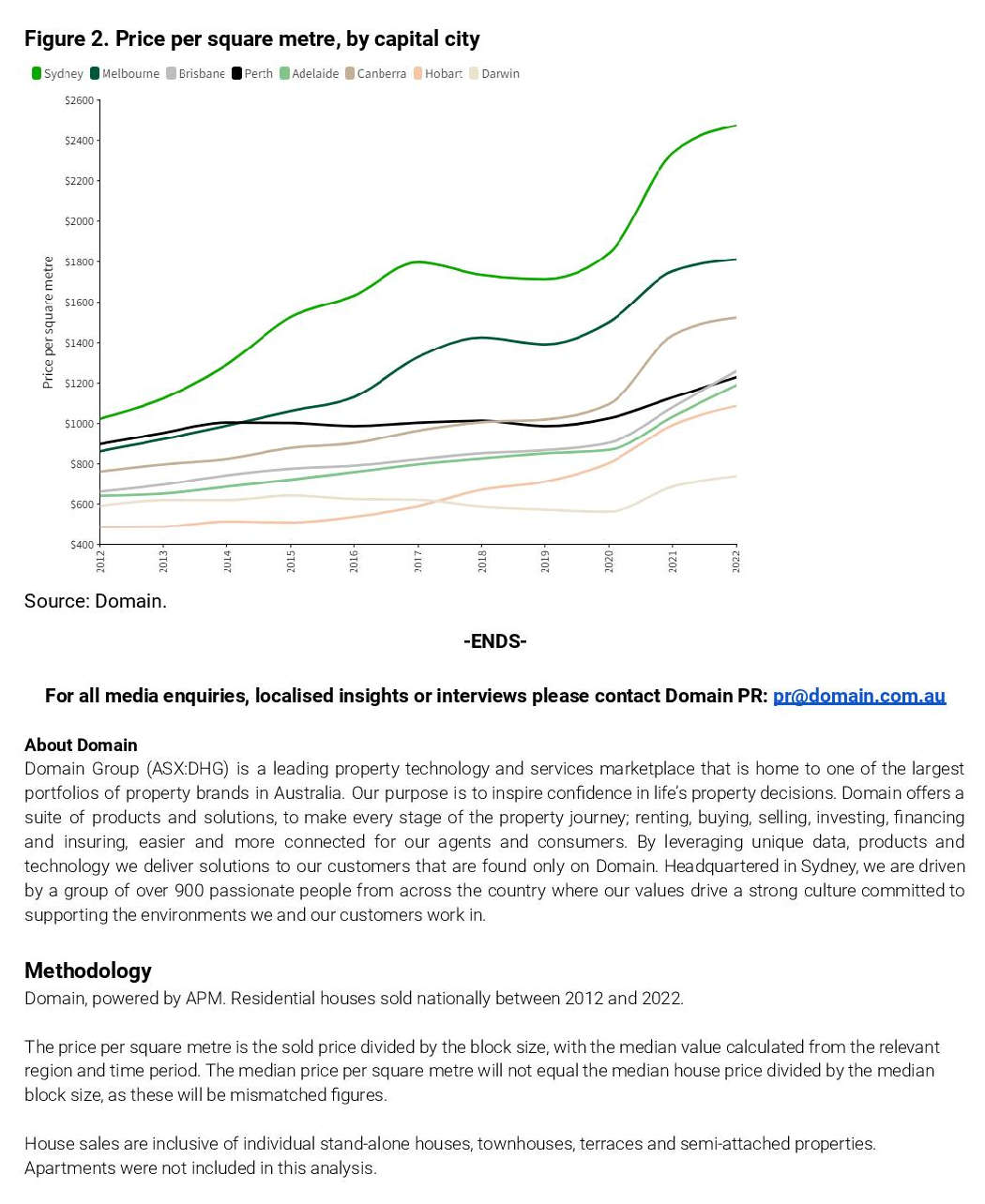
House land size has shrunk as cost per square metre increases
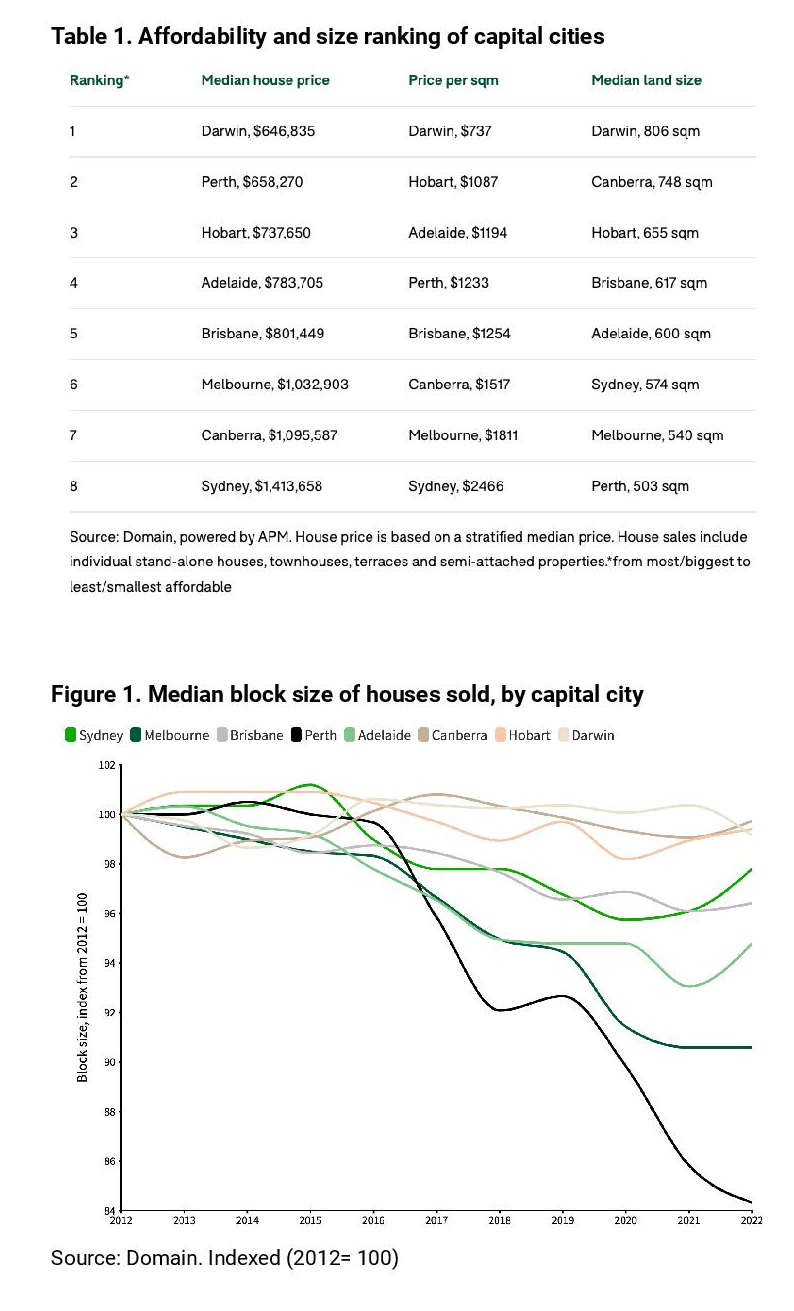
● Sydney is Australia’s most expensive capital city, at $2,466 per sqm. The price of a sqm is 36% more expensive than Melbourne in second place. (Table 1)
● Buyers will find greater value for money in Adelaide, Brisbane and Perth at around $1,200 per sqm, roughly half the price of Sydney. (Table 1)
● Over 10 years, the average block size has shrunk by 13% in the larger capital cities, with Perth and Melbourne seeing the biggest decrease in median block size sold. (Figure 1)
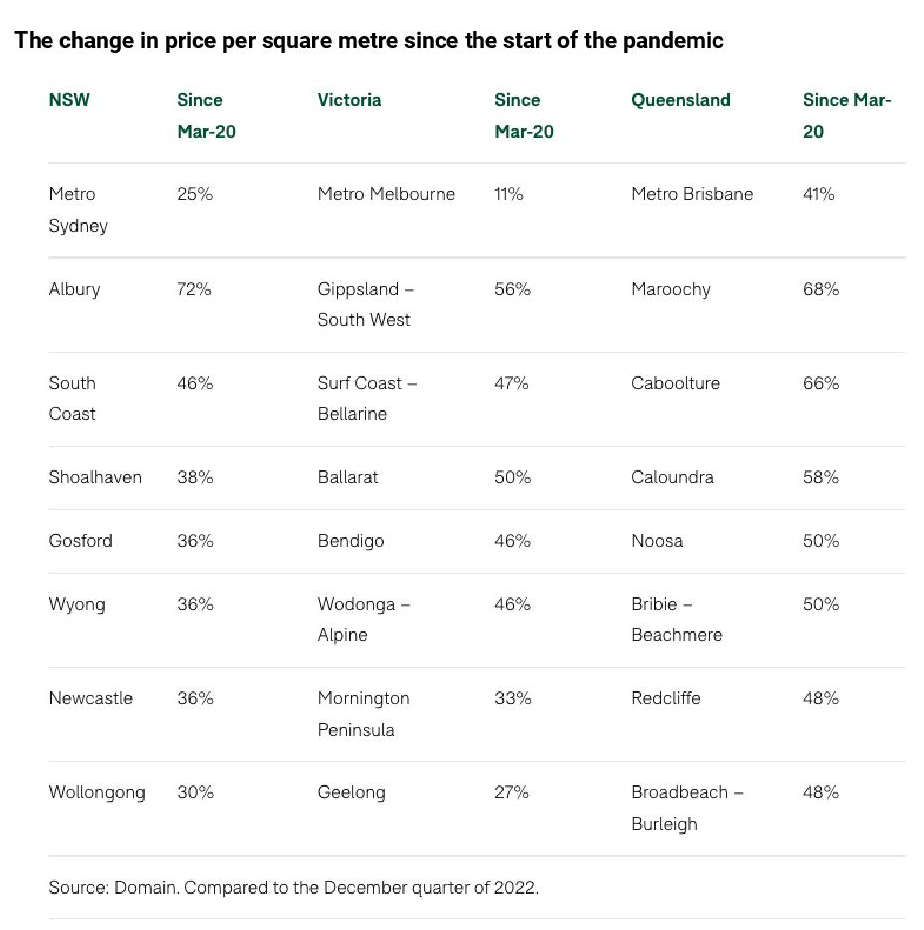
● Regional areas have been hit hardest with above-average price per sqm increases, particularly in areas such as Albury in NSW, Ballarat and Bendigo in Vic and Maroochy in Qld.
Domain’s unique housing affordability report, which analyses property landsize and the price of a square metre (sqm), shows the average block size in larger capital cities shrank by 13% in 10 years while population growth, urban density increases and income growth are pushing the price of a square metre up when buying a house.
Commenting on changing affordability dynamics and the key themes that influence the price per sqm of a house, Dr Nicola Powell, Domain Chief of Research and Economics said, “escalating price per sqm costs reflect our housing preferences of living close to a city or the coast in search of a certain lifestyle, location and proximity to amenities and infrastructure, especially in our major cities.”
“Shrinking block sizes should help to slow the growth in house prices, as the cost of land is the major component in a purchase. However, per square metre, the land cost has not reduced – buyers are just purchasing less of it. As a result, areas with the largest decreases in block size have had growth in price per sqm outpace house price growth at a faster rate, meaning that the true cost to buyers is growing faster than the median house price alone suggests.”
Despite attempts to fit in more houses, many cities’ development in cities such as Sydney is lagging behind the influx of new residents and will only continue to increase prices, said Nicola. “Policy change, land release and property tax reform is needed to see a drastic change in price per sqm affordability to improve.
“The city fringes offer a much cheaper price per sqm and with more jobs moving to commercial hubs such as Parramatta and Macquarie Park, these outer areas will become more attractive due to the potential for lower workplace commute times. Having multi-region cities will help to distribute wealth across a larger area and provide equal access to education, healthcare and employment opportunities. This will also help to spread the cost per sqm to be less heavily centred in towards our CBDs.”
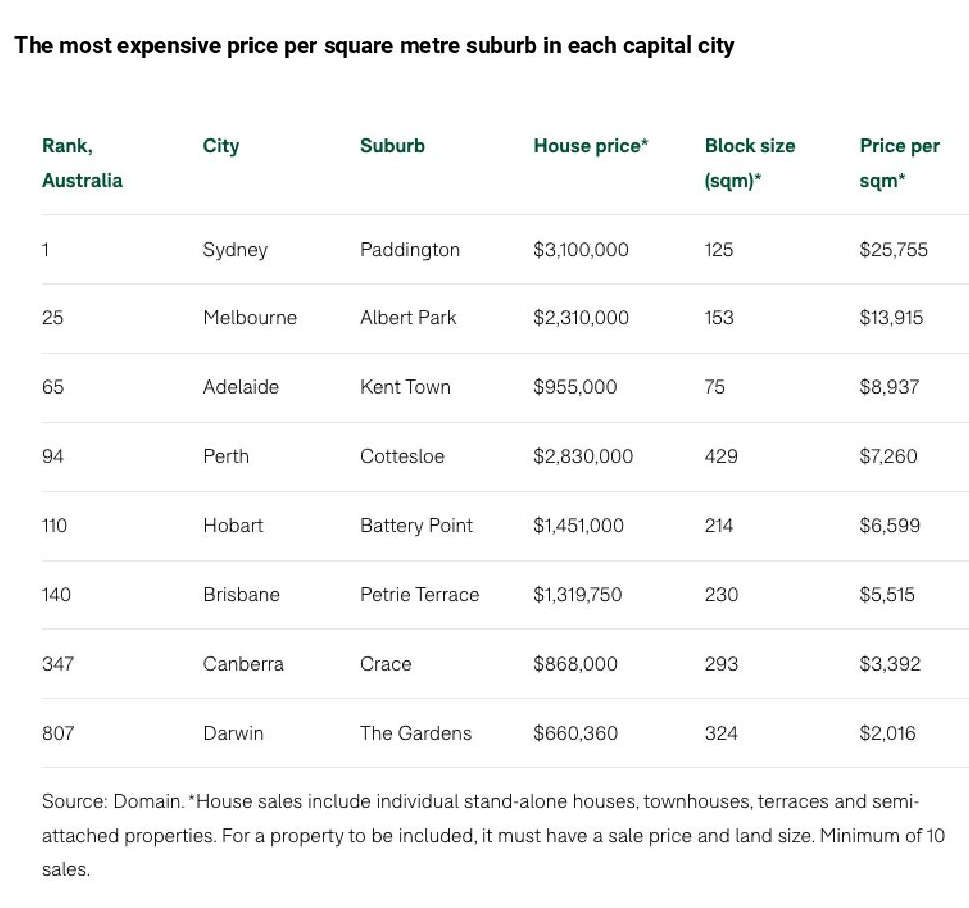
Nicola adds, “for buyers, it’s valuable to understand the price per sqm of any home you are looking at to standardise the cost of housing, making it easier to compare different sizes geographically. It can be used to compare neighbouring suburbs to identify areas that might offer better value for money and allows you to compare the value of different properties to that of the suburb average. Some cities have a higher median house price where often dollars go further in terms of what you can actually afford while others have neighbouring suburbs with vastly different prices per sqm due to gentrification so it’s worth noting where to look.”