zzSPECIALPOSTzz
The Impact of AI on Global Economic Growth

Advertisement / Sponsored Content
This content is paid advertising and has been prepared in collaboration with the advertiser.
This post remains active as a legacy issue and is being phased out from January 2026.
Tasmanian Times no longer accepts requests for paid content or advertorials.
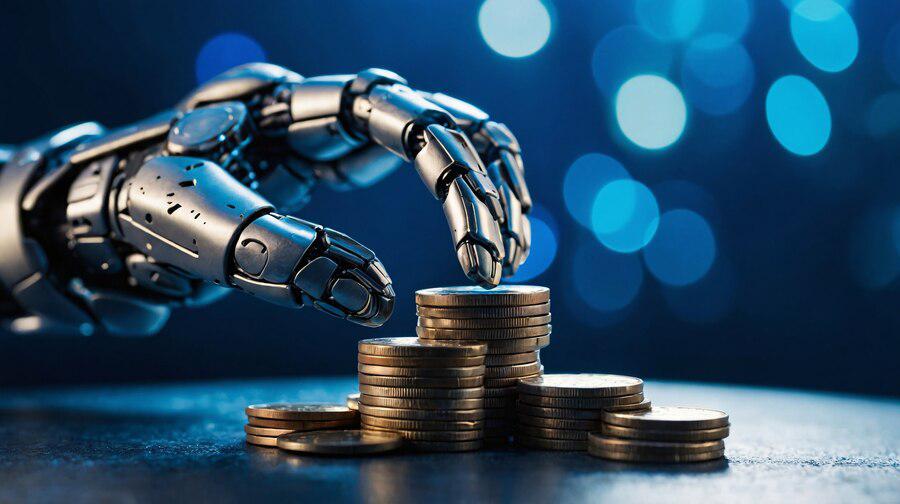
Artificial intelligence (AI), once a futuristic concept confined to science fiction, has swiftly woven itself into the very fabric of global economics. Its reach extends from the most sophisticated industrial sectors to the smallest of startups. The question is no longer if AI will impact global economic growth but how profound and lasting that impact will be. With countries racing to integrate AI into their economies, the technology is reshaping industries, labor markets, and international competition.

Revolutionizing Industries
In manufacturing, AI is creating more efficient production lines. Machines now think, analyze, and act, reducing the need for human oversight. There is even an AI solver for iPhone that can solve any problem. Moreover, AI helpers can offer several solutions and describe the entire solution path. Now AI apps are taking on the most unexpected forms. Autonomous robots and predictive analytics have already slashed production costs, while minimizing errors.
Let’s talk numbers. According to McKinsey, by 2030, AI could contribute up to $13 trillion to the global economy. That’s an immense figure! It’s a transformation that is anticipated to increase global GDP by 1.2% annually over the next decade. In some sectors, AI is driving growth rates that would have been unthinkable just a few years ago.
Disruption of Labor Markets
But wait, while AI is revolutionizing industries, it’s also disrupting labor markets. That’s the other side of the coin. Jobs, once secure, are disappearing as automation takes over repetitive tasks. Yet, AI also creates jobs—just not the same ones it’s erasing. A World Economic Forum report predicts that AI will displace 85 million jobs by 2025, but simultaneously create 97 million new roles in fields like data analysis, AI development, and cybersecurity.
However, this shift requires an adaptable workforce. Economies that invest in education, particularly in technology and AI skills, will reap the rewards. The workers of tomorrow need to evolve just as rapidly as the technology they interact with. Without these investments, countries risk widening the inequality gap, with AI accelerating growth in some regions while leaving others behind.
Global Competition and AI
It’s not just businesses feeling the push of AI, but entire nations. Around the world, an AI power struggle is unfolding as countries’ muscles flex in pursuit of technological superiority. Among the pack of players vying for top spot, China emerges as a dominant force. With investments clocking in at tens of billions, China is all in on AI – and intends to outrace its rivals, crossing the 2030 finish line as the world’s undisputed AI champion. Imagine the pace of progress if creativity and technological muscle combine – that’s what’s happening in China, where majors like Alibaba and Baidu are propelling artificial intelligence research to unprecedented heights.
Meanwhile, the U.S. isn’t standing still. The trifecta of tech titans – Google, Microsoft, and Amazon – spearheads AI progress, advancing existing applications and charting new territories. Europe falls short when it comes to investment and building the necessary infrastructure. Suppose AI begins to yield profits only for a tiny elite, precipitating a global catastrophe: that’s the risk we face if we don’t take steps now. Whichever countries can tap into AI’s potential will be the ones flexing their economic muscles, leaving the rest in their wake. Policymakers globally are zeroing in on this pressing issue.
Boosting Productivity and Efficiency
Perhaps one of the most obvious impacts of AI on global economic growth is its ability to increase productivity. AI can analyze vast amounts of data in a fraction of the time it would take a human. For example, in agriculture, AI-powered machines are used to monitor crops, predict weather patterns, and optimize irrigation, significantly boosting output with less human intervention. According to PwC, AI is projected to boost global GDP by 14% by 2030, with AI-driven productivity improvements accounting for nearly half of that growth.
Artificial intelligence is transforming the healthcare landscape one innovation at a time. AI storms into the medical scene, shrinking the timeframe for disease diagnosis and treatment planning from years to mere months. The ripple effect? Because healthier people are more productive, proactive healthcare investment breeds a thriving workforce, stabilizing the economy from the ground up. Boost employee wellness, and you’ll see an uptick in productivity – and, by extension, economic growth starts to soar.
Ethical Concerns and Regulatory Hurdles
However, with great power comes great responsibility. As AI deploys at an alarming rate, ethical questions start to swirl. With AI rapidly changing the employment landscape, the prospect of growing wealth inequality looms large – but is it an inevitable consequence? As AI innovators tap into an ocean of data, millions of times larger than before, the stakes are high: how will we shield our most personal details from the glare of these omniscient systems? Innovation and regulation are old foes, engaged in a high-stakes game of cat and mouse – can they find a balance that benefits both?
Take Europe’s GDPR (General Data Protection Regulation), for example. Protecting our privacy is essential, but these measures are stifling AI progress – it’s a constant trade-off. When you’re constantly policing innovators, it can backfire. Europe, for instance, has essentially handcuffed its own progress in AI, while countries like the United States gallop ahead, uninhibited by such regulatory constraints. and China. The pursuit of AI-driven economic growth must go hand-in-hand with careful consideration of its ethical and legal implications – a balancing act we can’t afford to get wrong.

Conclusion
Economic growth around the world is decidedly benefiting from the emergence of AI. A sea change is brewing, courtesy of AI: enhanced efficiency, industry makeovers, and a total reshuffle of the global competitive landscape. In just a decade, AI is set to thunder onto the global economic scene, projecting a whopping $15.7 trillion injection that’ll catapult it to the top of the growth leaderboard.
As this growth spurt gains momentum, some roadblocks inevitably arise. With labor markets in flux, ethical quandaries popping up left and right, and global competition heating up, companies need to think critically to stay ahead. Nations and businesses that fail to adapt may find themselves left behind, while those that embrace AI stand to benefit immensely. What does the future hold for our global economy now that AI is on the scene? Not what AI will do, but how we’ll help it uplift people from all walks of life – that’s the crucial question.
Advertisement / Sponsored Content — This content is a paid advertorial published in consideration of payment or other commercial benefit. The views, claims, statements, offers and representations are those of the advertiser and do not necessarily reflect the views of the publisher, which does not endorse or verify them. This material is provided for general promotional information only and does not constitute legal, financial, medical, investment or other professional advice; readers should make their own enquiries and seek professional advice before acting. Claims, testimonials and performance statements have not been independently verified unless stated. Offers and availability are subject to change and additional terms. This advertorial may contain links to third-party websites and the publisher may receive commissions or other benefits from reader engagement; the publisher is not responsible for third-party content or fulfilment. To the maximum extent permitted by Australian law, the publisher disclaims liability for reliance on this content, and nothing limits rights that cannot be excluded under the Australian Consumer Law. Where applicable, this advertorial is authorised by the advertiser and does not constitute independent editorial content.