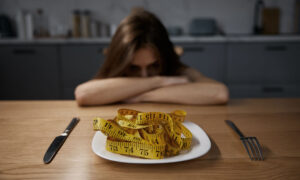
More than a million Australians have played the new Start Living video, which challenges viewers to think about how they want to be remembered – for how they looked, or how they lived?
To mark this milestone 2023 Australian of the Year and body image advocate, Taryn Brumfitt, has stepped out of her comfort zone to take this picture in a coffin, in a bid to encourage even more Australians to reframe how they think about their body, to support how death reflection can change how you live for the better.
Brumfitt said:
“It was very confronting to do this shoot, but in a noisy world, sometimes you need to shock people to get their attention to listen to something important.
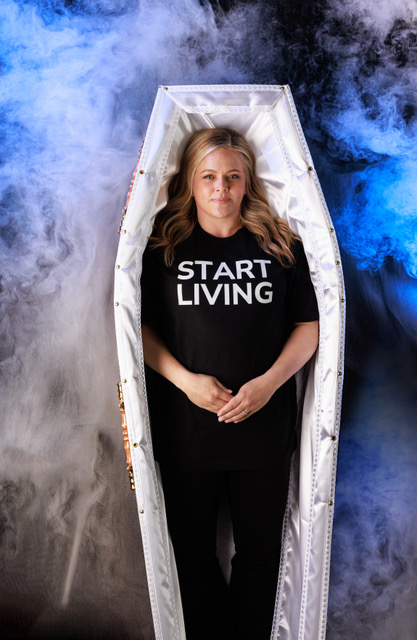 “I felt compelled to do this, because the evidence showed us that confrontation with one’s death can encourage individuals to ‘take stock’ and ‘rebuild’ more authentic versions of themselves and their lives. Who knew death could impact our lives in such a profoundly positive way!
She said the response to the campaign indicates that people are curious about a different narrative and have had enough of believing that it’s normal to hate our bodies.
“This is not about a viral moment and shock factor – it’s so much more. I wanted to grab people’s attention so they can listen to what we are saying, and we know death reflection works.
“How do you want to be remembered? How you look or how you lived? The truth is, fitting into a bikini or size 8 jeans isn’t etched onto our gravestones. The size and shape of our nose or our BMI doesn’t make it on the funeral notice. It becomes pretty obvious very quickly how you can start living when you think about the end – and then amplify that for your kids.”
Dr Zali Yager, international body image expert and co-Executive Director of The Embrace Collective said that death reflection is used in acceptance and commitment therapy and other therapeutic interventions. Similar to a near-death experience, taking a moment to consider one’s mortality can help individuals realign with their core values and what truly matters in life.
“In studies used to evaluate this approach, body appreciation improved among women who reflected in detail on their own potential death. Reflecting on death is a powerful tool for promoting body appreciation and overall well-being. It encourages people to live life on their terms, appreciating their bodies for what they are and what they can do, rather than how they measure up to unrealistic standards.
“Being prompted to remember that ‘life is short’ can encourage people, particularly women, to be able to appreciate their bodies—for how they look as they are, and for what they can do—regardless of whether they think they meet societal unrealistic beauty standards. We believe this campaign sums up the message beautifully and will hopefully change people’s lives,” said Yager.
This is important because Dr Yager said that 91% of adult women are dissatisfied with their bodies, meaning the knock-on effect is enormous with children modelling their parents’ behaviour.
“The research tells us that embracing your body teaches our kids to do the same. If you can do this for them, you’re more likely to have healthy behaviours, happier relationships and long-term well- being – and so are they,” Yager said.
The epidemic of body hate has become a national health crisis, which continues to cause significant physical and mental health issues among all age groups.
“We have 30 years of studies that show the powerful influence of parents – particularly mothers – on their kids’ body image. Children are like sponges. They soak up all of the things we do and say, even when we don’t want them to. Most parents want their kids to grow up happy and healthy, and feeling comfortable in their skin. The easiest way to achieve that is to model it yourself. And yes, you can ‘fake it’ until you actually ‘feel it’,” Dr Yager said.
The need for change appears urgent, with 77% of Australian adolescents indicating that they are in body image distress.
“Young people with body image distress are 24 times more likely to develop anxiety and depression, and rates of eating disorders have more than doubled since 2019. The emotional and mental toll is evident, but the cost of eating disorders on the Australian economy annually is $67 billion,” Dr Yager said.
“It’s a powerful exercise to think about your death and how you want to be remembered. Use that lens and look at how you are living now for the moment of truth… How do you want your children to remember you? Replicate you? Does negative body image stop you from living? Will it stop them from living?”