Applicable in the assessment of all human endeavours, hindsight and foresight share equal weight, and our cities form an archetypal exemplar of this notion.
Foresight heralded the demolition of a tram terminus from a prime harbourfront headland in preparation for the Sydney Opera House. Who would argue in hindsight against that decision? However, when the Askin Liberal Government was elected in 1965, it did all it could to destroy that vision by starving its architect of funding and forcing his resignation.
Hindsight would suggest such political acrimony should never have occurred. During that same term in office, on the other side of Circular Quay, developers were encouraged to demolish the historic Rocks area in favour of hotels and high-rise apartments. Only through the protracted foresight of trade union Green Bans and, finally, another change of government, were The Rocks saved from wholesale desecration.
This background preamble is to highlight the critical importance of foresight in government decision-making. Around the same time as those early Green Bans in Sydney, developers were lobbying the Tasmanian State Government for the demolition and redevelopment of the historic Salamanca Place. As with many other town-planning decisions throughout the decades in Tasmania, hindsight teaches us valuable lessons.
Imagine (in hindsight or with retrospective foresight) how the consolidation and sensitive repurposing of our unrazed nineteenth century buildings has gifted Greater Hobart the warm, human-scale consistency we now cherish within the Salamanca and Hunter Street precincts.
Foresight would have bestowed a blueprint for a truly unique Australian city, as removed in distance as in civility from the towering sameness of mainland metropolises.
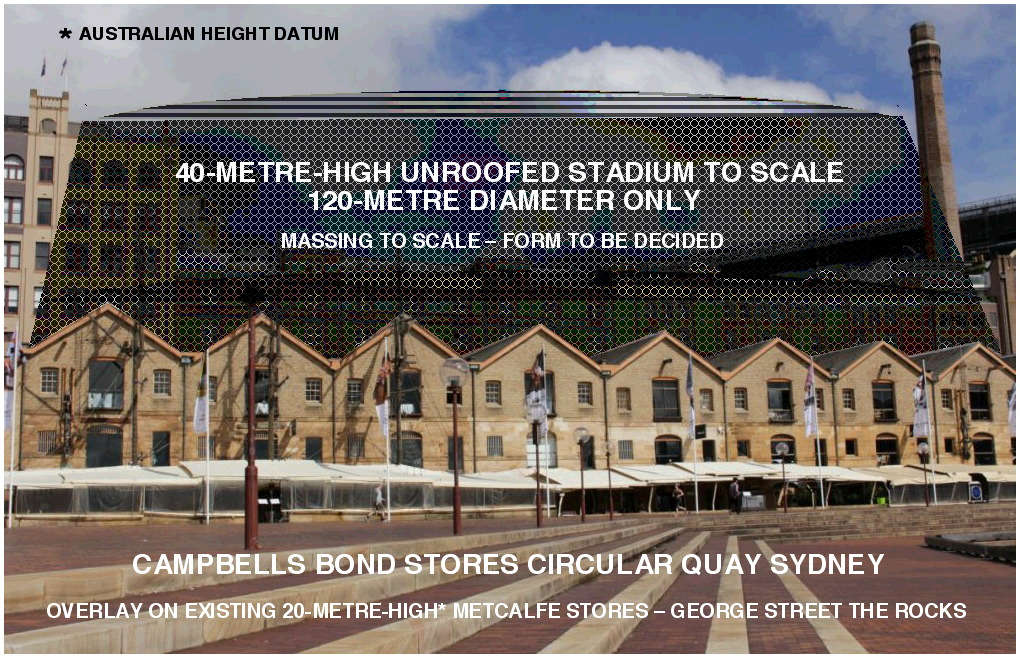
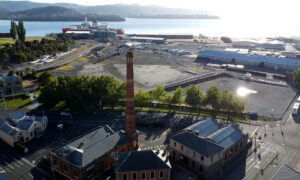
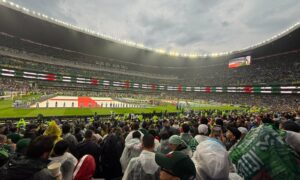
To the Point (Macquarie). Imagine further, the response any NSW State Government would receive to a proposal to build a football stadium directly behind a harbourside row of restored colonial bond stores. Imagine Sydneysiders’ reaction to an ephemeral, inward-looking arena, towering over and subjugating a 200-year-old maritime landmark, as depicted above.
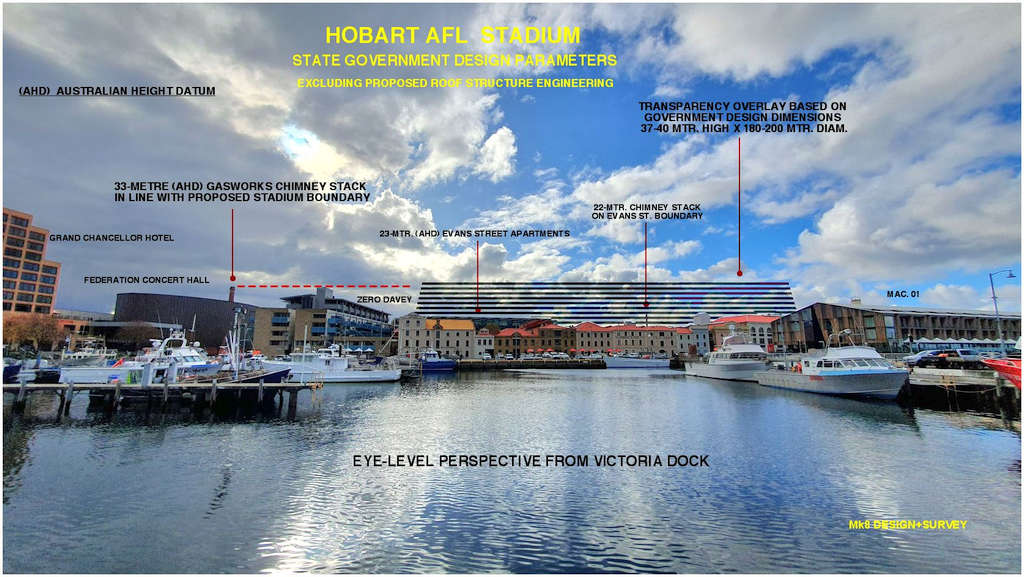
All Tasmanians need to fully absorb the consequences of this true scenario playing out in our own backyard. Hobart’s Hunter Street row is at least as old as Sydney’s Campbells Bond Stores and – in fortuitous symmetry with Salamanca Place – boasts Australia’s oldest and finest example of a colonial mercantile streetscape.
Please Tasmania, time is running out for us to stop (or at the very least, relocate) this unsolicited abuse of precious foreshore land.
Mark Pooley is a retired architect who lives in Hobart.