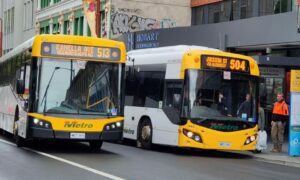
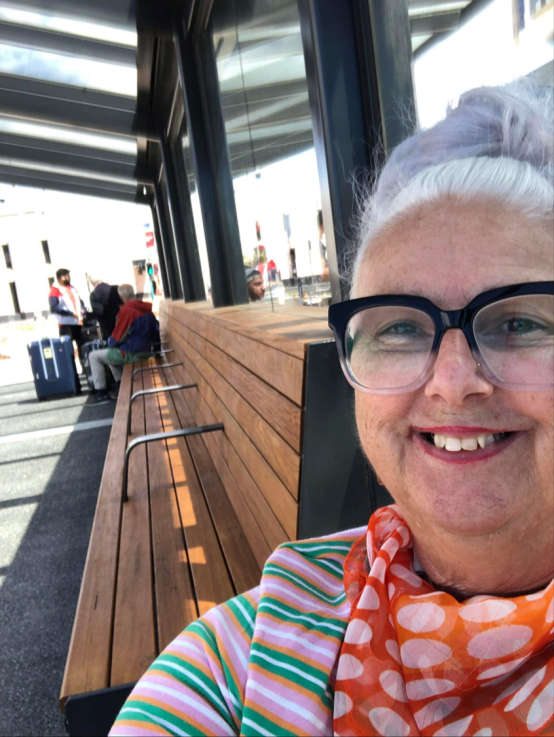
 Today I caught a bus. So what’s unusual about that? you say, million so of people all around the world do it everyday! What makes it unusual is that I was able to catch a bus because the infrastructure, the bus and the bus stop were accessible to me and my wheelchair.
I was able to catch a bus, go for dinner and a movie. That is freedom, that is choice and that is control! I am the master of my environment in this small way in this instance, when all the stars align or more pointedly when government, bus companies, and councils work together to make sure that transport is accessible to everyone.
This occasion was anomalous and not the ordinary and certainly not to be taken for granted. There are thousands or at least hundred of variables that stand in the way of this being an ordinary, everyday occurrence for all people with disabilities.
The Bus Stops
Their placement geographically is a variable that can not be ignored. If the bus stop is on a steep gradient in a street then the bus ramp is inoperable and/or dangerous to use. This prevents people with disabilities using the bus.
But I have seen wondrous engineering skills implemented to ‘fix’ this situation, such as bus stops with elevated and flattened boarding points on the street. So really the only impediment to all bus stops being accessible is funding and skilled engineering.
The Bus
As yet we still do not have 100% accessible transport in this country. In some areas it’s close but even that 1% or 5% of inaccessible busses can mean someone is left on the side of a road because they can’t get on. They are unable to access their community and their lives are not the same as those who can easily hop on that bus.
The Other Passengers
Those seats with the little wheelchair sign are dedicated for PWD, not crabby teenagers, or lazy people who like the first seat they can find. The other day I was on a bus and a young man was busily playing on his phone as I tried to manoeuvre into the wheelchair section of the bus.
He occupied one section, sprawled on his seat. He either didn’t notice the amount of times I had to reverse and go forward, reverse and go forward to still not be able to get into the space or didn’t really understand that he was impeding my access. I gave him the benefit of the doubt, maybe he had a disability? But when his stop came and he bounced off the bus I was crabby.
So young man on the 501 to North Hobart check your privilege. Also, unlike toilet seats where you put them down after using as a courtesy, put the bloody seats in the upright position. Have you ever tried to lift those seats up from your wheelchair? Often all six of them? It’s hard and can’t be done without assistance. So people please make sure those seats are put back up again. I have noticed in Melbourne the seat automatically return to the upright position once the person leaves the seat. Food for thought, Transport Tasmania?
The wheelchair
Is has become a ‘thing’ where well-meaning professionals prescribe wheelchairs that are great at home and at the theatre and all about but they are large, heavy and are not suited to travelling on a bus. So they may well be extremely comfortable to sit in in theatre but getting to the theatre is another story. If it’s too big for a bus, if I don’t have transport of my own like a custom car or van, then is it really fit for purpose. Is my life really better off with it?
So it seems a missing piece of our transport needs is that our wheelchairs are fit for purpose and are able to be used and transported. This is an issue for professionals, manufacturers and PWD themselves to advocate for more innovation in this space: we want wheelchairs that are fit for purpose that we can use to access our community. Make them lighter, more comfortable and more durable so we can use public transport.
There should be no compromise. You should not have to give up catching a bus because the new $20 000 wheelchair is not fit for purpose and possibly requires an additional $75 000 because you need a purpose built van to carry it and the van is driven by not you, but an additional person, so your independence to do things alone is taken away.
So you see the price of freedom has many and varying costs but none are insurmountable with greater thought, planning and engineering solutions. I want to continue to travel with my trusty Green Card for the all zone cost of $1.92. I want to save the environment by not using a car, I want to stop congestion by not taking up road space, I want to free up parking in the CBD and I don’t want to have to pay for it either. I want my freedom at all costs.
Tammy Milne is a deaf interpreter, a community activist in various fields and a person living with Arthrogrophosis Multipex Congenita.