The Tasmanian LGBTIQA+ community’s long history of protest has helped make our state a better place.
The Government’s anti-protest law would have silenced us and, in turn, held Tasmania back.
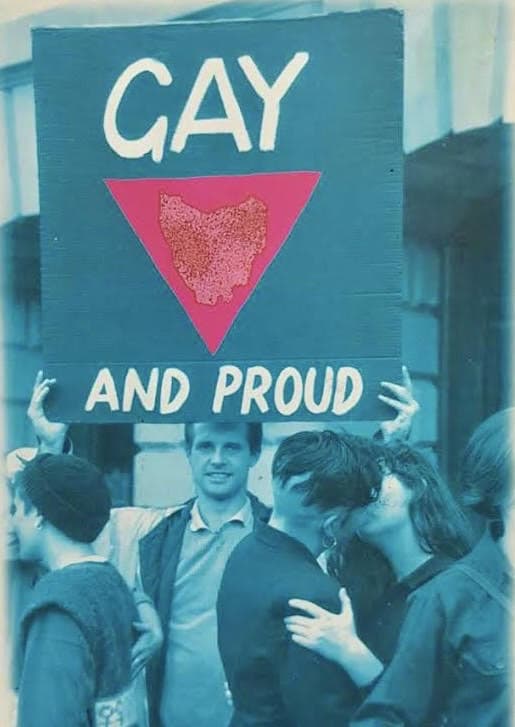
By my rough count there have been about 100 LGBTIQA+ protests in Tasmania in the last thirty five years.
They include LGBTIQA+ people and our allies
– being arrested at Salamanca Market for defying a council ban on our stall
– holding vigils against hate at anti-gay rallies in the north
– handing out stones to the flocks of anti-gay bishops
– holding protests in and around Parliament including ringing the building with gay law reform supporters and conducting a kiss-in
– handing ourselves in to the police
– protesting against the 2004 same-sex marriage ban outside politicians’ offices
– conducting mock weddings
– gathering spontaneously to commemorate the victims of LGBTIQA+ massacres overseas
– protests against the Religious Discrimination Bill
– gathering on footpaths outside Australian Christian Lobby conferences to protest the ACL’s anti-LGBTIQA+ campaigning
– protesting at the Magistrate’s Court against discrimination by the Coroner
– gathering in solidarity with trans Tasmanians outside the Town Hall
Individually, these protests may have upset some people.
But together they served an invaluable purpose: prompting Tasmanians to sit up and think about the discrimination and prejudice their LGBTIQA+ compatriots face.
Protesting prejudice
Prejudice often inflicts its harm below the level of public debate, for example hidden by the dry official language of government or during everyday personal interactions.
Protest is an immensely effective way to expose the damage prejudice causes, to discredit it as a way for a society to treat its minorities and to consign it to history.
Alongside its siblings, persuasion and persistence, protest puts prejudice to flight.
In Tasmania that is exactly what has happened.
We have gone from having the worst laws and attitudes about LGBTIQA+ people to having some of the best.
We were the last state to decriminalise homosexuality, but the first to move on civil partnerships and same-sex marriage.
We were the only state to have laws against cross-dressing but now have the nation’s best anti-discrimination and gender recognition laws.
Support among Tasmanians for criminalising homosexuality was higher than the national average in the 90s, but so was our Yes vote for marriage equality in 2017.
Tasmania’s transformation is astonishing and at each point in that transformation protest played a critical role.
Put another way, if you believe Tasmania’s transformation has made it a better place, then you must support the right to protest that helped propel this transformation.
The anti-protest law will curtail LGBTIQA+ protest
 That brings me to the anti-protest law the state government is trying to pass.
The Government sells this law as a way to protect workers and employers from the lost income and mental health trauma of confronting environmental protesters.
But in reality this law could have been used to shut down most of the LGBTIQA+ protests I have mentioned, and imposed fines so great it would have deterred any future action.
I understand that in the eyes of many people the proposed law is chiefly aimed at protests in far-away forests.
But the ambiguous provisions of clauses 4 and 5 of the proposed law could potentially be used to close down many urban protests.
Part of the problem is that the proposed law leaves the police with too much discretion to close down protests they don’t like. In clause 4, which is about protests in public areas, it’s up to police to decide whether a protest “unreasonably and substantially obstructs the passage of vehicles or pedestrians”. If they do decide, they don’t need to ask you to move on, they can just arrest you. In clause 5, which is about protest on private land, the protesters’ intentions are irrelevant. Even if they have no intention to obstruct a business they can be arrested, and indirect obstruction could occur without the protester even realising. When it comes to protests in street markets it’s not clear whether the public or private provisions of the bill apply, or what defines obstruction of business and pedestrians.
At particular risk are protests that are spontaneous and don’t have permits, or have permits but draw larger than expected crowds. Examples include the large, spontaneous gathering at Franklin Square after the Orlando gay night club massacre in July 2016, and the unexpectedly well-attended pro-trans gathering outside the Town Hall in March this year.
https://www.abc.net.au/news/2016-06-15/orlando-shooting-hobart-franklin-square-vigil/7514364
https://www.themercury.com.au/news/politics/antitrans-feminists-outnumbered-by-protrans-counterrally/news-story/338e3b0c9ffe3a74a378f657827be901
Both gatherings could have been closed down by police with massive fines imposed.
If the proposed law was in place thirty five years ago, when few people were listening and when prejudice was rampant, the history of the LGBTIQA+ community and Tasmania would have been very different.
We may well still be the closed and intolerant society that consigned young LGBTIQA+ people to one-way flights north and which suffered headlines in the foreign press like “Bigots’ Island”.
There remain many LGBTIQA+ inequities and injustices to resolve in Tasmania. Protest will continue to be an important element in achieving reform.
But if the anti-protest law passes as is, it will chill our capacity to bring to light the prejudice we face.
If a handful of protesters inadvertently stand outside a shop run by an anti-LGBTIQA+ business person, everyone attending the protest, as well as the group that organised it, could suddenly find themselves slapped with huge fines.
If a particular police officer happens to harbor anti-LGBTIQA+ attitudes, that officer’s discretion could lead to the kind of confrontations between the LGBTIQA+ community and police which most Tasmanians think lies behind us.
The anti-protest law threatens to close down urban protest. Moreover, it threatens to slow down the progress Tasmania would otherwise continue to make thanks to such protest.
Protest and prosperity
The Tasmanian LGBTIQA+ protests I have mentioned are the latest manifestation of a long tradition.
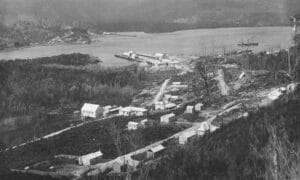
In the 1820s, 30s and 40s, Tasmanian convicts in same-sex relationships could be found at the centre of many protests against the tyrannies and cruelties of carceral life.
From the Cooking Pot riot on Norfolk Island to the Flash Mob at the Cascades Female Factory and escapes from Macquarie Harbour, same-sex partners shared a bond of loyalty the authorities could not break and which formed a solid foundation for resistance to those authorities.
As hidden as that history is to most people, it is clear to some LGBTIQA+ people. It’s no coincidence that at Equality Tasmania’s motto contains four small asterisks, the symbol used in convict records to denote ‘unnatural vice’.
We are not alone in this. Many Tasmanians are aware, albeit incompletely, of the resistance our convict forebears put up to the inequities of their bondage.
But only now are we beginning to see just how widespread their protests were and how deeply these protests influenced today’s Australia.
Professor Hamish Maxwell-Stewart and Emeritus Professor Michael Quinlan have released ground-breaking research which shows resistance and protest was much more common among the convicts of Van Diemen’s Land and New South Wales than previously thought. They have documented hundreds of thousands of instances of go-slows, strikes, mass absconding and riots.
They make a compelling case that these widespread protests contributed to Australia leading the way on labour rights and democratic reforms in the late nineteenth and early twentieth centuries.
They also argue persuasively that convict protest was responsible for Australia’s relatively rapid transformation from reliance on a coerced labour force to a labour system that was freer, wage-based and recognisably modern.
This in turn contributed to Australia’s more rapid economic growth and higher standard of living than other comparable British colonies in the first half of the nineteenth century.
It might seem counterintuitive that protests that curtailed productivity lead to greater prosperity. The link is that, by demanding wages, better conditions and more control over their work, convict protest brought a new and more productive economic system into being.
In short then, convict protest made Australia the relatively freer, fairer and more prosperous place it is today.
The same principle applies today. Protest remains vital to challenging the growing power imbalance between corporations and their employees, between minorities and the society we live in, and between Tasmanians and the natural world we rely on.
Ensuring greater balance through protest is key to ensuring the next generation has a chance of the freedom and prosperity we have had.
A better future
The anti-protest law proposed by the Tasmanian Government is a repudiation of the bravery of our forebears and the better society their protests forged.
It is a rejection of the demonstrably better Tasmania latter-day protests have helped forge.
It says Tasmania values control over change, force over freedom and punishment over prosperity.
It says we prefer the tense silence of the gaol to voices raised for a better future.
That is why it must be rejected.
Rally against the anti-protest law, next Saturday 13 August on Parliament Lawns: https://allevents.in/hobart/
Rodney Croome is a long-time LGBTIQA+ rights advocate who was named Tasmanian of the Year in 2015. He was the national director of Australian Marriage Equality and is currently president of Equality Tasmania.