Media release – Australian Energy Market Operator, 14 April 2022
Electricity reliability reliant on new transmission, generation and storage to close gap from Eraring’s early exit
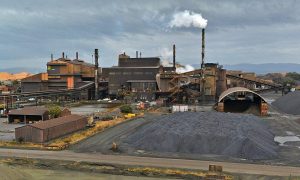
AEMO’s update to the 2021 Electricity Statement of Opportunities (ESOO) report forecasts sufficient reliability in New South Wales if investments consistent with NSW Government Policy are delivered, alongside existing and committed projects, ahead of the potential Eraring Power Station closure in 2025-26.
To increase transparency and inform stakeholders, AEMO has extended its reliability assessments based on various combinations of generation, storage and transmission investments not yet deemed committed under AEMO’s ESOO methodology. These forecasts are based on the ‘step change’ scenario developed with stakeholders for the Draft 2022 Integrated System Plan (ISP).
This includes anticipated projects in AEMO’s Generation Information file and anticipated and actionable transmission investments, largely in the Draft 2022 ISP. A third case includes generation and storage targets considered in the NSW Government’s Electricity Infrastructure Investment Roadmap.
AEMO’s Executive General Manager System Design, Merryn York, said the expanded assessments consider private and government-supported projects critical to improving reliability forecasts in the coming decade.
“The retirement of Eraring Power Station, without replacement investments, could lead to a reduction in the reliability of the NEM, particularly in New South Wales,” Ms York said.
Considering only existing and committed developments, AEMO forecasts an initial period of unserved energy (USE) above the reliability standard (0.002% USE) in NSW, leaving reliability gaps of 590 megawatts from 2025-26, 330 MW in Victoria from 2028-29 and 770 MW in Queensland from 2029-30.
“If the pipeline of anticipated investments, as well as projects in the ISP and NSW Government’s energy roadmap, proceed to expected schedule, then forecast reliability outcomes in the NEM would meet or exceed the reliability standard in 2025-26,” she said
Anticipated projects, including 1,700 MW of grid-scale wind and solar generation, along with transmission developments, improve forecast USE in NSW to within the reliability standard in 2025-26.
“NSW’s reliability will further improve following the completion of the Sydney Ring (July 2027) and HumeLink (2026) transmission projects, which allows more southern NSW generation capacity, such as Snowy 2.0, to reach Sydney, Newcastle and Wollongong during times of supply scarcity,” Ms York said.
In Queensland, South Australia and Victoria, reliability is forecast to improve with anticipated generation and storage and the availability of inter-regional support. However, absent further investment, Victorian USE is forecast to be above or close to the reliability standard from 2028-29 after the retirement of Yallourn Power Station.
“Commitment of some currently anticipated generation and transmission projects, including those being pursued through the NSW Government Electricity Infrastructure Roadmap, are crucial to meeting reliability standards in NSW by 2025-26,” Ms York said.
“AEMO will take updated commitments into account for 2025-26 in making its next reliability assessment in August 2022,” she said.
A further 138,000 MW of proposed developments have not been included in any of the reliability forecasts, including numerous shorter-duration storage projects that may further improve reliability.

Media release – The Climate Council, 14 April 2022
New AEMO report: More renewables and storage needed to replace fossil fuels
The Climate Council is calling on all governments to speed up plans to phase out coal and gas, in response to the Australian Energy Market Operator’s latest annual Electricity Statement of Opportunities report released today.
Greg Bourne, Climate Councillor, energy expert and former President of BP Australasia said: “Australia needs to phase out fossil fuels as quickly as possible and replace them with clean and affordable renewables and storage. It’s the quickest path to a cheaper, cleaner, safer, and more reliable electricity system.
“Coal and gas simply cannot compete with renewables and storage on price. Gas, in particular, is the most expensive source of power in the electricity network, and adding more new gas power stations won’t change that.”
Renewables and storage are already well on the way to reliably powering Australia. Nationally, renewables provided five times more power than gas in the National Electricity Market in 2021. Tasmania is already 100 percent renewables and South Australia got two-thirds of its power from renewables in 2021.
“Supporting or funding new fossil fuel projects will only drive-up power prices and make Australia more susceptible to global energy shocks,” said Bourne.
“The quickest and cheapest way to increase Australia’s supply of clean, secure, affordable energy into our electricity systems is to replace coal and gas with renewables, storage and smart grids.”