Consultation Paper – A New Aboriginal Cultural Heritage Protection Act, 10 March 2022
Department of Natural Resources and Environment Tasmania
Introduction
The Aboriginal Heritage Act 1975 (the Act) is old and, despite some changes in 2017, generally regarded as inadequate. It has undergone several reviews since the late 1990s, all of which recommended its replacement.
This Paper takes forward the process of review and looks to the drafting and introduction of new legislation as a priority. Changes made to the Act in 2017 required the recent review to be undertaken. This saw a report on the outcome of the Review (the Review Report) tabled in the Parliament on 1 July 2021. The Review involved public consultation and targeted engagement with Tasmanian Aboriginal people, Aboriginal community organisations, and stakeholders. The Review Report is a useful published resource. It includes background information, as well as 17 findings. When tabled in Parliament, the Review Report was accompanied by a Government response (the Tabling Report).
For decades, Aboriginal cultural heritage in Tasmania has been protected and managed despite the shortcomings of the Act. What happens in Tasmania is in many ways similar to what happens in other jurisdictions. It occurs largely as a consequence of goodwill and good practice owing to the work of many Tasmanian Aboriginal people (including Aboriginal Heritage Officers, the former Tasmanian Aboriginal Land and Sea Council and the members of the Aboriginal Heritage Council), as well as those Aboriginal people and community organisations that have taken an active role in seeking to improve the ongoing protection of their heritage. Likewise, Aboriginal Heritage Tasmania (which includes staff who are also Aboriginal people) and a large number of proponents and heritage professionals, have adopted national and international good practice procedures.
While the amendments to the Act in 2017 addressed some of its most outdated and problematic aspects, it was recognised that the Act still lacked critical elements of modern legislation seen elsewhere.
This Consultation Paper puts forward the Government’s proposed approaches and directions on key elements of the new legislation. Like the Review itself, this takes account of recent and proposed legislation in other jurisdictions, the principles outlined in the national policy directions paper, the 2020 Dhawura Ngilan, and the accompanying Best Practice Standards.
Importantly, the recent Pathway to Truth-Telling and Treaty report stated, after its extensive and intensive consultations with Tasmanian Aboriginal people: ‘The views we heard tended to reiterate those reported in the Review Report’. The Government agrees with the further comment from the authors:
Clearly, there is a need for reform of the Act to be progressed as a matter of urgency. Reform should not wait for a truth-telling or treaty process. There is also merit in proceeding immediately with the measures mentioned in the Tabling Report as interim steps independently of the introduction of the new legislation.
The Government allocated funding, in the 2021-22 State Budget, to facilitate rapid progression of the muchneeded new legislation and the Department of Natural Resources and Environment Tasmania (NRE Tas) is already well underway in progressing this critical work.
Several other states are also currently reviewing their Aboriginal cultural heritage legislation.1 While the results of those reviews will inevitably reflect the distinctive history and organisation of each jurisdiction, it seems likely that there will be more and more similarities in the fundamental underpinning principles as each resolves its own modern and contemporary legislation. There is also likely to be a revised approach by the Commonwealth, and possibly new national legislation. The relevant Ministers have announced a partnership with the First Nations Heritage Protection Alliance and a commitment to ‘strengthen safeguards’ for Aboriginal heritage2 .
The Government anticipates that its proposed approach for many of the key elements of new legislation is likely to be relatively uncontentious. However, it is clear, and acknowledged, that there remain important questions where views differ – sometimes sharply. These differences cannot be minimised or avoided, and care has been taken to show where other options have been proposed, so that feedback may be properly informed.
1 In Western Australia, the Aboriginal Cultural Heritage Act 2021 was passed in December 2021 after a three-year review process. Queensland and New South Wales are both intending in the next year or two to complete reviews that have been under way for some years.
2 See https://minister.awe.gov.au/ley/media-releases/government-signs-first-alliance-partnership of 29 November 2021.
Read the full consultation paper here: https://nre.tas.gov.au/Documents/Aboriginal%20Cultural%20Heritage%20Protection%20Act%20-%20Consultation%20Paper.pdf

Media release – Roger Jaensch, Minister for Aboriginal Affairs, 10 March 2022
Consultation Paper for new Aboriginal Cultural Heritage Act released
The Tasmanian Liberal Government recognises the importance of Tasmania’s Aboriginal cultural heritage to Tasmanian Aboriginal people, and all Tasmanians.
It deserves to be recognised and protected by effective and modern laws that respect its significance and support Aboriginal people to exercise their role as its custodians.
Today, I am pleased to release a Consultation Paper that marks the next step of our Government’s action to introduce new legislation to better protect Tasmania’s Aboriginal Cultural Heritage.
Our Government completed a review of Tasmania’s existing Aboriginal Heritage Act 1975 last year, which concluded with the tabling of a Review Report in Parliament.
The overwhelming finding of the Review was that the legislation was outdated and in need of replacement. Our Government accepted those findings and committed to developing a new Act as a priority.
The Consultation Paper outlines our Government’s proposed approach on key elements of new Aboriginal heritage legislation, based on the findings in the Review Report.
We are clear and transparent about our proposals and welcome feedback from Tasmanian Aboriginal people, and the broader Tasmanian community.
One of the most important proposals is that the new legislation should clearly recognise Tasmanian Aboriginal people as the rightful custodians of their cultural heritage.
To that extent, we are also proposing that the new legislation should provide for a strengthened Aboriginal Heritage Council that will have decision making powers on matters such as:
- what constitutes Aboriginal cultural heritage;
- repatriation processes;
- the granting of permits for interfering with or harming Aboriginal cultural heritage; and
- the approval of Aboriginal Cultural Heritage Management Plans for complex activities that pose a risk to Aboriginal cultural heritage.
My commitment is to listen carefully to all views and to introduce legislation that is effective and balanced and, most importantly, that provides for the contemporary management and conservation of Tasmania’s unique Aboriginal heritage by the rightful custodians of that heritage – Tasmania’s Aboriginal people.
A six-week consultation period will run until Sunday, April 24, 2022. Following this stage of consultation, we will use the feedback provided to develop draft legislation, which will be the focus of further consultation, to make sure we get this important legislation right.
The Consultation Paper and further information about this phase of consultation is available on the Department’s website: https://nre.tas.gov.au/about-the-department/aboriginal-heritage-act.
Written submissions can also be made to [email protected].

Media release – Aboriginal Land Council Tasmania, 10 March 2022
PROPOSED NEW ABORIGINAL HERITAGE ACT IS WEAK, KEEPS GOVERNMENT CONTROL OF ABORIGINAL HERITAGE AND IS DISMISSIVE OF ABORIGINAL COMMUNITY ASPIRATIONS
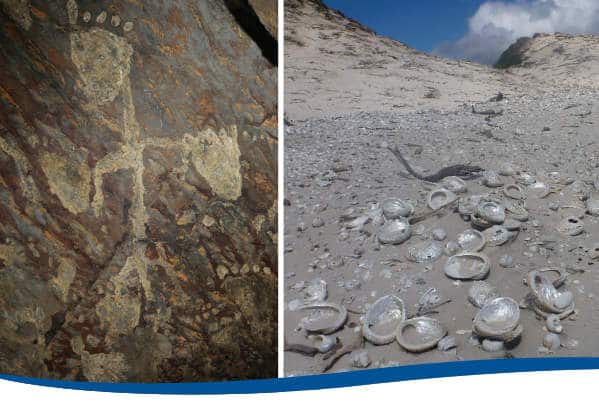
Chairman of the Aboriginal Land Council Michael Mansell has described the just released consultation report for ‘A new Aboriginal Cultural Heritage Protection Act’ as “weak, and one that continues government ownership and control of Aboriginal heritage. Under this so-called new proposal, he added, “Aboriginal people would still need approval to put stolen petroglyphs back to where they were removed.”
Mr Mansell said, “The ‘new’ proposal maintains the 200 year old position of government control over black heritage. The Paper proposes ‘greater Aboriginal involvement’ and acknowledges Aboriginal people are the custodians of our cultural heritage but then keeps outdated role of Aborigines as advisers to departments who, on behalf of Aborigines, will look after our heritage. The government are proposing to retain an advisory body (appointed by government) which acts completely independently of the Aboriginal community and is unaccountable except to government.
The Aboriginal community rejects the idea out of hand and asks the government to immediately hold talks with the Aboriginal people to find common ground.
The weaknesses in the proposal are:
- No Aboriginal ownership of Aboriginal heritage. Control through government institutions;
- Ownership too difficult to deal with;
- Aboriginal people can still be prevented from accessing burial grounds and sacred sites by property owners;
- Sets up existing government appointed advisory body as a statutory body to administer Aboriginal heritage. Body is made up of some Aboriginals with some white people claiming to be Aboriginal
- No requirement for the body to seek approval or consult Aboriginal people
- Minister retains overall approvals.
The new Act:
- would not stop the destruction of Aboriginal heritage on Robbins Island where a wind farm is being developed;
- would not stop the cable car interference with Aboriginal spiritual connections to Kunanyi
- would not stop the government allocating $10m to further increase off road vehicles to the Tarkiner, nor would it prevent new tracks being opened up or heavy mats being laid over middens to allow vehicle access.
We proposed in our submission in 2021 that the new Act have a new section – Ownership of Aboriginal heritage – as follows:
7A (1) All objects created or used by Aboriginal people are the property of the Aboriginal people.
(2) Collective ownership of Aboriginal heritage is to be expressed through the Aboriginal Land Council of Tasmania
Our suggestion has been ignored completely, the government Paper arguing it is too hard.”