Federal Minister for the Environment Sussan Ley is calling for additional submissions under the Aboriginal and Torres Strait Islander Heritage Protection Act,] for Robbins Island and surrounding waters.
Local Aboriginal man Malcolm Stokes has formally requested they be declared a significant Aboriginal area to be preserved and protected from injury or desecration.
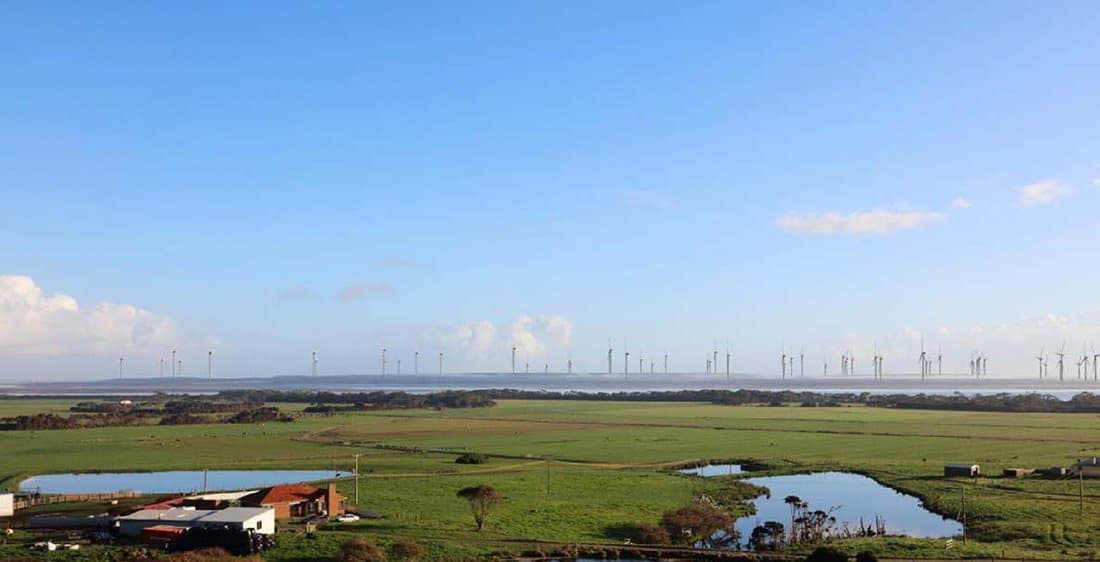
This is truly a David and Goliath battle; if Stokes’ application is successful, Minister Ley has powers to block the proposed UPC Renewables Robbins Island industrial wind energy park. The Robbins Island project is worth an estimated $1.2-1.6 billion dollars, proposing up to 122 wind turbines of 270 metres height and associated infrastructure, including 1.2km bridge and transmission lines.
The rush for renewables energy infrastructure in Tasmania is encountering significant opposition on many fronts, including choice of appropriate locations, biodiversity impacts and lack of genuine community consultation.
Pressure is increasing for the Tasmanian government to follow the lead of other states and establish ‘no-go zones’ for renewable infrastructure in important Tasmanian places.
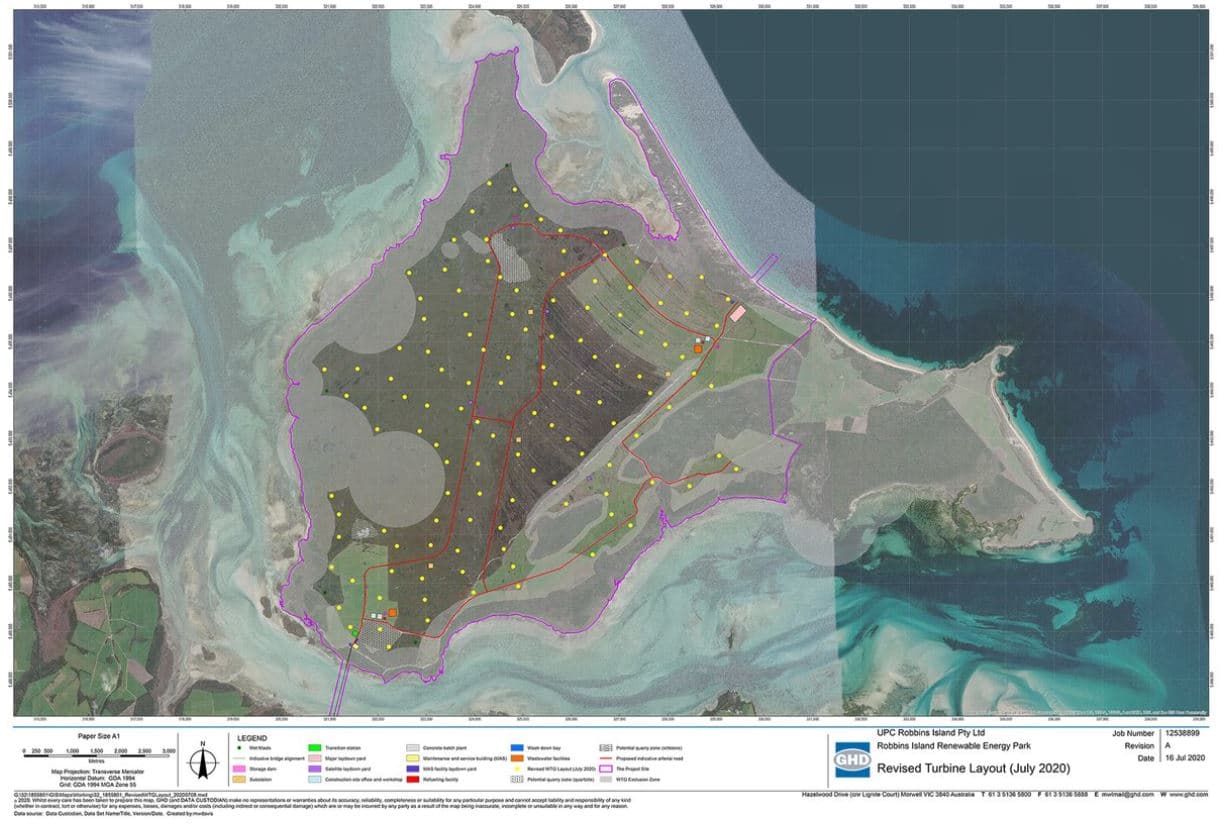
Stokes believes Robbins Island is significant to the Tasmanian Aboriginal people and should not be desecrated. The Tasmanian government is working to improve engagement with the Tasmanian Aboriginal people, with the Pathway to Truth-Telling and Treaty Report recently tabled in Parliament, and Stokes is hopeful the views of Tasmanian Aboriginals will be respected, stating:
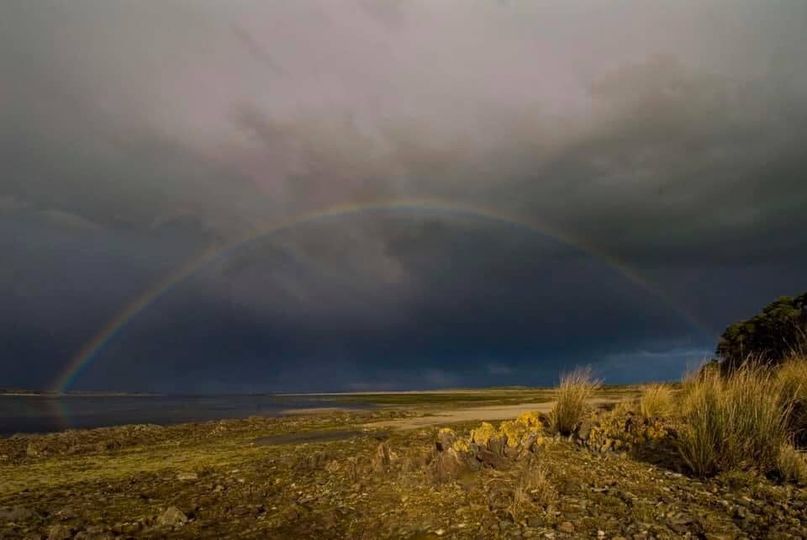
“For thousands of years Robbins Island was the place to head when the blackwood bloomed in spring. Hundreds of members of the north-west Aboriginal tribes would travel along coastal paths to gather on Robbins Island for a month each year, bringing gifts of tools and ochre to gain safe access to these Peerapper lands. Whilst on the island Aboriginals conducted ceremonies, organised marriages between tribes, made spears & baskets and gathered shells to make necklaces for decoration and trade.
Robbins Island was a place of abundant bush tucker with mutton bird, bird eggs, salt bush, pepper berry, pigface, seals, shellfish wallaby, coastal birds, skate and fish in abundance. In 1802 Baudin reported ‘while off Robbins Island one fine night they sent out a boat to fish which saw several natives with torches and spears fishing the shore line’, a practice adopted to this day fishing for flounder with modern torches and spears.
Tunnerminnerwait was born on Robbins Island; a prominent figure in early contact history with George Augustus Robinson. Tunnerminnerwait was the first man executed in Victoria and is a significant figure in the early clash between civilisations. His last words purported to have been ‘I am happy to be hanged because I have three heads, one for the noose, one for my spirit and one to go back to Robbins Island.’
There are three points of first European contact on Robbins Island, a significant turning point in the history and demise of the north-west tribes. A legacy Stokes believes is largely dismissed, and sees the continued disempowerment of the local indigenous peoples.
There is proof of long-term Aboriginal presence in north-west Tasmania ranging from 6000 – 8000 years at Rocky Cape and 22,500 years at Cave Bay, Hunters Island.”
Stokes believes it is not just a matter of relocating turbines a few metres this way or that, as the whole island is sacred to the Aboriginal people. Stories were told on this island to pass down knowledge. Aboriginal stories relating to the stars were of great importance. They taught that the black spot in the milky way / Orion’s belt is a stingray and said that their ancestors are spearing it.
Stokes understands that UPC Renewables have offered to take any Aboriginal artefacts they find off country and place them in a new museum near Robbins Island.
With Tasmania currently going through reversing this process with the state museum, returning petroglyphs to country, Stokes view is firm: “Robbins Island is special to the Tasmanian Aboriginal people; artefacts should be left on country and Robbins Island should be protected from desecration.”
He fears corporate attitudes may not respect Aboriginal culture and is keenly aware of examples like Rio Tinto and the desecration of the Juukan Gorge Caves. “We don’t want a Rio Tinto moment here,” Stokes said.
Interested persons (or parties) are invited to furnish representations from 15 December to:
Vanessa Edmonds – Principal, Everick Heritage Pty Ltd, 6B Reserve Street, Annandale NSW 2038
Tel: 0429114188; Email: [email protected].