Media release – SMA Australia, 2 December 2021
Continued state and territory inaction on SMA testing will fuel a lifetime of heartache for 30 families each year
A classroom of babies each and every year could have the life they deserve while living with Spinal Muscular Atrophy (SMA) i– the leading cause of genetic death in kids under two ii – if all states and territories acted on newborn screening for the condition.
- We should not be a nation of haves and have nots: Currently, only babies born in NSW or the ACT are tested for SMA as part of an ongoing trial program i, and only WA has committed to implementing a trial iii , despite the 2020 recommendation for all states and territories to implement SMA newborn screening iii .
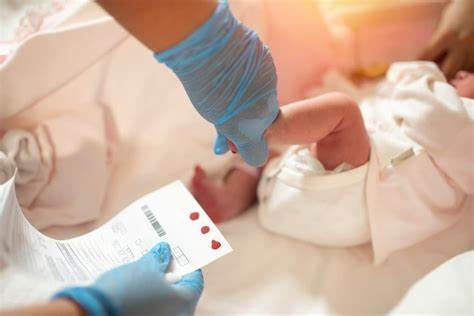
- Life without severe disability or premature death is at stake: Access to a test for Spinal Muscular Atrophy (SMA) as part of Newborn Bloodspot Screening (NBS) would ensure early diagnosis and treatment i.
- Parents demand equity: New research shows 8 in 10 Australian parents expect their state or territory government should adopt testing for SMA immediately iv.
In a bid to end the premature deaths of children diagnosed with SMA in the future, new research reveals Australian parents expect their state and territory governments to include a test for SMA as part of newborn screening immediately iv .
Over 1,000 Australian parents, expectant parents and grandparents took part in the survey that was commissioned in partnership between SMA Australia and the Genetic Support Network Victoria with funding and communications support by Novartis Australia.
In 2020, an inter-jurisdictional committee of federal, state and territory governments recommended that all states and territories implement screening for SMA through their respective NBS programs iii. This recommendation was informed by a comprehensive trial program conducted in NSW and the ACT that screened 202,000 newborns i. Yet, nearly a year since the recommendation, currently, only babies born in New South Wales or the Australian Capital Territory are tested for SMA.
Affecting one in 10,000 children v , SMA progressively destroys the nerve cells in the brain stem and spinal cord that control essential activity such as speaking, walking, breathing and swallowing v. The condition causes extreme muscle weakness to the extent that key milestones — crawling, rolling, playing with toys — fly by unmet, with many babies not living to see their second birthday v.
Early detection of SMA via newborn screening is critical i . The earlier babies are screened for SMA and gain access to treatment, the greater the chance to live a life, without severe disability or death i.
Julie Cini, CEO, and founder of SMA Australia, explained that newborn screening is the only way parents can help protect their families against this rare, but potentially devastating disease.
“Every hour of every day matters for babies born with SMA. If SMA is picked up at birth, Australian babies identified with the condition may never need to experience life in a wheelchair, and they could enjoy everyday freedoms of walking and eating normally.
“Babies born with SMA don’t have time to wait, they need testing at birth and early intervention, so they have the best chance of having a good quality of life,” said Ms Cini
The survey found that:
- 64 per cent consider positive health outcomes as the most important hope they have for their children iv;
- Nine in 10 consider it to be important to have more health information about their newborn baby as early as possible iv;
- 81 per cent would rather know the risk of a newborn’s serious health condition when considering whether to have a baby iv;
- The majority believe having early newborn health information would allow them to make medical decisions that could improve the health of the child (79 per cent), seek additional medical advice & support (74 per cent), and put in place life plans that will help them to take care of the child (64 per cent) iv; and
- 73 per cent agree that the NBS program should include a test for the leading cause of genetic death in children under the age of two* iv.
Critically, half of those surveyed do not believe Australia is a world leader in newborn screening iv.
While the survey results indicate that parents demand early access to health information about their newborns iv , the reality is that there is disparity between the states and territories and what conditions are currently tested for within each jurisdiction’s newborn screening program.
“Each state and territory is responsible for the conditions made available for babies born locally. However, right now, this equity of access does not exist which has created two classes of parents – those who have the chance to see their child potentially live a somewhat normal life and those who whose children sadly die unnecessarily,” continued Ms Cini.
The survey findings also showed that almost all (86 per cent) believe it’s important for Governments to work with the community to review and update the conditions included in NBS iv.
Australians want state and territory governments to provide access to a test for the leading cause of death arising from an underlying genetic condition in children under the age of two with the majority (68 per cent) admitting they would be concerned if their state government didn’t make the test available. Additionally, the majority (80 per cent) agree that it should be implemented immediately iv .
Importantly, including a test for SMA as part of newborn screening program will improve health outcomes for all Australian babies. A Newborn Screening Program that includes testing for SMA will deliver hope for parents and has the potential to save the lives of 150 children in Australia over 5 years. Funding a test that costs approximately $10 per test is likely to identify 150 cases and save $3,197 million in health system costs alone, over 5 years. This represents a $2.18 return on every dollar spent vi.
“We call on the state and territory governments to act quickly to include a test for SMA in their NBS programs to ensure that all children are given the best chance of living a good quality life”, Ms Cini concluded.
References:
i University of New South Wales. Australian pilot program for spinal muscular atrophy screening in newborns garners overwhelming support. Available at: https://med.unsw.edu.au/news-events/news/australian-pilot-program-spinal-muscularatrophy-screening-newborns-garners-overwhelming-support
ii Rossoll W et al. Spinal Muscular Atrophy and a Model for Survival of Motor Neuron Protein Function in Axonal Ribonucleoprotein Complexes. Results Probl Cell Differ. 2009; 48: 289–326. doi:10.1007/400_2009_4.
iii WA Department of Health. Assessment of rare genetic disorder for inclusion in WA Newborn Bloodspot Screening Program. Available at: https://www.mediastatements.wa.gov.au/Pages/McGowan/2021/08/Assessment-of-rare-genetic-disorder-forinclusion-in-WA-Newborn-Bloodspot-Screening-Program.aspx
iv Consumer research: perspectives and attitudes of Australian parents, expectant parents, and grandparents in relation to their hopes and fears for their children, key concerns, expectations of government, and newborn screening; conducted by Cerner Enviza; undertaken by SMA Australia and the Genetic Support Network of Victoria, with funding by Novartis; October 2021.
v Spinal Muscular Atrophy Australia. SMA Information Guide. Available at: https://smaaustralia.org.au/wpcontent/uploads/SMA_2020_A4_Information_Guide-compressed.pdf
vi Novartis Data on File 2021.
vii SMA: results of a large-scale survey of newborn screening around the world. Available at: https://www.institut-myologie.org/en/2021/05/31/sma-results-of-a-large-scale-survey-of-newborn-screeningaround-the-world/. Accessed in November 2021
viii Status of Newborn Screening for Spinal Muscular Atrophy. Available at: https://www.sma-screeningalliance.org/map/ . Accessed in November 2021.
ix In Just Three Years, Cure SMA Marks Nationwide Milestone for 85% of U.S. Babies Now Screened at Birth for SMA. Available at: https://www.curesma.org/three-year-rusp-anniversary-newborn-screening-for-sma/ . Accessed in November 2021.